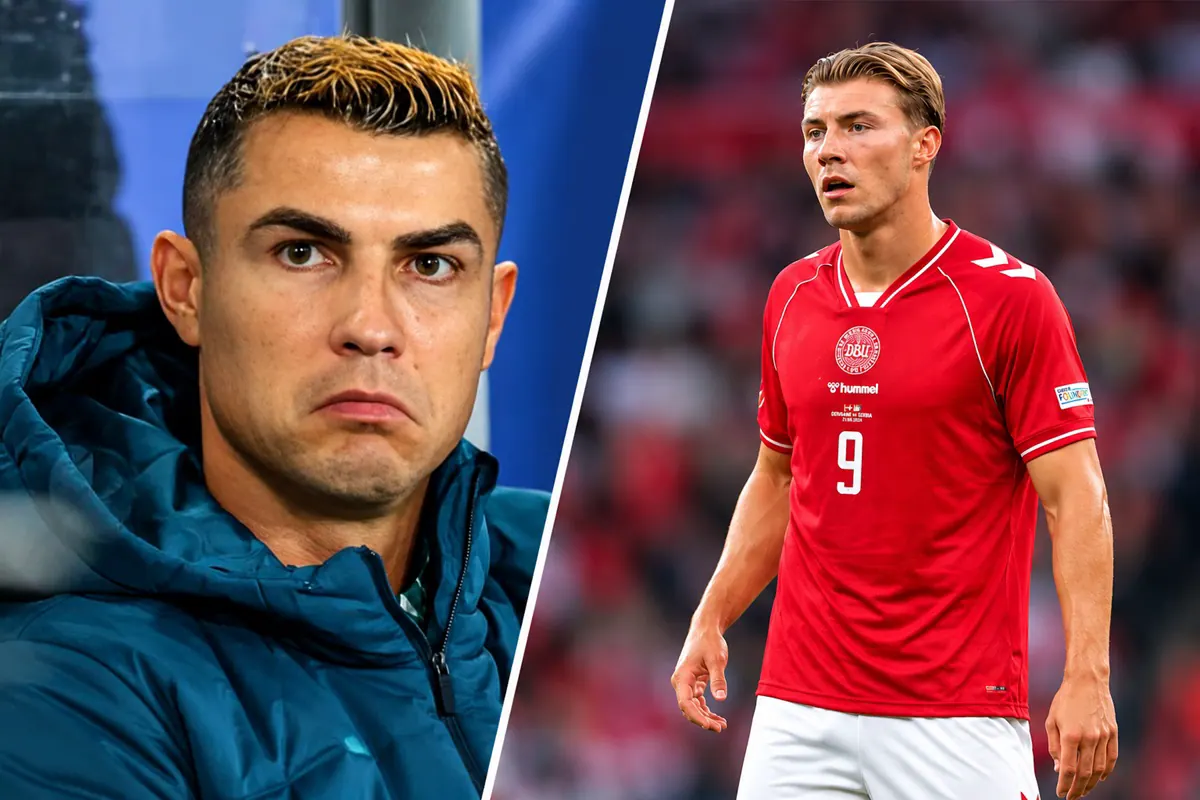
Rasmus Hojlund has reacted publicly after organisers of the Dubai d’Or awards, Globe Soccer, published a fabricated comment attributed to a Napoli star that appeared to praise Cristiano Ronaldo. The incident sparked widespread attention online, with Hojlund responding after his name became linked to the controversy. This episode has raised questions about how football award organisers handle social-media content and statements attributed to players.
The fake comment was published by Globe Soccer, the organisation behind the Dubai d’Or awards, and was presented as though it had come from a Napoli forward. The statement quickly gained attention due to its reference to Ronaldo, one of the biggest names associated with the Globe Soccer Awards. However, the comment was subsequently identified as fake, prompting Hojlund to respond and draw further attention to the error.
The situation became more notable because of Ronaldo's close association with the Globe Soccer Awards, having received multiple honours at the event. That connection makes comments involving the Portuguese superstar particularly significant whenever they are published in connection with the awards. The fabricated statement appeared to give the impression that another prominent player had publicly praised Ronaldo, potentially generating engagement around both the player and the event.
Once it became clear that the comment was not authentic, the focus shifted from Ronaldo to the credibility of the post itself. Hojlund's reaction further amplified the situation, ensuring that the disputed statement received even more scrutiny. Rather than allowing the statement to circulate without challenge, his response helped expose the issue and prompted further discussion among football supporters.
The incident highlights the growing importance and potential risks of social media in modern football. Players' comments can quickly attract international attention, particularly when they involve high-profile figures such as Ronaldo. For clubs, players and football organisations, even a seemingly harmless social-media post can become controversial if information is incorrectly attributed.
In this case, the false comment was linked to a major football award platform, making the incident particularly sensitive. The reaction also demonstrates how quickly players and supporters can challenge information that appears to have been published in their name. For Hojlund, his response ensured that the controversy did not simply remain an unnoticed social-media post.
The incident is unlikely to overshadow the Dubai d’Or awards themselves, but it has already created an unexpected talking point ahead of the ceremony. With Ronaldo continuing to attract huge attention across world football, any statement involving the Portugal star is likely to generate significant engagement. This time, however, the attention came from words that the Napoli player never actually said.
Key points
- Rasmus Hojlund responded publicly to a fake comment about Cristiano Ronaldo.
- The fake comment was published by Globe Soccer, organisers of the Dubai d’Or awards.
- The incident highlights the risks of social media in modern football.