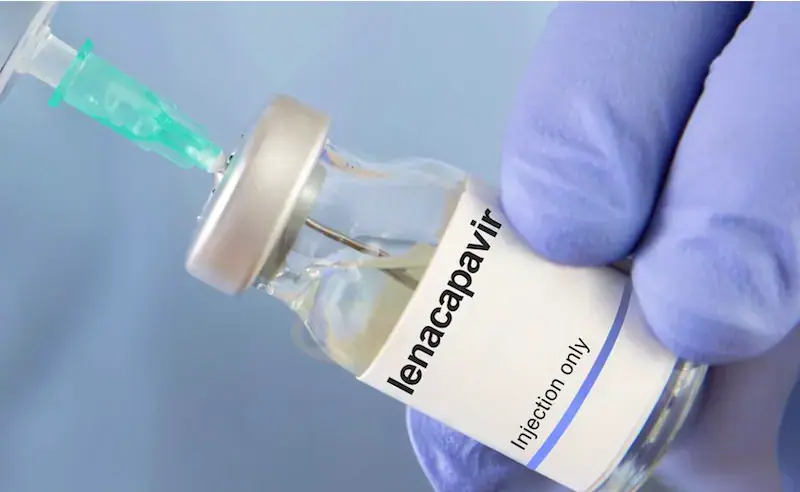
Demand for lenacapavir, a long-acting HIV prevention injection given twice a year, has outstripped limited supplies in Uganda, Kenya and Malawi. Health officials and advocates from the three countries are warning against stirring up demand that health systems cannot meet. They spoke at a regional webinar on advancing access to lenacapavir for pre-exposure prophylaxis (PrEP) in the three countries. Warren Mitchell, executive director of AVAC, said the countries reported similar experiences.
In Uganda, Dr Peter Mudiope, the ministry of Health’s HIV prevention coordinator, said some people who earlier declined other forms of PrEP are now asking for the injection. The country had planned to raise the number of facilities offering lenacapavir from 103 to 300 by December 2026. However, Mudiope said the first rollout showed the need to balance demand creation with supply. When they launched PrEP on April 17, they had only 20 doses for the site, and they got finished quickly.
Uganda now has 103 facilities offering lenacapavir and expects more doses in December. Mudiope said the new supply will go first to regions and facilities with very large numbers of people on oral PrEP. The ministry is urging people to keep using other options while supplies grow. These are daily oral PrEP, the dapivirine vaginal ring and injectable cabotegravir, which is given every two months.
Kenneth Mwehonge, executive director of HEPS Uganda, said introducing lenacapavir takes more than awareness campaigns. He urged investment in community structures that can give accurate information, address stigma and misinformation, and link interested people to health facilities. HEPS worked with communities, local governments and health facilities to train 246 community resource persons from 115 PrEP implementation sites.
In Kenya, Patricia Jeckonia, programme manager for policy, advocacy and HIV prevention at LVCT Health, said the Kenyan experience shows how shortages can undermine community confidence when people are urged to seek a product that is not consistently available. Kenya deliberately built its campaign around PrEP choice rather than lenacapavir alone. Messages were co-created with adolescent girls and young women, pregnant and breastfeeding women, adolescent boys and young men and other priority groups.
Jeckonia said even so, supplies ran out quickly, and some people arrived at facilities to find the drug unavailable. She said Kenya’s experience shows the importance of announcing supply interruptions quickly and helping health workers explain the alternatives to clients. Demand generation should not be an afterthought; it should be at the very beginning when thinking about availability of the product.
In Malawi, Simon Sikwese, executive director of Pokachere, said the country handed out communication materials in phases to avoid generating demand in districts where lenacapavir was not yet available. He said awareness campaigns must be matched to what health facilities can deliver. The country took a phased approach to introducing lenacapavir, ensuring that demand creation is aligned with the available supply.
Key points
- Health officials stress the need to balance demand creation with supply to avoid undermining community confidence.
- Community mobilisation should be built into existing health structures to ensure sustainability.
- Awareness campaigns must be matched to what health facilities can deliver to avoid generating unmet demand.
Reporting sources
- HIV jab demand outstrips supply in Uganda, Kenya and Malawi · The Observer