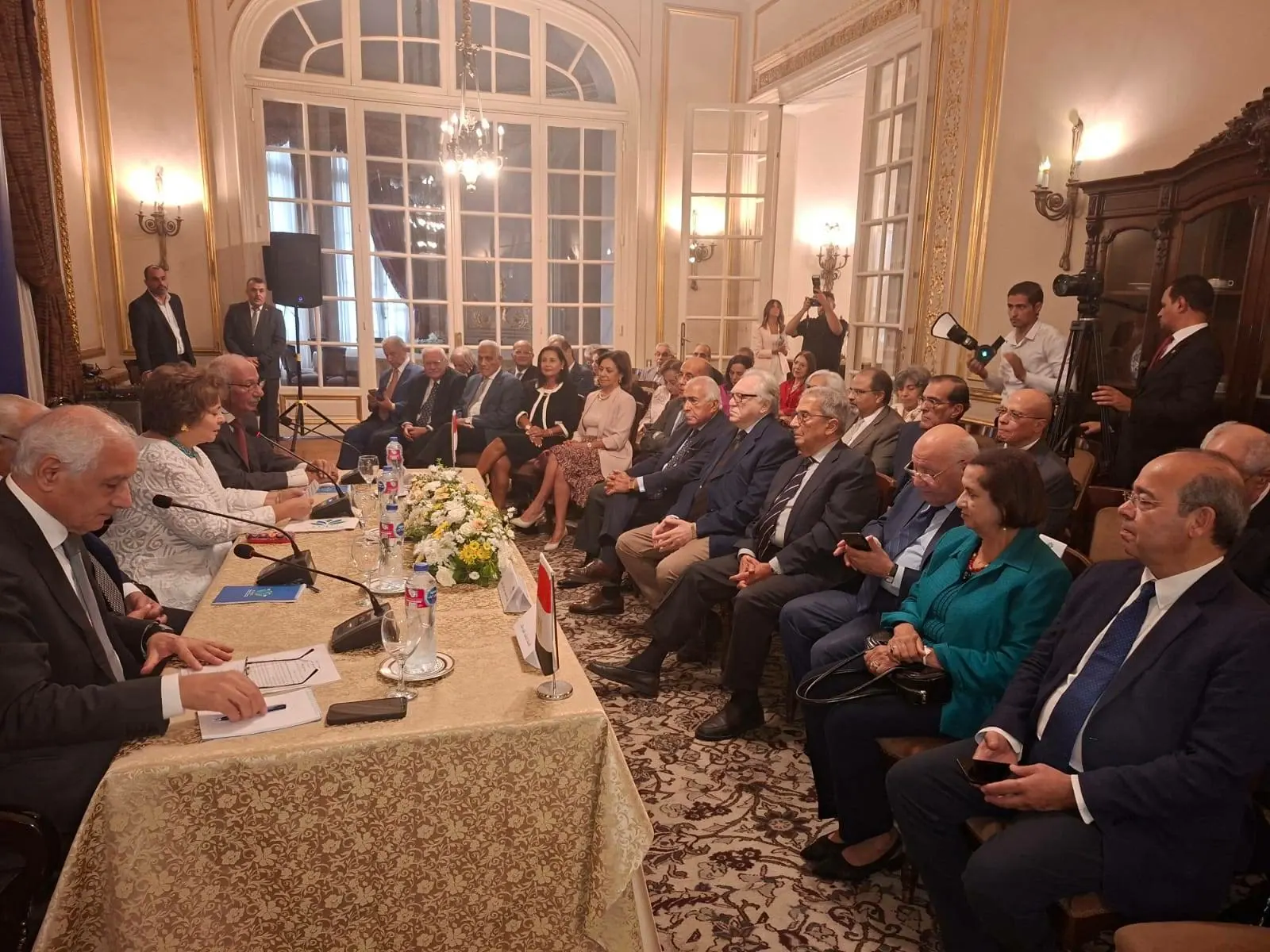
The Cairo Diplomatic Club recently hosted a seminar titled "70 Years Since the Nationalization of the Suez Canal: Future Prospects," where participants revisited the historical decision and its implications. The event, moderated by Dr. Ali Al-Din Hilal, featured speakers including Dr. Ali Al-Hafnawi, Dr. Ahmed Jalal, and Omar Mehna. The discussion highlighted differing views on the nationalization, with some emphasizing its national and sovereign significance, while others pointed out the substantial economic costs.
Dr. Mahmoud Abaza, former leader of the Wafd Party, asserted that the colonial powers would not have willingly relinquished control of the Suez Canal by 1968, justifying the nationalization as a necessary measure. He argued that the decision's value went beyond financial considerations, representing a crucial aspect of Egypt's independence and sovereignty. Abaza also emphasized the strategic importance of the canal, which faces challenges due to regional conflicts.
Abaza countered arguments that President Gamal Abdel Nasser should have waited until the concession ended in 1968, suggesting that this approach would have avoided financial losses. He questioned whether the Suez Canal's value could be assessed solely in economic terms, comparing it to the Sinai Peninsula and the Aswan Dam. Abaza also noted that the 1967-1975 closure of the canal had a significant global impact, particularly during the 1973 oil war.
Omar Mehna, head of the Egyptian Center for Economic Studies, presented a contrasting view, highlighting the substantial costs associated with nationalization, including compensation and limited gains. Mehna suggested that an alternative approach could have been to wait until 1968, when the concession would have expired. He also discussed the current challenges in developing the Suez Canal Economic Zone, citing Egypt's overall investment climate as a significant concern.
Mehna pointed out that Egypt's business environment is affected by high taxes and additional fees, which can increase the actual cost of doing business to 50%. He also noted a decline in the private sector's share of credit, from 70% to 25%. The discussion underscored the complexities surrounding the Suez Canal's nationalization and its ongoing impact on Egypt's economy and politics.
The seminar also featured a speech by Ambassador Laila Bahaa Eddin, representing Mamdouh Abbas, head of the forum. The event provided a platform for experts to share their insights and perspectives on the nationalization of the Suez Canal, an event that continues to shape Egypt's history and development.
The nationalization of the Suez Canal remains a pivotal moment in Egypt's history, with ongoing debates about its consequences and implications. As Egypt continues to navigate regional challenges and economic development, the Suez Canal's role is likely to remain a significant factor in the country's growth and international relations.
Key points
- The nationalization of the Suez Canal is still debated among experts, with some emphasizing its national and sovereign significance, while others highlight the substantial economic costs.