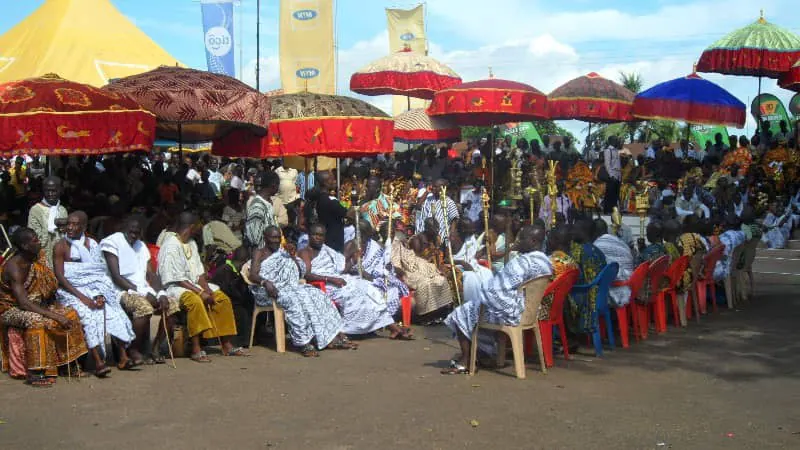
As Akuapem prepares to celebrate 200 years of its Odwira festival starting September 21, 2026, historians are reevaluating the traditional story behind the event. For centuries, Akuapem elders have believed that Odwira was born out of a sacred Asante object captured during the Battle of Katamanso in 1826. However, University of Ghana historian Kwaku Darko Ankrah suggests that this tale may be more complicated than tradition suggests. According to the Ghana News Agency (GNA), the Battle of Katamanso was fought on August 7, 1826, near Dodowa, where Akuapem forces were part of a coalition that defeated Asante.
The popular narrative surrounding Odwira's origin centers on the capture of a sacred Asante object during the Battle of Katamanso, which is believed to have become the spiritual foundation for Akuapem's own Odwira festival. However, Ankrah argues that Akuapem's existence as a state predates the 1826 victory, with its establishment dating back to the 18th century following the defeat of Akwamu and the Abotakyi Accord of 1733. The Akyem warlord Safori was associated with the leadership of the Akuapem State at that time. Therefore, the Battle of Katamanso may have helped consolidate an existing order rather than creating it.
Scholarly literature suggests that the origins of Asante's own Odwira tradition date back to 1717, under Asantehene Osei Tutu I, decades before the Akuapem State came into being. This makes it challenging to argue that Akuapem originated the wider Odwira institution. Instead, what Akuapem developed after 1826 appears to be a distinct local expression of an older Akan ritual tradition, shaped by the memory of victory, purification, and the renewal of social order.
Two questions remain contested regarding the Odwira festival: whether Asante permanently lost the right to celebrate Odwira after the capture of its sacred object in 1826, and whether the Odosu, a spiritual symbol of the Akuapem state, was the same object as the Odwira Apafram associated with Asante origin. Ankrah suggests that there could be an element of truth in the claim that Asante lost the right to celebrate Odwira, but he stops short of confirming it as historical fact.
Research published in the University of Ghana's Ghana Social Science Journal treats the Odosu and Odwira Apafram as distinct objects. Ankrah declined to give a definitive answer when asked directly, citing the need to consult relevant documentation. The historical clarifications reported by GNA are significant for how the festival's story is told to younger generations and visitors during the bicentenary events.
The Odwira festival remains a major cultural and religious event in the Eastern Region, drawing chiefs, residents, and visitors for rites that include purification of stools, new-yam ceremonies, remembrance of ancestors, and public processions. As Akuapem marks 200 years of the tradition, it is essential to distinguish documented history from what has been shaped by oral tradition over time.
Akuapem's bicentenary Odwira celebrations are set to begin on September 21, 2026. While sources have not detailed a full program of events beyond the start date, the historical reexamination of the festival's origin story is expected to be a significant aspect of the celebrations. No further academic publications or clarifications on the disputed historical points have been announced.
Key points
- Historians question the popular tale of Odwira's origin, suggesting that Akuapem's existence predates the 1826 Battle of Katamanso.
- The origins of Asante's Odwira tradition date back to 1717, under Asantehene Osei Tutu I.
- Two questions remain contested: whether Asante permanently lost the right to celebrate Odwira and whether the Odosu and Odwira Apafram are the same object.