A new book titled "Moses, Peace Be Upon Him, and the Exodus of the Israelites from Egypt" by former minister of antiquities Mamdouh Al-Damaty has revived the debate over the identity of the Pharaoh of the Exodus. The book examines whether archaeology, ancient Egyptian history, and accounts from the Old Testament and the Quran can provide an answer to this question. Al-Damaty presents a case for identifying Ramses II as the Pharaoh mentioned in the Biblical and Quranic accounts.
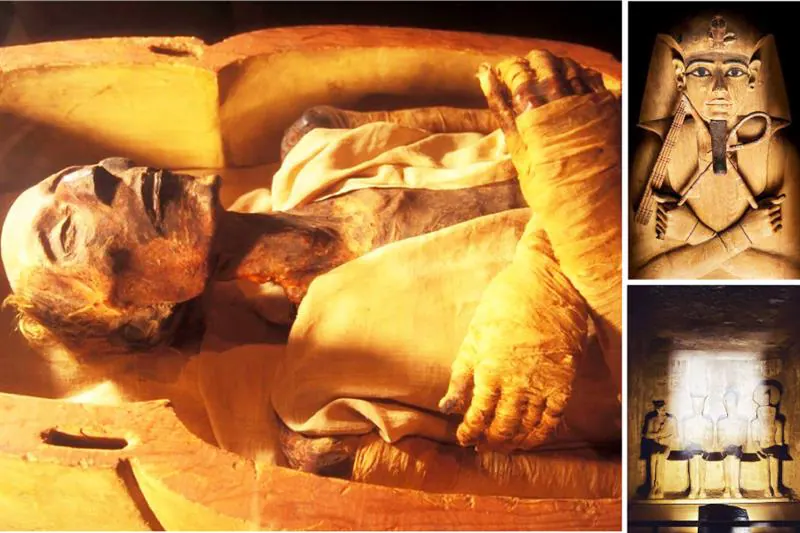
Ramses II, one of the longest-reigning kings in ancient Egyptian history, ruled for approximately 66 years. He was a prolific builder and warrior who left a lasting legacy, covering the country with monuments bearing his name. His reign has been associated with the controversial question of whether he was the Pharaoh of the Exodus. Historians, archaeologists, and religious scholars have sought an answer for generations without reaching a universally accepted conclusion.
Al-Damaty argues that the available clues can help establish the Pharaoh's identity and points to Ramses II as the most likely candidate. He draws on religious texts and relates their accounts to the geography, chronology, and surviving evidence of ancient Egypt. However, he stresses that this remains a scholarly hypothesis based on probability and interpretation, rather than definitive proof. "From an archaeological and historical perspective, there is still no conclusive evidence that identifies the Pharaoh of the Exodus by name," Al-Damaty said.
One of the principal arguments supporting Al-Damaty's identification is the exceptional length of Ramses II's reign. The Quranic narrative recounts that Moses was raised in the Pharaoh's household before fleeing Egypt. Pharaoh's familiarity with Moses' upbringing and earlier life suggests that his connection with Moses extended over a considerable period. This raises the possibility that the ruler concerned must have remained on the throne for many years, making Ramses II a likely candidate.
Geography also plays a significant role in Al-Damaty's argument. Ramses II established the city of Per-Ramses in the eastern Nile Delta as his royal capital, a region associated with the presence of the Israelites. The name "Raamses" also appears in the Old Testament. Al-Damaty relates this setting to the Quranic account of the infant Moses being cast into the water and followed by his sister until he reached Pharaoh's household.
Al-Damaty points to additional archaeological indications that support his hypothesis. He notes the deification of Ramses II, particularly at the Abu Simbel Temples in Upper Egypt, where the king appears alongside major ancient Egyptian deities. He also references the Merneptah Stele, which records the king's military achievements and mentions Israel, stating that it had been devastated.
While Al-Damaty's hypothesis is based on probability and interpretation, it offers a new perspective on the debate. Future excavations may one day uncover evidence that either confirms or disproves his theory. As Al-Damaty concluded, "I can only say which interpretation I consider more likely on the basis of the available clues. Future excavations may one day uncover evidence that either confirms or disproves it."
Key points
- Historian Mamdouh Al-Damaty presents a case for identifying Ramses II as the Pharaoh of the Exodus in his new book.
- Al-Damaty's hypothesis is based on archaeological and historical clues that correspond with references in the Old Testament and the Quran.
- The debate over the Pharaoh of the Exodus remains ongoing, with no universally accepted conclusion.