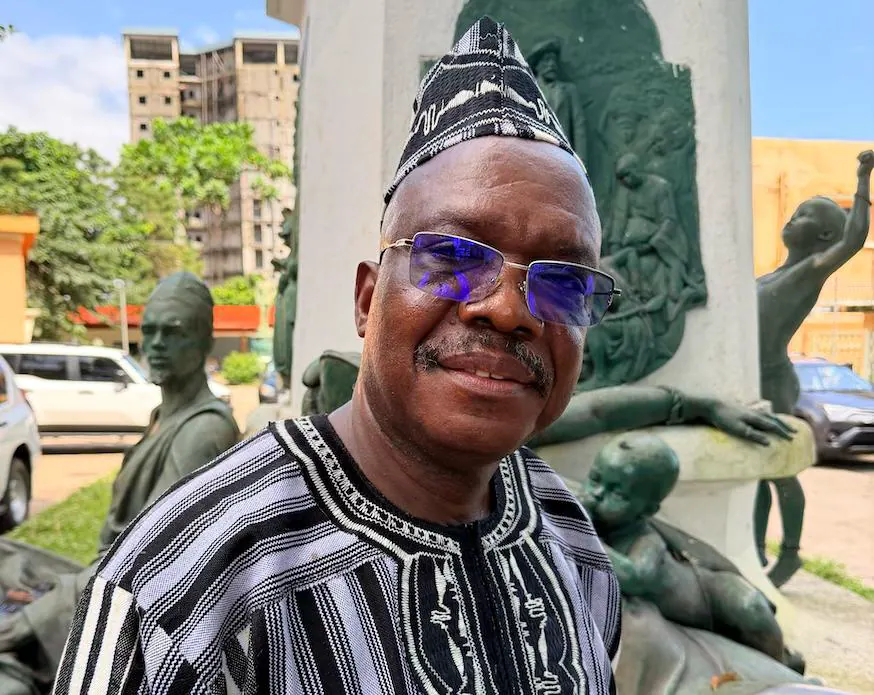
In a recent interview with Africaguinee.com, Prof. Maxime Koivogui, a renowned historian and Inspector General of the Ministry of Higher Education and Scientific Research, shed light on the significance of September in Guinea's history. According to Koivogui, September is the most remarkable month in the country's political trajectory, marked by several major events that have shaped the nation's destiny.
Koivogui pointed out that from the late 19th century to the present day, several pivotal events have occurred in September, including the capture of Almamy Samory Touré by French colonial troops on September 29, 1898, and the historic "No" vote in the referendum on September 28, 1958, which paved the way for Guinea's independence. Additionally, September 1, 2000, marked the beginning of rebel attacks along the country's borders, while September 28, 2009, witnessed a bloody crackdown at Conakry's stadium.
The historian also touched on the September 5, 2021, takeover by General Mamadi Doumbouya, who seized power with the support of defense and security forces. When asked about the recurring nature of these events in September, Koivogui attributed it to coincidence, noting that some have been fortunate, while others, such as the 2000 and 2009 incidents, have been tragic, resulting in the loss of many Guinean lives.
Beyond these historical events, Koivogui discussed the ongoing efforts to repatriate cultural artifacts and symbolic human remains, including the manuscripts of Samory Touré and the remains of Almamy Bokar Biro and his companions. He views this initiative as a crucial step in preserving collective memory, allowing historians to revisit and reevaluate the country's past.
Koivogui emphasized the historical connections between these prominent figures, citing their shared faith and common cause, Islam. He noted that the Empire of Samory, El Hadj Umar Tall in Dinguiraye, and the theocratic state of Fouta Djallon were already linked through their Islamic heritage and objectives.
In light of these developments, Koivogui called upon researchers in the humanities to come together and transform this legacy into a unifying force for the nation, rather than a source of division. He stressed the importance of rewriting Guinea's history using available tools, including recovered manuscripts and oral testimonies.
Ultimately, Koivogui's insights underscore the significance of September in Guinean history, highlighting the need for a comprehensive understanding of the country's past to inform its future. By examining these pivotal events and cultural artifacts, researchers and historians can work towards a more nuanced understanding of Guinea's complex history.
Key points
- The historian Prof. Maxime Koivogui emphasizes the importance of September in Guinean history, citing several pivotal events that have shaped the country's destiny.
- The repatriation of cultural artifacts and human remains, including the manuscripts of Samory Touré and the remains of Almamy Bokar Biro, is seen as a crucial step in preserving collective memory.
- Koivogui calls for a rewriting of Guinean history, using available tools, to promote national unity and understanding.