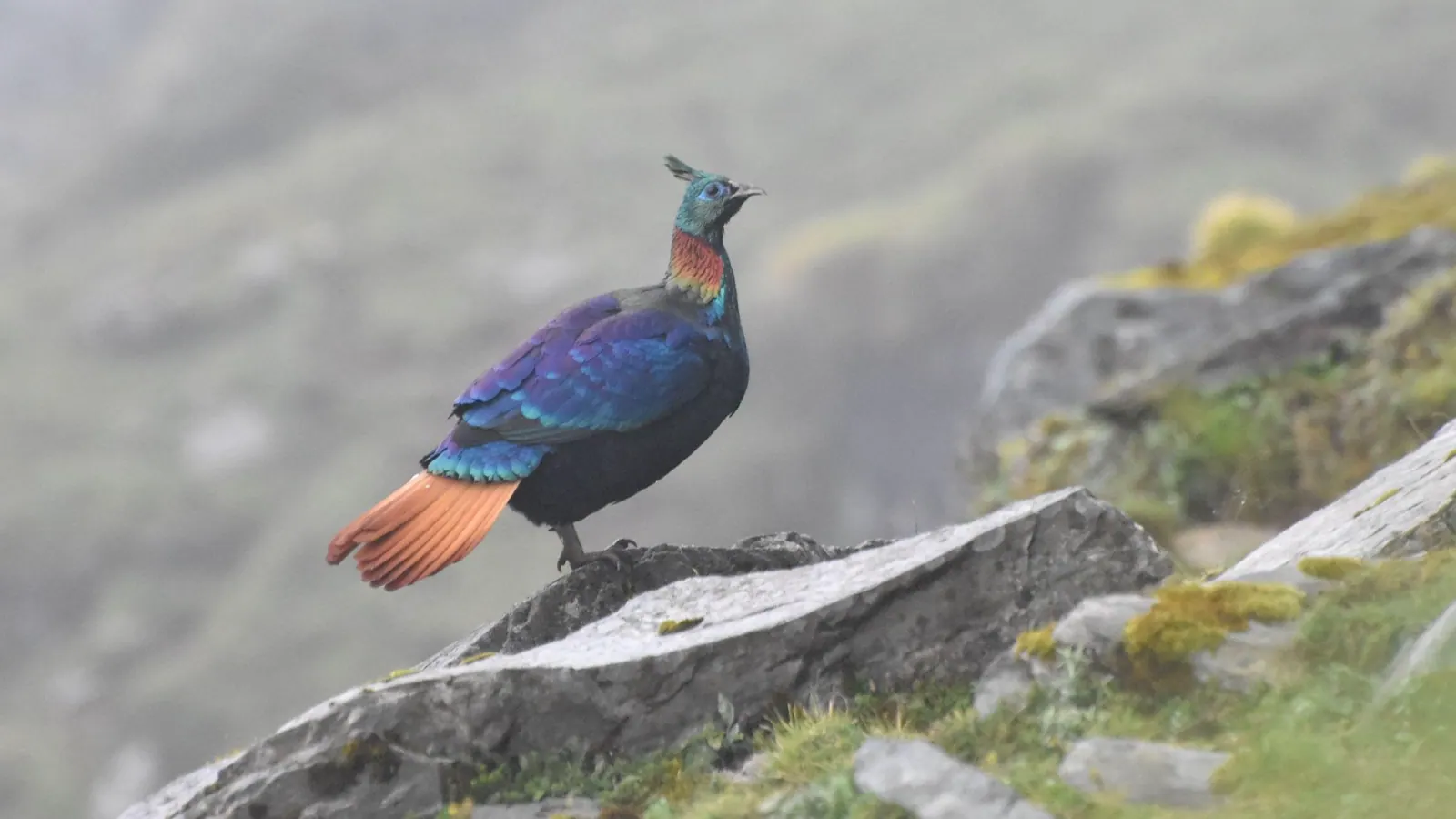
The Himalayan Monal, a bird species native to the high-altitude Himalayan region, is renowned for its striking appearance and distinctive call. Found in the alpine meadows above forests, this bird is an integral part of the region's culture and folklore. However, studies have shown that human activities such as infrastructure development and tourism are putting pressure on the Monal's habitat, leading to changes in its behavior.
Researchers have observed that the Monal is being forced to migrate to higher elevations due to the increasing human presence in its natural habitat. This shift is not only altering the bird's distribution but also affecting its communication patterns. The study found that Monals in areas with high human activity tend to produce higher-frequency calls to overcome the background noise.
The study, conducted by Indian researchers, used microphone recordings to capture over 700 calls from Monals in two different locations. The results showed that birds in noisy areas produced shorter calls with higher frequencies compared to those in quieter areas. This change in vocalization is crucial for the bird's survival, as it relies on its call to attract mates and warn off predators.
According to Dr. Rajeev Lochan, the lead researcher, the Monal's habitat is under threat due to unregulated tourism and infrastructure development. The region's fragile ecosystem is facing pressure, and the Monal's adaptation to human noise pollution is a warning sign for other bird species. The study highlights the need for conservation efforts to protect the Monal's habitat and prevent further degradation.
Climate change is also expected to exacerbate the challenges faced by the Monal. Rising temperatures and changing precipitation patterns are projected to reduce the bird's habitat and disrupt its migration patterns. The study used global climate models to predict the impact of climate change on the Monal's distribution, and the results are concerning.
The researchers emphasize that the study's findings are preliminary and more research is needed to fully understand the implications of human activity on the Monal's behavior and ecology. However, the results suggest that urgent action is required to mitigate the effects of human pressure on the bird's habitat and prevent long-term consequences for the species.
The Himalayan Monal is an iconic species that plays a vital role in maintaining the region's ecological balance. Its decline could have far-reaching consequences for the ecosystem and the local communities that depend on it. Efforts to conserve the Monal's habitat and reduce human impact on the environment are essential to protecting this magnificent bird and preserving the region's natural beauty.
Key points
- Human activity is altering the behavior of the Himalayan Monal, with the bird changing its song in response to noise pollution.
- The Monal's habitat is under threat due to unregulated tourism and infrastructure development, with climate change expected to exacerbate the challenges faced by the species.
- Conservation efforts are necessary to protect the Monal's habitat and prevent further degradation, with researchers emphasizing the need for urgent action to mitigate the effects of human pressure on the bird's ecology.