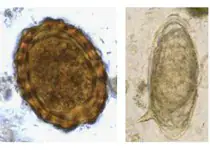
A cross-sectional survey was conducted in 19 rural public schools in the Sahelian and Sudanian zones of Chad between September 2021 and February 2022. The study aimed to describe the prevalence, polyparasitism, and associated factors of helminthiases among schoolchildren. A total of 1,443 pupils were enrolled, and 1,408 provided both stool and urine samples. The study found that nine helminth taxa were identified, with intestinal helminths and Schistosoma haematobium being the most prevalent.
The prevalence of intestinal helminths was 35.87% (505/1,408), while the prevalence of Schistosoma haematobium was 45.46% (656/1,443). Heavy-intensity infections affected 41.6% (273/656) of S. haematobium carriers and 42.1% (83/197) of S. mansoni carriers. The study also found that polyparasitism affected 23.08% (325/1,408) of pupils and comprised 28 infracommunity types.
The study used multivariable logistic regression to assess factors associated with polyparasitism. The results showed that polyparasitism was less likely in the Sahelian zone than in the Sudanian zone (adjusted odds ratio [aOR], 0.56; 95% confidence interval [CI], 0.42–0.74). Additionally, polyparasitism was more likely among pupils aged 15–18 years than among those aged 10–14 years (aOR, 1.45; 95% CI, 1.03–2.06).
The study's findings highlight the need for an integrated control strategy to combat helminthiases among schoolchildren in Chad. The World Health Organization recommends a combination of praziquantel and albendazole, health education, and improved sanitation to control soil-transmitted helminth infections. The study's authors suggest that a similar approach could be effective in Chad.
Helminthiases are a significant public health problem in sub-Saharan Africa, with schoolchildren being a high-risk group. The study's findings are consistent with previous research in the region, which has shown high rates of helminth infections among schoolchildren. The study's authors note that the problem is likely to be exacerbated by factors such as poor sanitation, lack of access to clean water, and limited healthcare resources.
The study's results have implications for public health policy in Chad and other countries in the region. The authors suggest that school-based programs could be an effective way to deliver interventions, such as deworming medication and health education. They also note that a comprehensive approach that addresses the root causes of helminthiases, such as poverty and lack of access to clean water and sanitation, is needed to make sustainable progress in controlling the problem.
Key points
- High prevalence of helminthiases among schoolchildren in Chad, with 35.87% infected with intestinal helminths and 45.46% with Schistosoma haematobium.
- Polyparasitism affected 23.08% of pupils, with 28 infracommunity types identified.
- An integrated control strategy combining praziquantel and albendazole, health education, and improved sanitation is needed to combat helminthiases among schoolchildren in Chad.