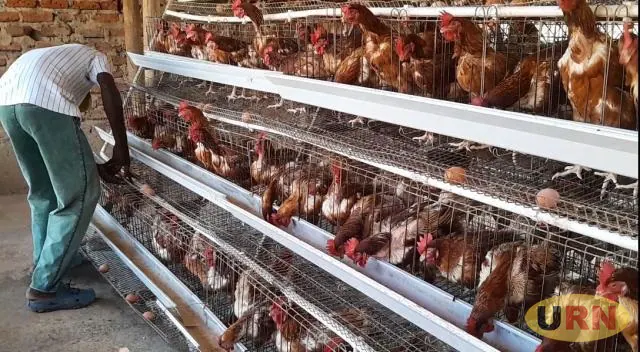
Poultry farmers in Busia District, Uganda, are increasingly seeking cheaper alternatives for feeds, vaccines, and drugs in neighboring Kenya. This trend is attributed to the high cost of production in Uganda, which is forcing many farmers to explore options across the border. The price differences are significant, with a 50-kilogramme bag of starter crumbs costing about Shs125,000 in Kenya, compared to Shs150,000 in Uganda.
The price disparity extends to other essential inputs, including concentrate, which costs about Shs180,000 in Kenya, while the same product costs between Shs230,000 and Shs240,000 in Uganda. Additionally, vaccines and drugs for poultry are also cheaper in Kenya. For instance, the fowl pox vaccine costs about Shs15,000 per dose in Kenya, compared to about Shs20,000 in Uganda. Similarly, a 100-gramme dose of fowl typhoid vaccine costs about Shs18,000 in Kenya, compared to between Shs27,000 and Shs28,000 in Uganda.
Farmers are also finding better deals for coccidiosis treatment in Kenya, where a 100-gramme sachet of Coxi-dioses Amprollorium costs about Shs7,000, compared to about Shs12,000 in Uganda. These price differences were highlighted during an economic mobilisation meeting in Majanji Sub-county, where farmers expressed concerns about the rising cost of poultry inputs. Some farmers noted that the high costs are pushing them out of business.
Samson Wanyama Wafula, a poultry farmer attached to Wasawa Poultry Farmers Group, attributed the trend to the increasing expense of poultry farming in Uganda. He noted that farmers are seeking cheaper inputs across the border to remain afloat. Wanyama also highlighted the challenge of shortages of layer chicks and appealed to the government to support the establishment of a chick hatchery in the area.
Hadijah Bony, a poultry farmer in Majanji Sub-county, keeps layers but struggles with the rising cost of feeds. Despite the challenges, she encouraged other farmers not to abandon poultry farming, citing her success in accumulating wealth through keeping hens. Her experience underscores the potential for poultry farming in the region, provided that the challenges can be addressed.
Kassim Namudia, another poultry farmer from Mawero East B Village in Eastern Division, emphasized the importance of proper management in poultry farming. He noted that farmers need to feed their birds at least three times a day to achieve good returns. With proper management, farmers can begin benefiting from poultry within two to three months. However, high feed prices are eroding their earnings, highlighting the need for government intervention.
The farmers are calling for government intervention to reduce the cost of poultry inputs, improve access to chicks, and make poultry farming more affordable in Busia. The government is yet to respond to these concerns, but the farmers' plight highlights the need for support to the agricultural sector, which is a significant contributor to Uganda's economy.
Key points
- Poultry farmers in Busia District are seeking cheaper feeds, vaccines, and drugs in Kenya due to high production costs in Uganda.
- The price differences between Uganda and Kenya are significant, with some inputs costing up to 50% more in Uganda.
- Farmers are calling for government intervention to reduce the cost of poultry inputs and improve access to chicks.