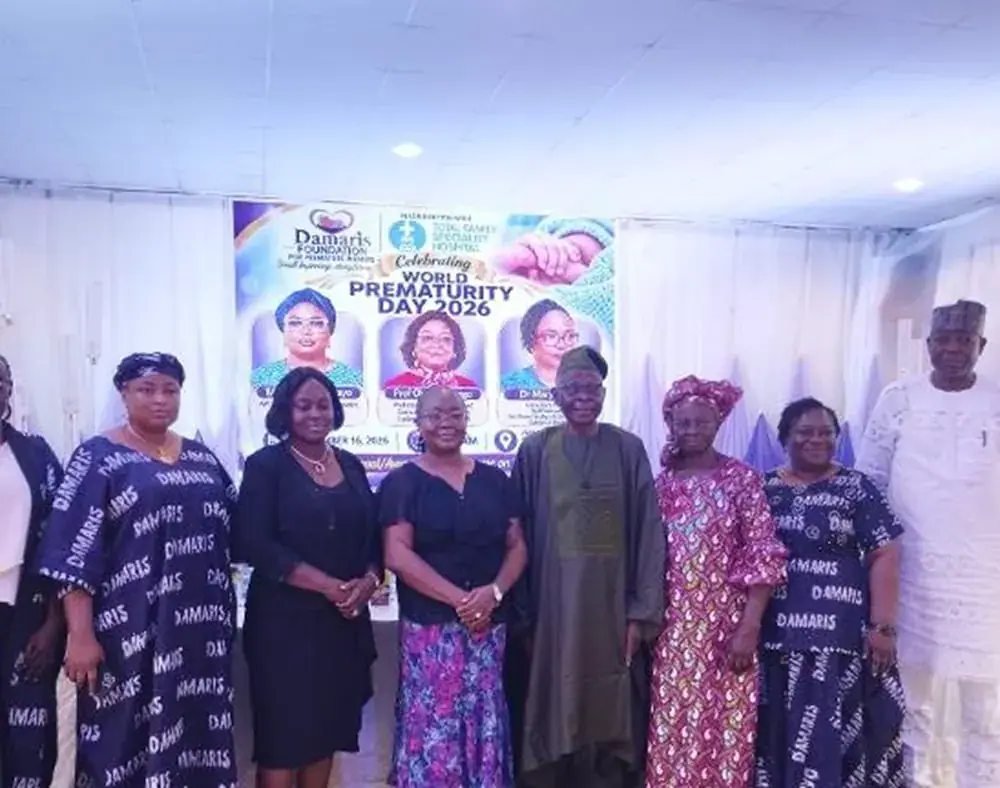
Professor of Paediatrics and Consultant Neonatologist Prof. Olukemi Tongo has warned that the high cost of specialised medical treatment is putting premature babies' lives at risk in Nigeria. The cost of essential medicines, feeding supplements, and prolonged hospital care could make it difficult for parents to sustain treatment, even after their babies had survived critical conditions. This concern was raised at the 2026 World Prematurity Day celebration organised by the Damaris Foundation for Premature Infants in conjunction with Total Family Specialist Hospital, Ibadan.
The cost of certain medical treatments and supplies is particularly high. A vial of surfactant, used to treat newborns with certain breathing difficulties, costs between N230,000 and N240,000, while a sachet of milk fortifier could cost about N22,000. Prolonged hospitalisation, medical investigations, and transportation further increase the financial burden on families. Prof. Tongo recalled her personal experience, where a hospital once demanded a deposit of N66,000 in 2002, when her monthly salary was N60,000.
Prof. Tongo stressed that a premature baby's survival in hospital is only the beginning, as such children need sustained medical attention to prevent complications and support healthy development. Follow-up care for premature babies should cover nutrition, growth, eyesight, hearing, immunisation, and developmental milestones. She particularly advocated timely screening and treatment for retinopathy of prematurity, a potentially sight-threatening condition.
Prof. Tongo also highlighted Kangaroo Mother Care, which involves skin-to-skin contact between a baby and caregiver, as an important intervention for eligible premature and low-birth-weight infants. She shared the story of Hasana, born at 27 weeks in late 2023, weighing just 650 grammes. With intensive medical care and continued support, the child had grown into a thriving toddler by 2026.
On prevention, Prof. Tongo urged pregnant women to attend antenatal clinics regularly and called on healthcare providers to identify complications early and transfer women at risk of premature delivery to appropriately equipped specialist centres where possible. She also called for emotional and psychosocial support for parents, noting that caring for critically ill newborns could expose caregivers to anxiety, exhaustion, and depression.
The Chairman of the Damaris Foundation, Mr Olusesan Olaniyi-George, reaffirmed his commitment to maternal and neonatal healthcare awareness. He recounted how his youngest daughter's premature birth in 2013 inspired his involvement in supporting preterm infants. He attributed her survival to divine intervention, dedicated medical care, and Kangaroo Mother Care.
Prof. Tongo and other stakeholders are calling on the government, hospitals, health professionals, and charitable organisations to make neonatal treatment more affordable and strengthen follow-up services. This includes providing emotional and psychosocial support for parents and ensuring that premature babies receive the necessary medical attention to prevent complications and support healthy development.
Key points
- The high cost of neonatal treatment in Nigeria puts premature babies' lives at risk, placing severe financial pressure on families.
- Prof. Tongo advocates for sustained medical attention and follow-up care for premature babies to prevent complications and support healthy development.
- Stakeholders are calling on the government and organisations to make neonatal treatment more affordable and strengthen follow-up services.