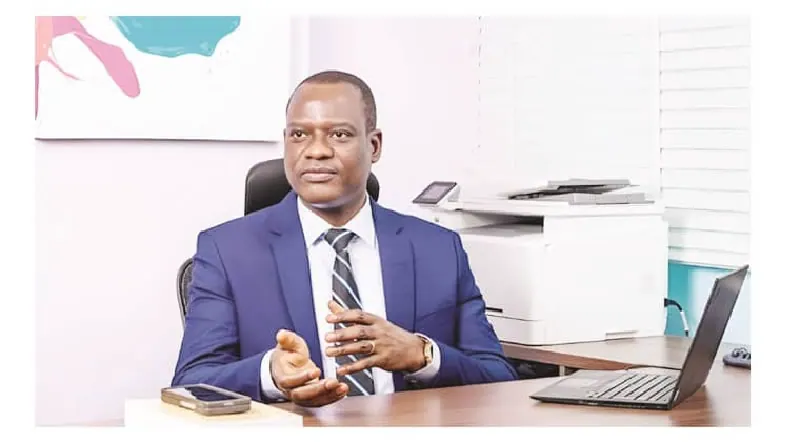
Nigeria's Minister of Finance and Coordinating Minister of the Economy, Taiwo Oyedele, has identified high financing costs and limited access to affordable long-term capital as major obstacles to Africa's infrastructure development. He made these remarks at the United Nations Dialogue on Solutions to Climate Finance on the sidelines of the 81st Session of the United Nations General Assembly in New York. Oyedele stated that Africa's development ambitions, particularly its energy needs, continue to be constrained by high financing costs and currency risks.
Oyedele described the additional financing burden on African countries as a "prejudice premium" and "narrative cost". He also identified currency risks and a "stereotype tax" as additional challenges confronting African countries seeking capital for critical energy and other development assets. According to Oyedele, despite Africa's relatively low contribution to global carbon emissions, countries on the continent continued to bear additional costs when attempting to raise financing for development.
The Minister called for a shift in the global approach to climate finance, including simpler access to affordable capital for developing countries and financing arrangements that better reflect their economic and development realities. He urged the international community to increase investment in gas and other transition energy sources in Africa to expand access to reliable and affordable energy. This, he argued, could also diversify global energy supplies and reduce concentration risks.
Oyedele emphasized that Africa's transition to cleaner energy must take into account the continent's substantial energy-access deficit. He stressed the need for greater investment to enable countries to meet their development needs while pursuing a practical transition to cleaner energy sources. The Minister's remarks highlight the challenges faced by African countries in accessing affordable capital for infrastructure development.
For Nigeria, Oyedele said the government's immediate priority was to implement policies and programmes aimed at reducing poverty, expanding economic opportunities, and accelerating the distribution of shared prosperity. He noted that achieving these objectives would require stronger international cooperation and a financing system that allowed developing countries to mobilise sufficient capital for infrastructure.
Oyedele's comments are consistent with the Federal Ministry of Finance's efforts to promote sustainable economic growth and development in Nigeria. The Ministry has been working to attract investment in critical sectors, including energy and infrastructure. The Minister's call for a shift in the global approach to climate finance is also in line with the United Nations' efforts to promote sustainable development and reduce poverty.
The issue of high borrowing costs and limited access to affordable capital for African countries has significant implications for the continent's development prospects. As Oyedele noted, Africa's development ambitions are being constrained by high financing costs and currency risks. The international community's response to this challenge will be crucial in determining the continent's ability to achieve its development goals.
Key points
- High borrowing costs and limited access to affordable capital are constraining Africa's infrastructure development.
- Nigeria's Finance Minister Taiwo Oyedele has called for a shift in the global approach to climate finance.
- Africa's transition to cleaner energy must take into account the continent's substantial energy-access deficit.