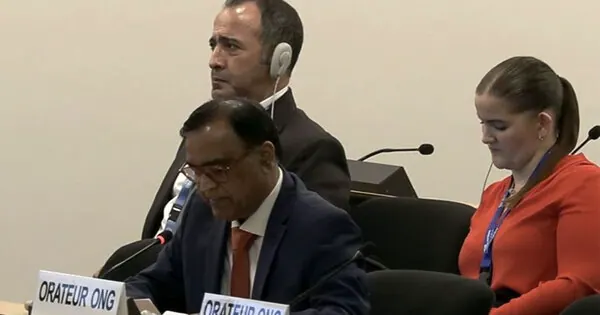
Dr Hidayat Bhutto, a Sindhi political activist, addressed the 63rd session of the United Nations Human Rights Council (UNHRC) in Geneva, raising concerns over the human rights situation in Sindh. He emphasized the need to respect the Sindhi people's right to self-determination, citing Common Article 1 of the International Covenant on Civil and Political Rights (ICCPR) and the International Covenant on Economic, Social and Cultural Rights (ICESCR). Bhutto highlighted the distinct homeland, language, culture, and collective identity of the Sindhi people.
Bhutto alleged that the people of Sindh are being systematically denied their right to self-determination, leading to a human rights crisis. He stated that Sindhis are increasingly excluded from decisions concerning their land, water resources, and future. Despite Sindh's significant contributions to sports, agriculture, industry, and energy resources, millions of people face poverty, unsafe drinking water, inadequate healthcare, and limited educational opportunities.
The activist raised concerns over several issues affecting Sindh, including the diversion of Indus waters, alleged land grabbing, and the destruction of the Indus Delta. He also mentioned alleged enforced disappearances and forced conversions of Sindhi Hindu girls, which he believes are undermining the dignity, identity, and fundamental freedoms of the people. Bhutto emphasized that self-determination is not a privilege granted by the state but a fundamental right guaranteed by international law.
Bhutto urged the Human Rights Council to call upon Pakistan to end what he described as repression and respect the Sindhi people's right to determine their political, economic, social, and cultural future. He emphasized the need for the international community to take note of the human rights situation in Sindh and to hold Pakistan accountable for its actions.
The World Sindhi Congress, which Bhutto represents, has been actively advocating for the rights of the Sindhi people. Hafeezan Wadhio, an executive committee member of the World Sindhi Congress, also participated in the UNHRC session, highlighting the territorial status and rights of Sindh. The organization's efforts aim to bring international attention to the human rights situation in Sindh.
The human rights situation in Sindh has been a longstanding concern, with various organizations and activists raising alarms about the region's plight. Bhutto's address at the UNHRC is part of a broader effort to bring international attention to the issue and to push for accountability and action from the Pakistani government.
The UNHRC session, where Bhutto raised his concerns, is part of the ongoing efforts of the international community to address human rights issues worldwide. The Council provides a platform for activists and organizations to bring attention to pressing human rights concerns, and Bhutto's address highlighted the need for continued engagement and action on the part of the international community.
Key points
- Dr Hidayat Bhutto raises concerns over human rights situation in Sindh at UNHRC
- Bhutto emphasizes the need to respect Sindhi people's right to self-determination
- The human rights situation in Sindh has been a longstanding concern, with various organizations and activists raising alarms about the region's plight