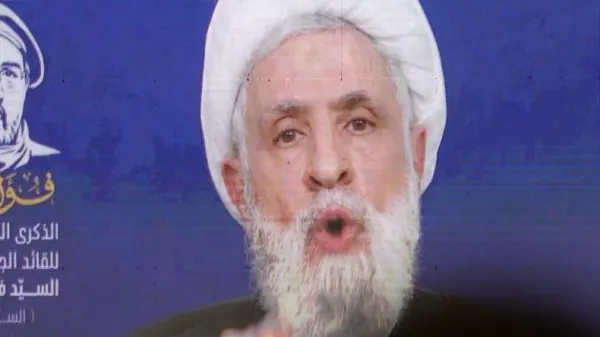
On September 27, Naïm Qassem, a top leader of Hezbollah, delivered a stern message to the Lebanese government, accusing it of backing the 'Israeli-American project' rather than confronting it. This statement was made during the commemoration of the second anniversary of Hassan Nasrallah's assassination. Qassem expressed his dissatisfaction with the government's stance and reaffirmed Hezbollah's refusal to disarm as long as Israeli forces remain in southern Lebanon.
Qassem specifically targeted the direct negotiations between Lebanon and Israel, facilitated by the United States, which began in June. He demanded that these talks be halted and replaced with indirect discussions, citing that the current process has not led to an end to Israeli operations or a withdrawal. According to Qassem, the pressures on Lebanon aim to achieve through politics what Israel could not accomplish militarily: the disarmament of Hezbollah.
The Hezbollah leader outlined conditions for dialogue with the Lebanese state, including the withdrawal of Israeli forces from the south and the return of displaced residents. This stance directly conflicts with that of Prime Minister Nawaf Salam, who, on September 25 at the UN, stated that decisions on war and peace should exclusively belong to Lebanese institutions and that weapons should be under state control.
The confrontation between Hezbollah and the Lebanese government occurs against the backdrop of a country severely impacted by the resumption of war in March. Official figures report over 4,300 deaths and more than a million displaced individuals since the conflict began. Hezbollah seeks to preserve its arsenal and status as a 'resistance' group, while the government aims to reestablish state control over weapons.
Hezbollah's position is influenced by its experiences in previous wars, which have left the group determined to maintain its military capabilities. In contrast, the Lebanese government faces challenges in asserting its authority and legitimacy in the face of ongoing conflict and political divisions. The internal discord complicates efforts to address the humanitarian crisis and rebuild the country.
Naïm Qassem also announced that Hezbollah would contribute to the housing and reconstruction efforts for displaced populations. This commitment reflects the group's ongoing role in supporting affected communities, despite its critical stance towards the government. The situation remains complex, with multiple stakeholders vying for influence and resources in a fragile political landscape.
The tensions between Hezbollah and the Lebanese government are likely to continue, with both sides holding firm to their positions. The outcome of these negotiations will have significant implications for Lebanon's future, including its relations with Israel, the status of Hezbollah's arsenal, and the country's overall stability. The international community is closely watching developments, as the situation in Lebanon has broader regional and global security implications.
Key points
- Hezbollah leader Naïm Qassem accuses Lebanese government of supporting 'Israeli-American project'
- Qassem demands halt to direct negotiations with Israel, citing lack of progress
- Hezbollah's stance on disarmament conditional on Israeli withdrawal from southern Lebanon