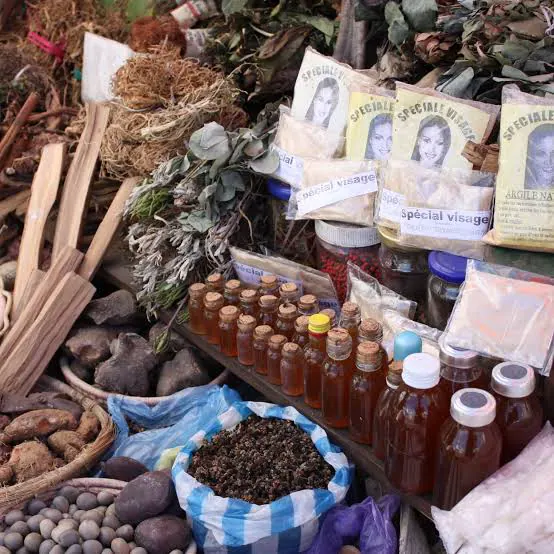
A recent incident in Ondo state has brought attention to the risks associated with consuming herbal concoctions in Nigeria. At least 48 people lost their lives in the Odigbo local government area after consuming a locally brewed herbal mixture, while over 170 individuals fell critically ill. The National Agency for Food and Drug Administration and Control (NAFDAC) and local health officials tracked the incident, which heavily impacted multiple communities in the area.
The state Ministry of Health confirmed the incident, expressing concerns over the number of casualties. According to the Ministry, over 40 fatalities were linked to the consumption of the locally brewed herbal concoction, with several others still hospitalized at the Federal Medical Centre, Owo, and the State Specialist Hospital, Ondo. The chairman of Odigbo LGA, Taiwo Adegoroye, imposed a one-month ban on the sale and consumption of all locally distilled alcoholic beverages and sachet herbal concoctions across the local government.
The Traditional Medicine Practitioners Board of Ondo state responded to the incident by announcing compulsory training for practitioners and publishing a list of approved agbo sellers with registration numbers. This move aims to regulate the sale and consumption of herbal concoctions in the state. The Ondo tragedy is not an isolated incident, as similar deaths have been reported in Kano and Sokoto in previous years.
Despite warnings from medical experts and regulators, many Nigerians continue to consume herbal concoctions, often citing trust in their curative properties. An Abuja-based sociologist noted that the trust in agbo runs deeper than the fear of death. Many observers argue that the deaths recorded in the past years were a waiting tragedy, given the age-long belief that herbal substances can heal or cure various ailments.
The consumption of herbal concoctions has become a daily ritual in Nigeria, with both old and young individuals patronizing vendors. Sellers often advertise their products as 'original African medicine' and claim that they can cure various ailments. However, consumers often ignore warnings and expert advice, and many are unaware of the unmeasured alcohol, high doses of heavy metals, and other hazardous substances used in the preparation of these concoctions.
Poverty, lack of awareness, and weak primary healthcare have been cited as contributing factors to the popularity of herbal concoctions in Nigeria. A sociologist and public commentator, Aduragba Aminulahi, attributed the problem to these factors, noting that one primary health centre in a particular state serves 20,000 people. As a result, many people patronize agbo sellers, which appear to be replacing pharmaceutical stores.
The Federal Ministry of Health and NAFDAC have disclosed that Nigeria has over 17 million people living with kidney disease, many undiagnosed, with herbal concoctions being a leading preventable cause. NAFDAC's Director-General, Prof. Mojisola Adeyeye, warned that no herbal concoction in Nigeria is approved as a cure for multiple ailments and urged Nigerians to stop consuming unregulated herbal mixtures.
Key points
- The Nigerian government and regulatory agencies have been urged to take action to regulate the sale and consumption of herbal concoctions.
- Herbal concoctions have been linked to kidney disease and other health problems in Nigeria.
- Poverty and lack of awareness have contributed to the popularity of herbal concoctions in Nigeria.