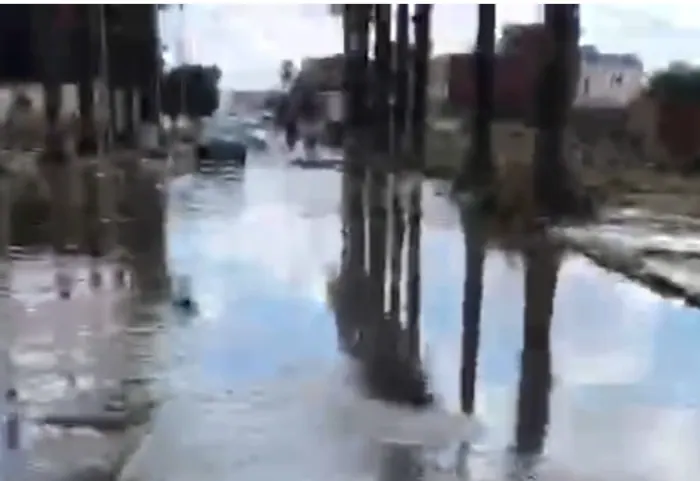
Heavy rainfall hit the city of Manzel Timmim in Tunisia's Nabul governorate on Wednesday, causing rapid accumulation of water in streets and turning several neighborhoods into temporary lakes. The downpour led to mixed flows of rainwater and sewage, resulting in foul odors and hazardous conditions. Local residents and authorities are grappling with the aftermath of the sudden and intense flooding.
Aymen Hammam, a civil society activist and head of the Manzel Timmim Environment Association, highlighted that the issue extends beyond mere water accumulation. He pointed out that the mixing of rainwater with sewage, caused by connections between stormwater drainage and sewage networks, exacerbates the problem. Furthermore, some residents have made unauthorized connections to the sewage system, increasing pressure on the network during rainfall events.
According to Hammam, the stormwater drainage network in Manzel Timmim is outdated, and several neighborhoods lack dedicated stormwater systems. Even in areas with existing networks, their capacity is insufficient to handle the city's needs. Additionally, some stormwater drainage networks are clogged or unable to accommodate the volume of water, particularly after recent sewage network renovations, which have worsened the flooding issue.
The situation was further complicated by brief but intense rainfall that continued for about 10 minutes, causing several areas to flood with a mix of rainwater and sewage. This led to the emission of strong, unpleasant odors. Hammam emphasized that the Environment Association has proposed solutions to mitigate flood risks, including studies and suggestions for clearing watercourses and constructing necessary water diversion infrastructure.
The association's efforts aim to address not only the immediate flooding issue but also the long-term challenges posed by inadequate infrastructure. By tackling the root causes of the problem, the association hopes to prevent similar incidents in the future. The flooding in Manzel Timmim highlights the need for investment in infrastructure and proactive measures to manage extreme weather events.
The impact of the flooding on residents and local businesses is significant, with many facing disruptions and health risks. Authorities and emergency services are working to alleviate the situation and restore normal conditions. The incident underscores the importance of effective urban planning, infrastructure development, and emergency preparedness in Tunisia.
As the region continues to deal with the aftermath of the flooding, there is a growing recognition of the need for collaborative efforts to address the challenges posed by climate change and infrastructure deficiencies. By working together, stakeholders can develop and implement effective solutions to mitigate the effects of extreme weather events and ensure the well-being of communities.
Key points
- The flooding in Manzel Timmim was caused by a combination of heavy rainfall, outdated infrastructure, and unauthorized connections to the sewage system.