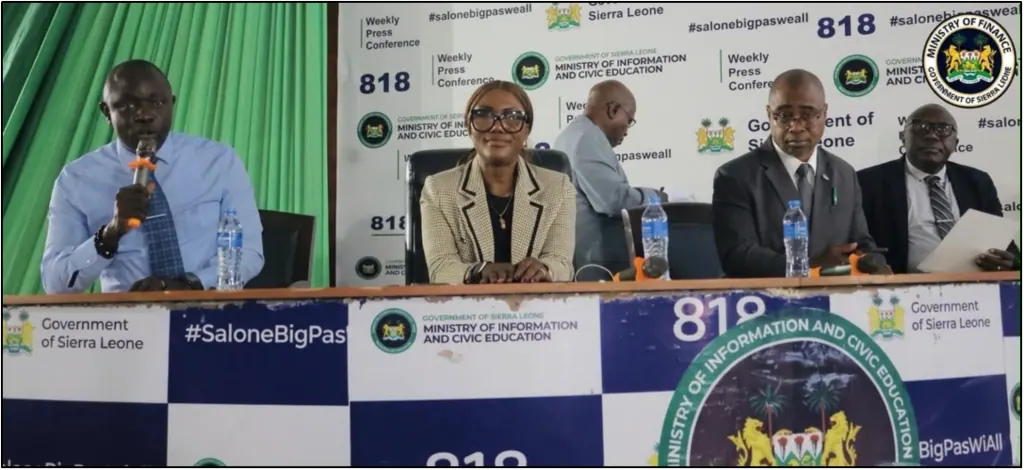
The Ministry of Finance in Sierra Leone recently held its FY2027 Bilateral Budget Discussions, featuring key presentations from the Ministries of Health and Gender and Children’s Affairs. Deputy Minister of Finance I, Kadiatu Allie, emphasised the importance of aligning resources with national priorities to achieve tangible outcomes. The discussions aimed to address the country's budget allocations for the upcoming fiscal year, with a focus on the health and gender sectors. The Ministry of Health and other stakeholders are pushing for increased funding to support various health initiatives and programmes.
The Ministry of Health has requested NLe341.27 million for recurrent funding in FY2027, which significantly exceeds the budget ceiling of NLe153.30 million by NLe187.96 million. Additionally, they proposed NLe211 million for new capital projects aimed at enhancing immunisation, family planning, and various health programmes. These projects also include building regional hospitals, supporting the Sierra Leone Social Health Insurance (SLeSHI), and expanding dialysis services. The total capital requirement for the health sector, including ongoing projects from FY2026, amounts to NLe263.57 million.
Deputy Health Minister Prof. Charles Senessie highlighted the progress made in the health sector, citing improvements in maternal and infant health, life expectancy, and the recruitment of over 3,000 health workers through a digital platform. He stressed the need for increased funding to meet the Abuja Declaration goal of allocating 15% of national budgets to health. Senior Permanent Secretary Andrew Sorie described health spending as both essential and a forward-thinking investment, reiterating the call for ongoing funding to enhance service delivery.
The Ministry of Health also noted significant reforms in health financing, including the development of a Health Financing Policy and plans for a Health Financing Agency to manage the Free Health Care programme. These reforms aim to improve the sustainability and efficiency of health financing in Sierra Leone. The Ministry is working to create a more robust and sustainable health financing system.
Principal Deputy Financial Secretary Samuel E.B. Momoh urged the Ministry to identify strategic goals and opportunities for private investment in the health sector. He emphasised the need to complement public resources with private capital to address the country's health challenges. The discussions also examined the impact of declining donor financing, with health sector resources dropping from about US$313 million in 2025 to US$267 million in 2026.
The Ministry of Gender and Children’s Affairs presented its FY2027 funding request of NLe7.96 million to support priority programmes. The session, chaired by Deputy Minister of Finance II Isata Marah and Deputy Director of Budget Dr Illara Mahdi, also included input from civil society representatives. They advocated for additional resources for gender equality and child protection services, highlighting the importance of these sectors in the country's development.
A key theme throughout the discussions was the need for strategic planning, enhanced domestic financing, and greater collaboration with the private sector and development partners. This collaboration aims to secure recent gains in health and social sectors and ensure sustainable development. The Ministry of Finance will consider the proposals and recommendations from the discussions as it finalises the FY2027 budget.
Key points
- The Ministry of Health has requested NLe341.27 million for recurrent funding in FY2027.
- Deputy Health Minister Prof. Charles Senessie highlighted improvements in maternal and infant health.
- The Ministry of Gender and Children’s Affairs presented a funding request of NLe7.96 million for FY2027.