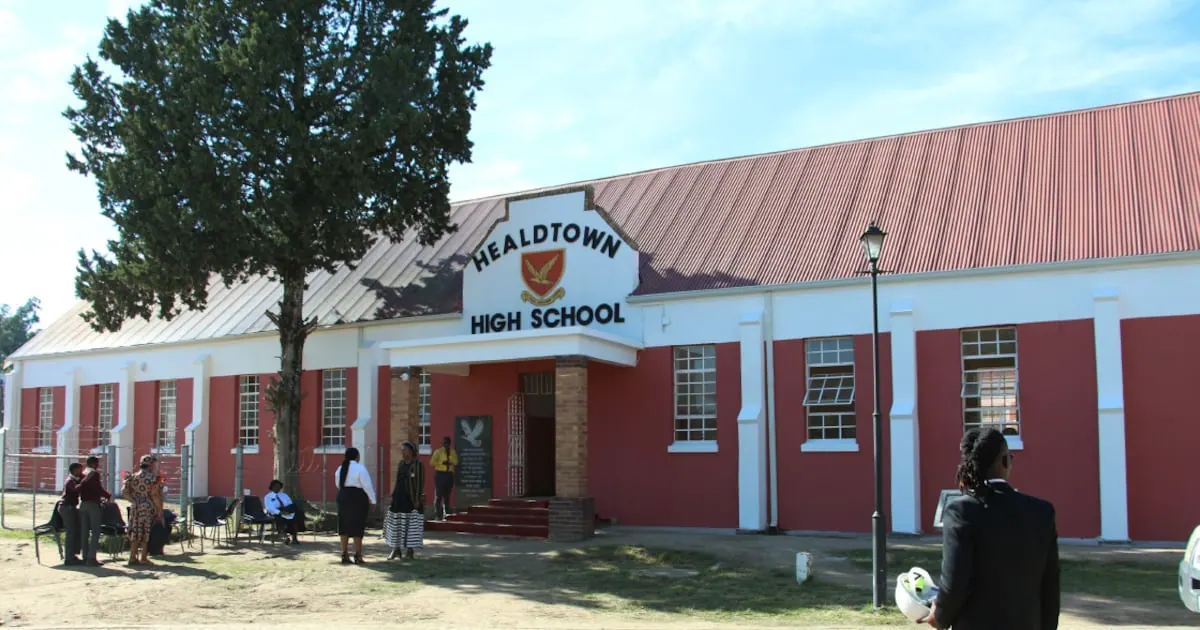
The Healdtown Institution, established by Wesleyan Methodists in the 1850s, was named after James Heald, a prominent benefactor of the Methodist Church. The institution was located in an area with a strong history of religious activism, where Mbonjana, one of the first Xhosa converts, worked as an evangelist. This legacy of activism inspired future generations, including Walter Rubusana, whose grandfather was Mbonjana. Rubusana became a priest, political leader, and scholar. Healdtown's history and the contributions of its alumni can inspire current students.
Healdtown attracted many brilliant students from the late 19th into the 20th century, including John Tengo Jabavu, who later became a teacher and editor of the newspaper Isigidimi Sama-Xosa. Jabavu also founded Imvo Zabantsundu, the first black-owned newspaper, in 1884. Another notable student was Isaiah Budlwana M'belle, a politician, sportsman, and high court interpreter who envisioned a higher education institution for Africans. These individuals, along with Sol Plaatje, formed a generation of African nationalists that shaped South Africa's political scene.
The introduction of Bantu Education in 1953 had a devastating impact on Healdtown and other mission institutions, forcing many to close. However, before its decline, Healdtown produced a sizeable number of gifted students, including Nelson Mandela and Robert Sobukwe, who fought for a liberated South Africa. The legacy of these individuals serves as a reminder of the importance of education in shaping the country's future.
Isaiah Budlwana M'belle played a significant role in advocating for higher education for Africans. In 1901, he suggested establishing a university in honor of Queen Victoria at a meeting of the South African Native Congress. Although the initiative failed, M'belle continued to pursue his dream, and his efforts eventually led to the establishment of Fort Hare Native College in 1916, now known as the University of Fort Hare.
The revival of Healdtown offers hope for South Africa's education system, which has struggled to overcome the legacy of Bantu Education. As new graduates step outside the gates, they can draw inspiration from M'belle and his contemporaries, who understood their duties to society. The youth of today must play a meaningful role in addressing the country's many problems.
To preserve the history of Healdtown and its alumni, it is essential to record and include their stories in South Africa's school curriculum. Renaming buildings, streets, and cities after notable figures like M'belle and Jabavu can help ensure their legacies are not forgotten. Considering Healdtown's historical significance, it could be declared a national heritage site, similar to Fort Hare, with a firm commitment from all stakeholders concerned.
Key points
- The revival of Healdtown serves as a hopeful sign for South Africa's education system.
- Healdtown's history and alumni contributions can inspire current students.
- Preserving Healdtown's history and legacy is crucial for South Africa's education and heritage.