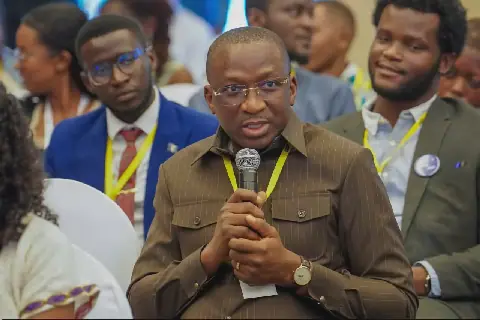
The Pan-African Parliament (PAP) has been experiencing a period of calm after a tumultuous election process in 2021. According to François Ango Ndoutoume, 4th vice-president of the PAP, the institution has been working to restore its image. The PAP was established in 2004 to represent the people of Africa. It has a complex structure, comprising a parliament, 11 commissions, and five caucuses, which are organized on a rotational basis among the five regions of the African Union.
The PAP has had a history of smooth leadership transitions, with leaders from different regions taking the helm. For instance, Gertrude Mongella from Tanzania was one of the first leaders of the PAP, followed by Idriss NDélé Moussa from Chad and Bethel Nnaemeka Amadi from Nigeria. However, the 2021 election process was marred by controversy, with some members pushing for a rotational presidency and others arguing that the rules allow for any region to present a candidate.
The conflict between the PAP's internal rules and the heads of state's push for rotation led to a heated debate. The PAP's rules state that any region can present a candidate for the presidency, but the heads of state argued that rotation is necessary to ensure representation from all regions. The debate ultimately led to a proposal for elections, which was accepted by the PAP.
The PAP is currently working to strengthen its position within the African Union. According to Ndoutoume, the PAP is the legislative organ of the African Union and has the power to make laws on various issues. However, its effectiveness is limited by the need for ratification of the Malabo Protocol by at least 27 countries. Currently, 20 countries have signed the protocol, but only 14 have ratified it.
The PAP has accepted the proposal for rotation, with the current president, Fortune Charumbira from Zimbabwe, representing the Southern region. The PAP's challenge now is to continue lobbying for the ratification of the Malabo Protocol, which would give it the full powers it needs to function effectively. Ndoutoume emphasized that the PAP wants to work with all the powers it needs to represent the people of Africa.
Despite its ambitions, the PAP's impact on the lives of Africans has been limited so far. Ndoutoume acknowledged that the PAP's work has not yet had a significant impact on the lives of Africans, but he expressed hope that this would change in the future. The PAP is currently working on producing model laws that can be adopted by national parliaments.
The PAP is working to strengthen its relationships with other organs of the African Union. Ndoutoume noted that the PAP is working closely with the executive and judicial branches of the African Union. He emphasized that the PAP wants to have a real impact on the lives of Africans and is committed to working with all stakeholders to achieve this goal.
Key points
- The Pan-African Parliament has accepted a proposal for rotation of its presidency among regional blocs.
Reporting sources
- « Les chefs d’Etat ont estimé que la rotation doit être de mise au PAP » · Cameroon Tribune