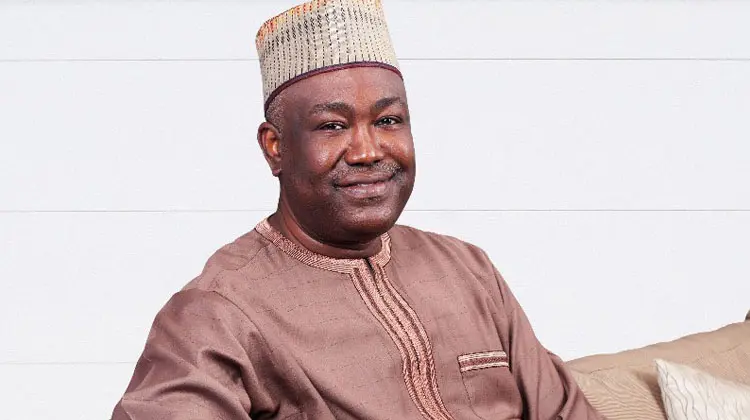
As Nigeria marks its 66th Independence anniversary, Dr. Gbenga Hashim, the Presidential candidate of the Accord Party, has challenged Nigerians to reject the notion that their country must remain a third-class nation. In an Independence Day message released in Abuja, Hashim emphasized that Nigeria's prolonged underdevelopment is not due to a lack of resources, but rather the failure to utilize its human, natural, and institutional capacity for transformation.
Hashim identified several factors holding Nigeria back, including poverty, human trafficking, insecurity, institutional capture, and the breakdown of security infrastructure. Despite its enormous potential, the country's young population is often seen as a development challenge rather than an economic advantage. Hashim argued that with the right skills, education, employment, and productive opportunities, Nigeria's youth can become a driving force for economic growth.
According to Hashim, Nigeria's poor governance has severe consequences that extend beyond economic statistics, affecting the security, dignity, and future of ordinary Nigerians. He noted that human trafficking, unemployment, and insecurity thrive in areas where citizens lack economic opportunities and institutions are weak. Hashim emphasized that defeating these challenges requires addressing the root causes of vulnerability.
The Accord Party candidate urged Nigerians to take greater responsibility for determining the country's direction, particularly with the 2027 presidential election approaching. He encouraged voters to demand clear visions, measurable targets, and accountability from political candidates, rather than focusing on personalities, ethnicity, or political slogans. Hashim emphasized that Nigeria belongs to its citizens, and they must stop behaving as spectators in their own country's affairs.
Hashim outlined his vision for an Accord administration, which aims to transform Nigeria into a $4 trillion economy within eight years. This would be driven by increased production, manufacturing, agriculture, energy, technology, and services. He proposed a shift from an economy focused on distributing resource revenues to one that creates wealth through production and value addition.
Hashim reiterated his proposal to raise Nigeria's crude production to at least four million barrels per day within 24 months of an Accord administration. This would be achieved through the recovery of shut-in oil wells, improved security, investment in production infrastructure, and better crude evacuation. He stressed that additional crude production must become a foundation for domestic industrialization, with Nigerian crude powering Nigerian industries.
Hashim also reaffirmed his proposal for a sustainable petrol price of ₦605 per liter, with a long-term objective of reducing the price to ₦200-₦300 per liter. He proposed substantial expansion of crude production, refining, petrochemicals, gas processing, electricity generation, and other energy infrastructure. Hashim argued that affordable and reliable energy would be central to reviving Nigeria's manufacturing sector and reducing production costs across the economy.
Key points
- Dr. Gbenga Hashim urges Nigerians to reject third-class status and take ownership of their future.
- Hashim proposes transforming Nigeria into a $4 trillion economy within eight years.
- He aims to raise Nigeria's crude production to four million barrels per day within 24 months.