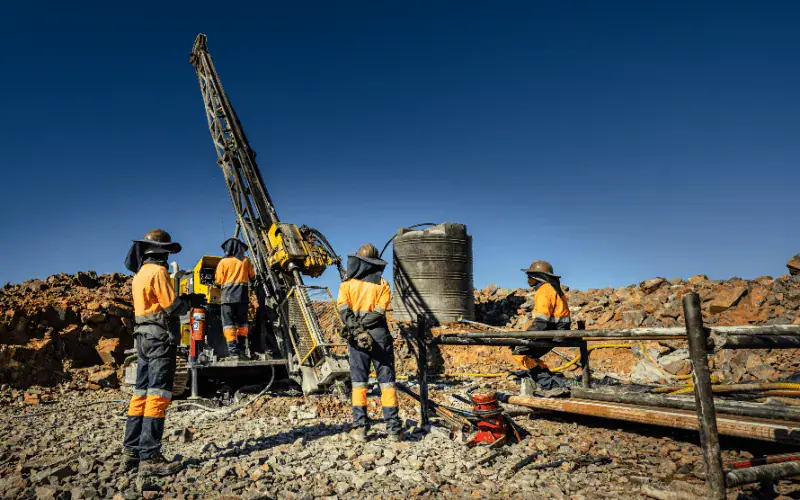
Koryx Copper has completed a pre-feasibility study for its proposed Haib copper project in southern Namibia, valuing the project at $2.5 billion in after-tax net present value. The project is expected to produce an average of 130,000 tonnes of payable copper annually during its first 10 years of operation. Located in the //Karas region near the South African border, the project will produce copper alongside gold and molybdenum.
The pre-feasibility study estimates a 24-year mine life, with upfront capital expenditure of $2.06 billion and an after-tax internal rate of return of 25%. The study assumes a copper price of $5 per pound. Koryx is targeting completion of a definitive feasibility study in 2027 and early construction works towards the end of that year. The project will use conventional open-pit mining and a processing plant designed to handle 48 million tonnes of ore annually.
The Haib project is expected to produce an average of 15,000 ounces of payable gold and 1.22 million pounds of payable molybdenum annually during its first decade. Gross copper-equivalent production is projected at 145,000 tonnes annually during the first 10 years. The estimated after-tax net present value is $2.5 billion, while the pre-tax value is $4.2 billion. The after-tax internal rate of return is 24.9%, compared with 30.6% before tax.
Koryx estimates cash operating costs of $1.72 per pound of payable copper during the first 10 years, increasing to $2.19 per pound over the life of the mine. All-in sustaining costs are projected at $2.07 per pound initially and $2.52 per pound over the full operation. The project's initial capital requirement includes $133 million in contingency and $152 million in capitalised pre-stripping costs. Sustaining capital expenditure is estimated at $639 million over the mine's life.
The proposed operation will require an estimated 1,650 gigawatt-hours of electricity annually, with peak demand of about 261 megavolt-amperes. The power supply plan combines a 220-kilovolt connection to NamPower's Harib substation with an approximately 417-megawatt-peak solar photovoltaic plant and 361 megawatt-hours of battery storage. The renewable energy system is expected to supply about 45% of the mine's electricity requirements over its life.
Koryx has entered into a memorandum of agreement with NamPower and is advancing the design of the grid connection infrastructure. The company has also applied for approval to source up to 49.9% of its electricity requirements through the contestable market. Water requirements are estimated at 20 million cubic metres annually, with the Orange River identified as the preferred source. The proposed supply system will include an off-channel storage dam to manage seasonal flows.
The project includes plans for a township near Noordoewer covering about 36.6 hectares, with 370 erven and capacity for approximately 2,000 residents. Koryx proposes constructing 543 housing units for its workforce. The company expects to secure major permits, including the mining licence and environmental clearance certificate, by around mid-2027. Koryx plans to undertake project financing and strategic options reviews alongside the study, with a construction decision expected to follow completion of the feasibility work.
Key points
- The Haib copper project is valued at $2.5 billion with a 24-year mine life and an estimated annual production of 130,000 tonnes of payable copper.
- The project will require an estimated 1,650 gigawatt-hours of electricity annually, with a renewable energy system expected to supply about 45% of the mine's electricity requirements.
- Koryx expects to secure major permits by mid-2027 and commence construction in the first quarter of 2028, subject to financing, permitting and approvals.
Reporting sources
- Haib copper project valued at US$2.5 billion in pre-feasibility study · Windhoek Observer