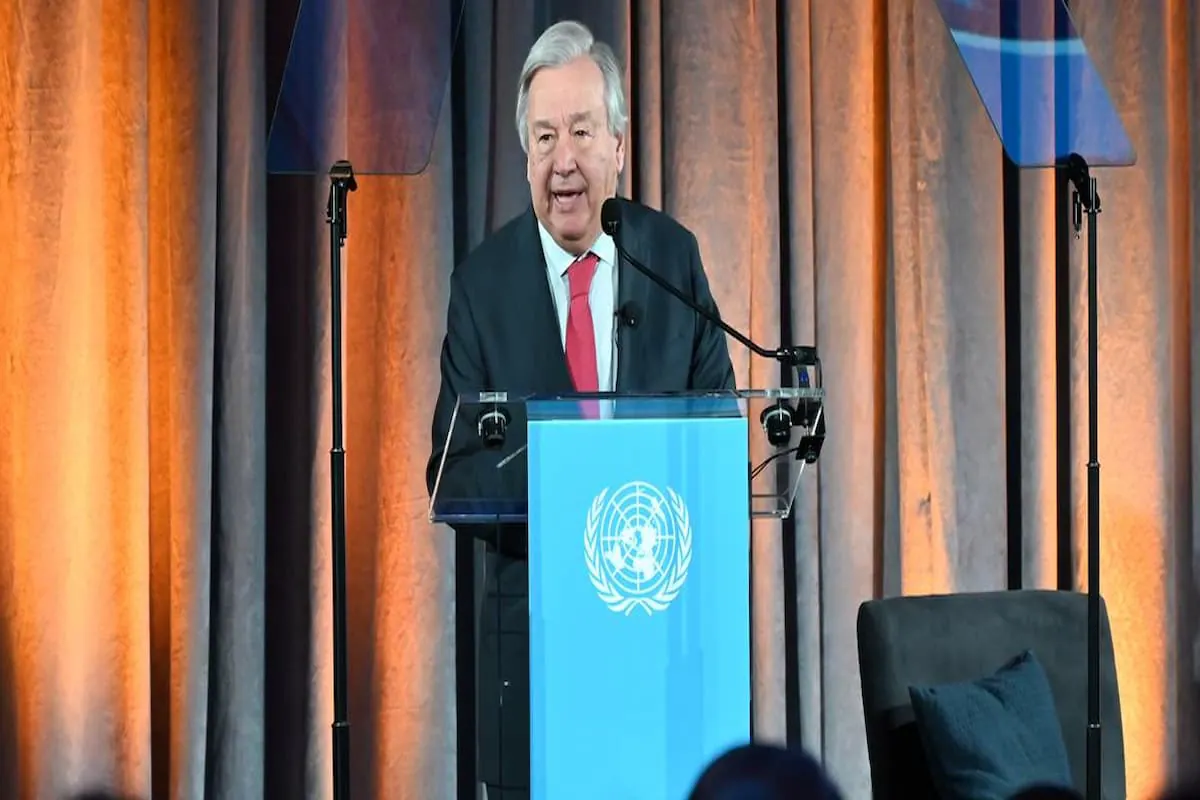
United Nations Secretary-General António Guterres presided over his last high-level climate summit in New York on September 23, 2026, with leaders from major economies, developed and developing countries, and significant energy producers and consumers in attendance. The summit aimed to explore ways to accelerate the transition to renewable energy and strengthen international cooperation. Guterres emphasized the need for governments to expedite the transition to a low-carbon economy, enhance financing, and better protect vulnerable countries from intensifying extreme climate events.
The summit took place just months before Guterres' term ends on December 31, 2026, and ten years after the Paris Agreement came into effect. The current climate landscape is marked by frequent extreme weather events and persistent disagreements on the pace of reducing fossil fuel usage. The UN estimates that temporarily exceeding the 1.5°C threshold is now unavoidable, underscoring the need for accelerated emission reduction and adaptation measures.
In a speech at the 81st General Assembly, Guterres criticized the oil industry for profiting from climate change consequences and called for greater responsibility from major emitters. He advocated for accelerating the transition to a less fossil fuel-dependent economy. The UN stated that discussions would focus on energy transition, energy security, climate justice, and protecting populations exposed to climate change impacts.
Financing climate action is a key summit issue, with developing countries demanding more resources to reduce emissions and adapt to climate change. Guterres noted that the oil industry has made hundreds of billions of dollars in profits since 2022, while funding for developing countries to adapt to climate change remains limited. The issue of loss and damage will also be addressed, with recent disasters like Nepal's deadly floods highlighting the vulnerability of countries with limited financial resources.
The summit occurs weeks before COP31, scheduled for November 9-20 in Antalya, Turkey, co-organized by Turkey and Australia. Turkey aims to increase the share of electricity in its total energy consumption to 35% by 2035, while Australia emphasizes renewable energy development and securing hydrocarbon supplies. This conference will be a crucial test of international cooperation on climate action.
As Guterres' term concludes, his last climate summit seeks to keep climate change at the forefront of the international agenda, competing with concerns like wars, energy tensions, and economic priorities. The summit aims to build momentum for COP31 and future climate negotiations. Guterres has consistently prioritized climate action during his nearly decade-long tenure as UN Secretary-General.
The climate summit reflects Guterres' efforts to address the interconnected challenges facing the international community, including conflicts, inequalities, and artificial intelligence. His call for accelerated climate action and increased support for vulnerable countries will likely resonate with countries preparing for COP31 and future climate negotiations.
Key points
- António Guterres convened his final climate summit, urging governments to accelerate the transition to renewable energy and enhance financing for climate action.
- The summit highlighted the need for increased support for vulnerable countries and accelerated emission reduction measures to address intensifying extreme climate events.
- The outcome of the summit will influence preparations for COP31, where countries will negotiate further on climate action and cooperation.