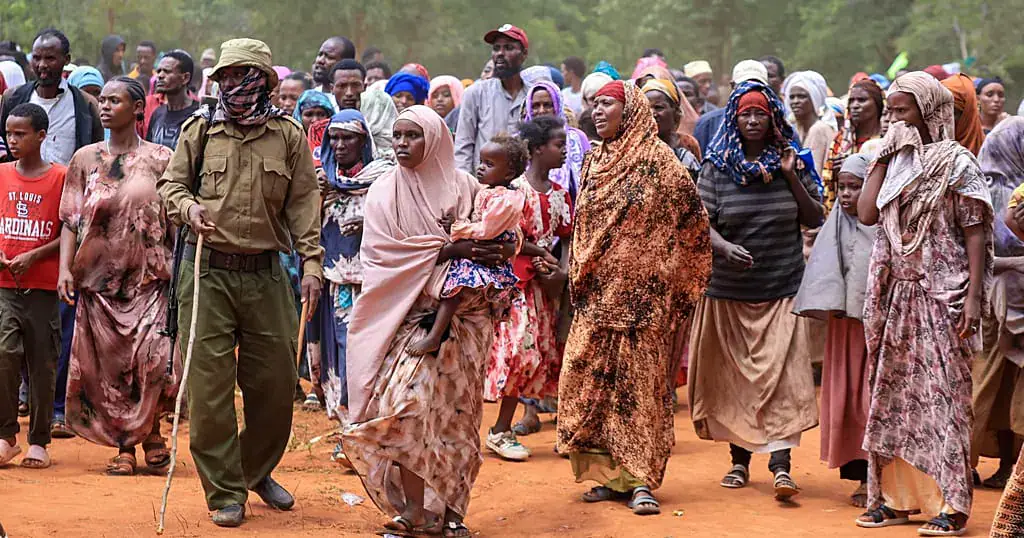
Gunfire was audible from the Ethiopian side of the border in Kenya's town of Moyale on Friday morning, as people continued to flee violence into Kenya. An Associated Press journalist recorded the gunfire while filming from the Kenyan side of the border on October 30. The sound of gunfire has become a daily occurrence, heightening concerns for the safety of those fleeing and those already in refugee camps.
The United Nations reported that 36,000 people had crossed into Kenya, as fighting near the border town of Moyale continues to displace civilians, mostly women and children. The influx of refugees has put a strain on local resources, with communities already struggling with food and water shortages. Local leaders in Kenya's Marsabit County have appealed for support, warning that the arrivals could overwhelm communities.
The U.N. refugee agency, the International Organization for Migration, and the Kenya Red Cross are working to provide medical care, food, and shelter to the refugees. Ethiopian doctor Seifu Negash, who fled into Kenya, is volunteering with the Kenya Red Cross to treat fellow refugees. Negash highlighted the challenges faced by those who have fled and those still in Ethiopia.
The fighting on the Ethiopian side of the border stems from a territorial dispute between the Oromia and Somali regional administrations. The dispute was aggravated by the killing of a 13-year-old girl in an area administered by the Somali regional administration. The situation remains volatile, with no clear end in sight to the violence.
Benedict Munywoki, deputy county commissioner for Moyale Sub-County, described the situation, saying more and more people are fleeing from their country and coming to their town. The local authorities are working to provide assistance, but the numbers are overwhelming. The situation is expected to worsen if the violence continues.
The Kenya Red Cross is playing a crucial role in providing assistance to the refugees. Doctor Seifu Negash's work with the Kenya Red Cross is a testament to the efforts being made to help those affected by the violence. The organization is working tirelessly to provide medical care and other essential services.
The humanitarian crisis is expected to worsen if the situation in Ethiopia does not improve. The international community is being urged to provide support to those affected by the violence. The situation remains a concern for human rights activists and organizations working in the region.
Key points
- 36,000 people have crossed into Kenya fleeing violence in Ethiopia.
- The fighting in Ethiopia is a result of a territorial dispute between the Oromia and Somali regional administrations.
- The U.N. refugee agency and other organizations are working to provide medical care, food, and shelter to the refugees.