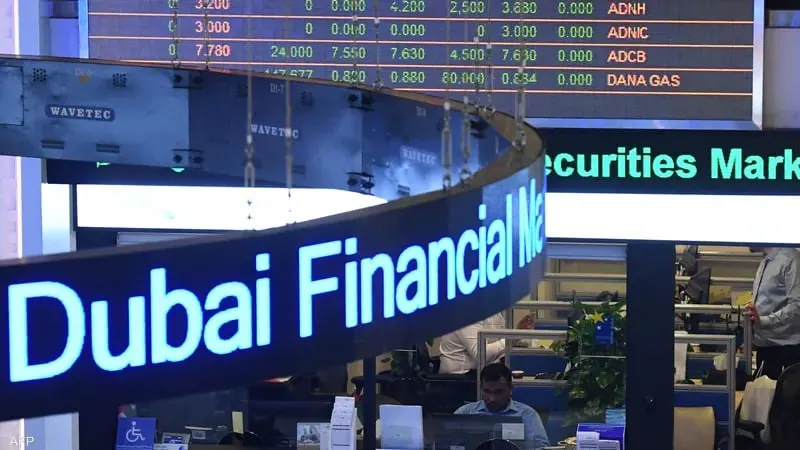
The Abu Dhabi index led the decline in Gulf stock markets on Monday, falling 1.6% due to a 4.6% drop in the shares of Global Holding Company. This decline offset the gains made by the company earlier in the session. Global Holding Company announced a corporate restructuring, with Found Trust becoming the ultimate parent company of Royal Group, aiming to oversee and manage long-term operations. Royal Group is headed by Sheikh Tahnoon bin Zayed Al Nahyan, UAE National Security Adviser.
In contrast, Dubai's index rose 0.1%, supported by a 1.3% increase in the shares of Emirates NBD. The Saudi Arabian index declined 0.6%, driven by a 3.4% drop in the shares of ACWA Power and a 0.9% decline in Saudi Aramco's shares. Qatar's index closed 0.1% higher. Most Gulf stock markets ended the day lower as rising regional tensions outweighed hopes for diplomatic progress in upcoming UN meetings.
The escalation of conflict in the region has kept energy markets on edge, with new threats exchanged between Washington and Tehran following Houthi attacks on Riyadh and an Aramco facility in Yanbu. However, some optimism emerged after China's call on Iran to curb Houthi attacks, following a direct appeal from Riyadh. This development comes ahead of UN meetings aimed at containing the conflict and protecting critical energy infrastructure.
The diplomatic efforts are gaining momentum, with Qatar's Prime Minister, Sheikh Mohammed bin Abdulrahman Al Thani, announcing the establishment of a new department within the Qatar Investment Authority (QIA) focused on developing local investments. This marks a shift in the sovereign wealth fund's strategy, which has traditionally focused on investing abroad. The move comes as Qatar faces financial pressures due to the US-Iran conflict and the closure of the Strait of Hormuz.
Qatar's economy remains heavily reliant on liquefied natural gas (LNG) exports, despite efforts to diversify. The country's LNG exports have been disrupted due to the conflict and the closure of the Strait of Hormuz. The new department within the QIA aims to boost local investments and reduce Qatar's dependence on LNG exports. This development is seen as a strategic move to strengthen Qatar's economy amid regional uncertainty.
The regional tensions have had a significant impact on Gulf stock markets, with investors remaining cautious amid the uncertainty. However, some analysts believe that the diplomatic efforts, including China's involvement, may help to ease tensions and stabilize the markets. The upcoming UN meetings are expected to play a crucial role in determining the course of the conflict and its impact on the region's economy.
Key points
- Gulf stock markets declined on Monday, led by a 1.6% drop in Abu Dhabi's index.
- Qatar's Prime Minister announced the establishment of a new department within the Qatar Investment Authority focused on developing local investments.
- The regional tensions have had a significant impact on Gulf stock markets, with investors remaining cautious amid the uncertainty.