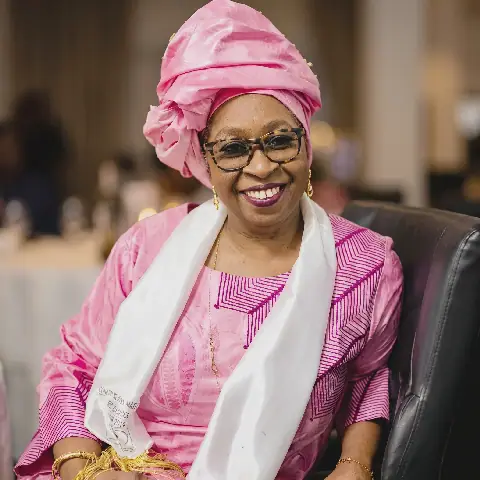
Guinean textile entrepreneur Mariama Camara is on a mission to revolutionize the African textile industry by building the institutions that support it. With over two decades of experience working with artisans across Africa, Camara has taken their textiles into global fashion, collaborating with major brands such as Tory Burch, Ulla Johnson, LemLem, and EDUN. Her work has not only brought "Made in Africa" textiles into international markets but also kept the women and artisans who make them at the center of the story. Camara's journey began at a young age, watching her mother and aunt create textiles, a tradition passed down through generations in her family.
Camara's great-great-grandmother came from the Ghana Empire, while her maternal great-grandmother was a renowned textile designer in Kindia, Guinea, who helped establish a government textile training center and taught artisans across West Africa. For Camara, textile is not just fashion, but identity. In 2008, she co-founded the There Is No Limit Foundation with her younger sister, Aissata, to empower women and girls, advocate for artisans, and advance sustainability. The foundation has sponsored 300 women and empowered 37,000 people. Through her work, Camara has come to realize the importance of valuing, protecting, and building Africa's textile heritage.
Camara's collaboration with Tory Burch in 2012 marked a turning point in her career, showcasing textiles made by women artisans in Guinea to global markets. The collaboration took Guinean artisans' work to major stores worldwide, including Bergdorf Goodman, Saks Fifth Avenue, and Harrods. The success of the collaboration made Camara realize the talent that existed across Africa and the need to create more opportunities for artisans. She established Mariama Fashion Production, with a clear mission to make Made-in-Africa textiles respected in global luxury. Camara has worked with thousands of artisans across Africa, from Guinea to Côte d'Ivoire.
Despite the progress made, there is still a gap between the value of handmade African textiles and comparable international brands. Camara believes that the biggest opportunity to close this gap lies in building the confidence of African textile makers, improving marketing and sales strategies, and positioning African textiles in the global market. She founded the Institute of African Textile to document, preserve, teach, and strengthen the continent's textile ecosystem. The institute has several pillars, including the African Textile Academy, the IE3 Museum of African Textiles, and IAT Magazine.
Through the Institute of African Textile, Camara aims to create a system that values and protects African textile knowledge. She recently participated in the 12th International Shibori Symposium in Basel, Switzerland, where she introduced the institute and its ecosystem. Camara shared a panel with Indian and Thai artisans, among others, and discussed the importance of packaging and presenting African textiles in a way that showcases their value. She believes that by strengthening the textile ecosystem, African makers can command higher prices for their work and create more jobs.
Camara's work has not gone unnoticed, with her textiles being featured in major magazines, including Vogue and Elle. Michelle Obama wore a dress made by Guinean artisans on live television, and Reese Witherspoon and Naomi Watts have also worn Camara's designs. Her work has been recognized in Tory Burch's book, Tory Burch in Color, which acknowledges the artisans behind the textiles. Camara's achievements have made her one of the first African textile makers to present handmade African textiles at New York Mercedes-Benz Fashion Week.
As Camara continues to build the Institute of African Textile, she hopes to create over one million jobs for African artisans. She believes that by documenting African textiles and tracing their sources and ownership, she can help close the gap between the value of handmade African textiles and international brands. With her dedication to empowering women and girls, advocating for artisans, and advancing sustainability, Camara is poised to make a lasting impact on the African textile industry.
Key points
- Mariama Camara is building global institutions to support the African textile industry, including the Institute of African Textile, the African Textile Academy, and the IE3 Museum of African Textiles.