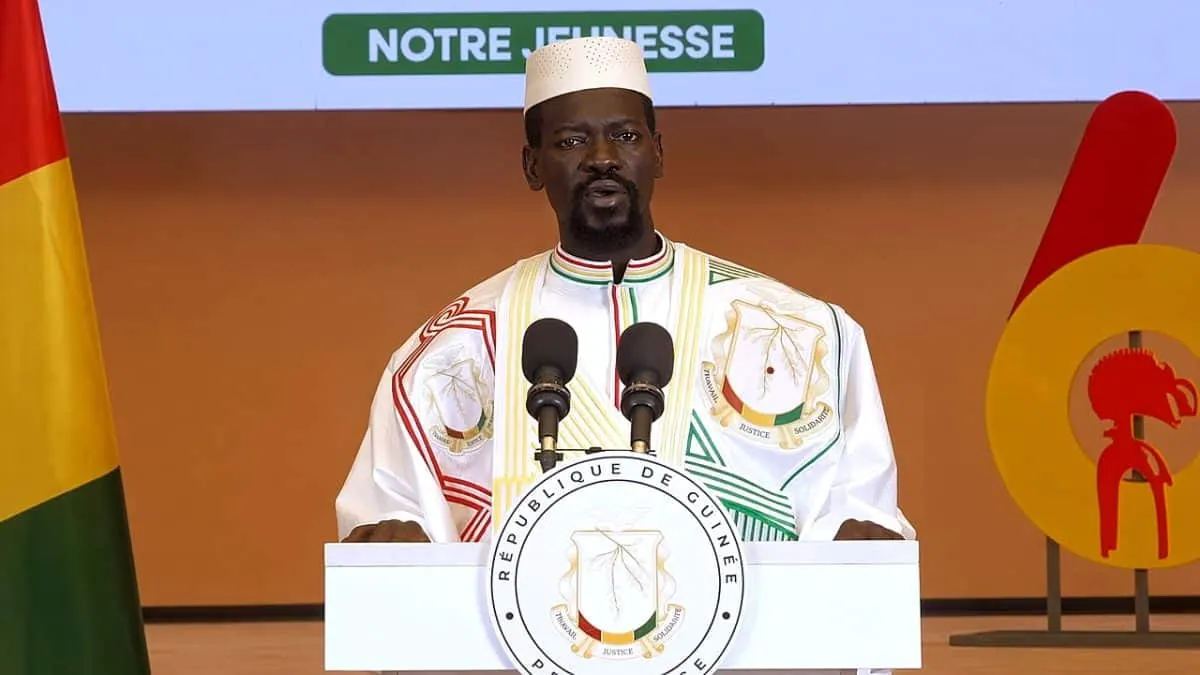
On October 2, 2026, Guinean President Mamadi Doumbouya marked the 68th anniversary of Guinea's independence by granting clemency to 217 inmates. This act of mercy was formalized through a decree broadcast on national television. The move is seen as a significant gesture, especially given the current political and social climate in the country. The clemency applies to all beneficiaries, who are incarcerated in various prisons across the nation.
The president's decision results in the complete remission of prison sentences for all 217 inmates. This tradition of granting pardons during major national celebrations is not new; however, this year's announcement holds substantial political weight. Notably, among the beneficiaries is Mamadou Aliou Bah, the president of the Mouvement démocratique libéral (MoDeL) party. Bah had been imprisoned since December 2024, serving a prison sentence for "offense and defamation" against the head of state.
The case of Mamadou Aliou Bah drew significant attention as the prosecution had recently sought to increase his sentence on appeal. His unexpected release is viewed as a strong political signal by observers and his associates. They see this decision as a welcome relief and a potential indicator of easing tensions between the military government and the political class. This development has sparked hope for a more harmonious relationship between the ruling authorities and opposition parties.
Beyond the high-profile case of the opposition leader, the collective amnesty aims to alleviate overcrowding in prisons, which are chronically overpopulated. The authorities also hope to foster a spirit of national unity through this act. The timing of the clemency, coinciding with the anniversary of Guinea's independence proclamation in 1958, underscores its symbolic importance. By linking this act to the foundational history of the Republic of Guinea, President Doumbouya seeks to strengthen social cohesion.
The choice of October 2 as the date for the clemency announcement reinforces its significance. This date commemorates the proclamation of independence led by Ahmed Sékou Touré in 1958. By associating the clemency with this pivotal moment in Guinean history, President Doumbouya aims to promote national reconciliation. The gesture is seen as an attempt to bridge divides and promote unity as the country approaches critical junctures in its transition.
The impact of this clemency on future political dialogue remains to be seen. Observers are keenly watching how this move will influence interactions between the government and the nation's vibrant forces. The release of Mamadou Aliou Bah and the other inmates may pave the way for more inclusive discussions about the country's future. As the situation unfolds, stakeholders are cautiously optimistic about the prospects for enhanced cooperation and stability.
As Guinea navigates its transition, the clemency granted by President Doumbouya has set a positive tone. The decision reflects an effort to address pressing issues, such as prison overcrowding, while also making a symbolic gesture towards national unity. With this act, the president has taken a step towards healing and rebuilding, which may have far-reaching implications for the country's political landscape.
Key points
- President Mamadi Doumbouya grants clemency to 217 inmates, including opposition leader Mamadou Aliou Bah, on Guinea's 68th independence anniversary.