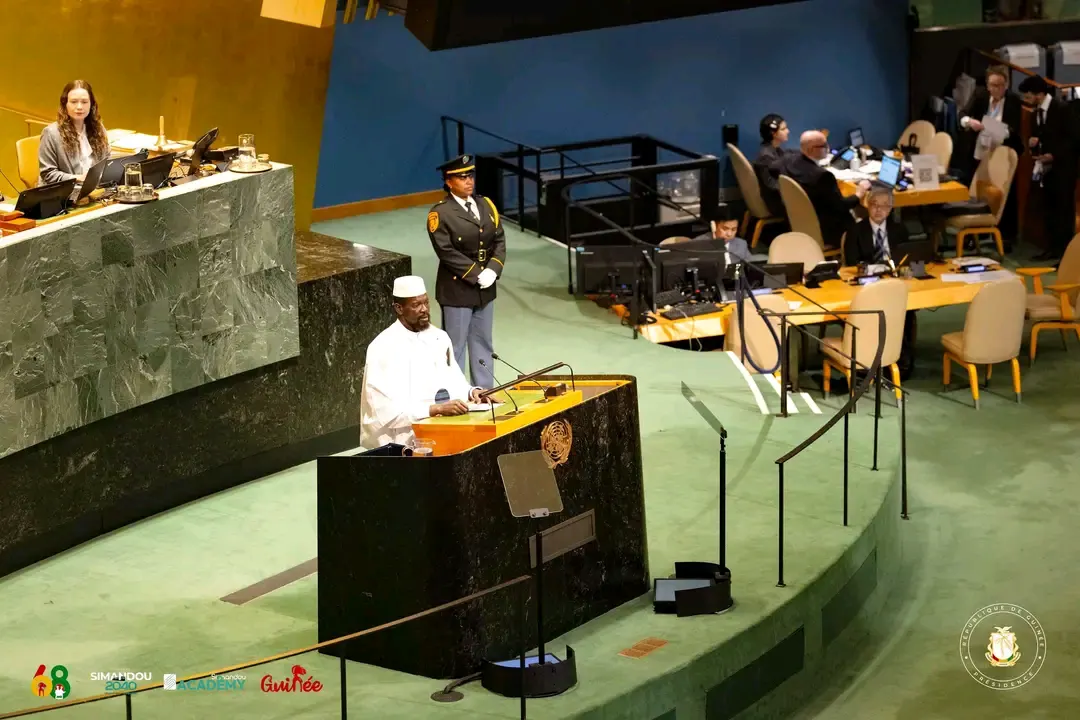
Guinean President Mamadi Doumbouya recently spoke at the 81st session of the United Nations General Assembly, where he emphasized the need for governance models that are adapted to the unique historical, social, and cultural contexts of African nations. In his address, Doumbouya reflected on his previous speech at the same podium three years ago, in which he criticized the imposition of foreign governance models on the African continent. He reiterated this stance, while also expressing his desire to share Guinea's experience in this regard.
Doumbouya pointed to the examples of certain Asian and Middle Eastern countries, which have successfully developed governance models that are tailored to their own realities. He noted that these countries have been able to accelerate their development by adopting models that are adapted to their unique contexts, rather than simply importing foreign models. According to Doumbouya, this approach has enabled these countries to achieve significant progress in a relatively short period of time.
The Guinean President emphasized that his advocacy for Africanized governance models does not imply a rejection of international cooperation. Rather, he called for partnerships that are based on mutual respect and a co-constructive approach, which takes into account the specific needs and realities of each country. Doumbouya argued that this approach would enable African nations to develop governance models that are truly effective and sustainable.
Doumbouya's speech was well-received by the international community, with many observers noting the importance of his message. The Guinean President's emphasis on the need for Africanized governance models reflects a growing recognition of the limitations of traditional Western-style governance models in the African context. By sharing Guinea's experience and advocating for a more nuanced approach to governance, Doumbouya is helping to promote a more inclusive and effective approach to development.
The Guinean President's address to the UN General Assembly was notable for its emphasis on the importance of national sovereignty and self-determination. Doumbouya argued that African nations must be free to choose their own governance models, without being imposed upon by external actors. This message resonated with many African leaders, who have long called for greater autonomy and self-determination in the face of external pressure.
Doumbouya's advocacy for Africanized governance models has significant implications for the future of development on the continent. By promoting a more nuanced and context-specific approach to governance, the Guinean President is helping to pave the way for more effective and sustainable development outcomes. This approach has the potential to unlock new opportunities for growth and progress, and could help to promote a more equitable and just society.
In conclusion, President Mamadi Doumbouya's address to the UN General Assembly highlighted the need for governance models that are tailored to the unique realities of African nations. By sharing Guinea's experience and advocating for a more nuanced approach to governance, Doumbouya is helping to promote a more inclusive and effective approach to development. As the international community continues to grapple with the challenges of sustainable development, Doumbouya's message is likely to remain an important point of reference.
Key points
- Doumbouya advocates for governance models adapted to African realities.
- The Guinean President emphasizes the importance of national sovereignty and self-determination.
- Doumbouya's approach has significant implications for the future of development on the continent.