Sidya Touré, a prominent figure in Guinean politics, has passed away in Paris on September 26, 2026. He was 65 years old. Touré served as Prime Minister from July 9, 1996, appointed by President Lansana Conté after a mutiny in February of that year. At the time, the country faced significant economic and social challenges. He prioritized electricity, sanitation in Conakry, and resuming international financial cooperation.
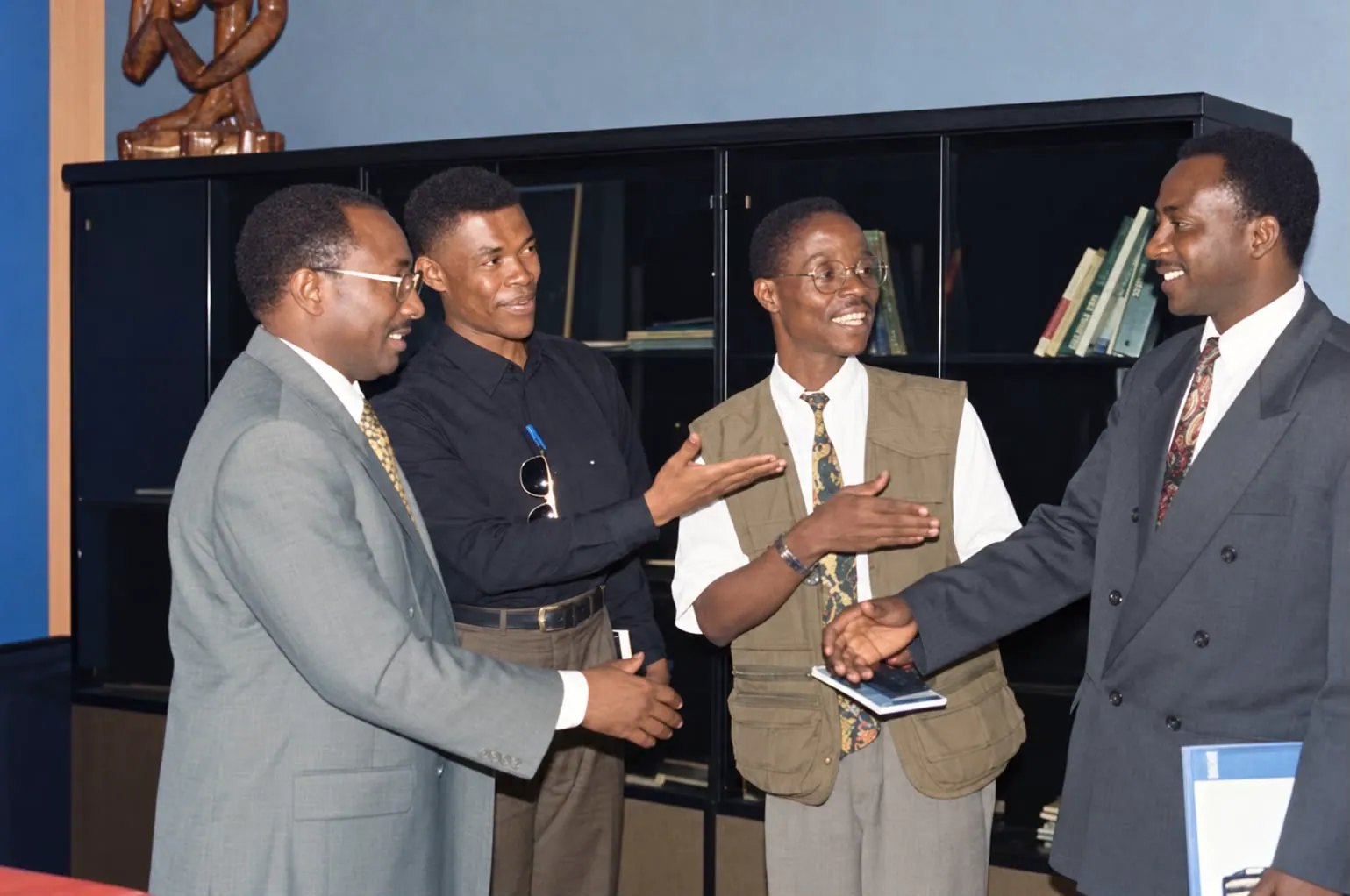
During his tenure, Touré made notable progress, including the restoration of public lighting in certain neighborhoods of Conakry on December 22-23, 1996. As a journalist with Le Lynx–La Lance, Sanou Kerfalla Cissé secured an interview with Touré in late December 1996. This meeting left a lasting impression on Cissé, who recalled the Prime Minister's attentiveness to the population's concerns and his resolve to defend his convictions.
Cissé's interactions with Touré extended beyond their initial interview. The two engaged in monthly discussions at the Prime Minister's office, covering pressing issues of the time. Touré frequently sought Cissé's opinion on how the population perceived the government's actions, demonstrating his commitment to understanding the public's sentiment. This approach earned Cissé's respect and admiration.
Despite his efforts, Touré's authority as Prime Minister was ultimately tied to President Conté's trust. Two years after his appointment, Touré lost his finance portfolio, and several government members could bypass him to communicate directly with Conté. On March 8, 1999, Touré left the Prime Minister's office, marking the end of his tenure. His experience underscored the challenges of implementing reforms with uncertain political responsibilities.
Following his departure from government, Touré joined the Union of Republican Forces (UFR), which he aimed to transform into a national party. He advocated for an alternative direction for the country, publicly breaking with Conté in 2000. As tensions rose ahead of the June 25 communal elections, Touré disputed the rejection of UFR lists in Matam and Matoto, emphasizing his disagreements with the government over poverty, education, and governance.
On July 27, 2000, Touré contacted Cissé, arranging a meeting at the Grande Mosquée Fayçal for the following day. The gathering aimed to mediate between Touré and Conté, with notables, religious leaders, and officers seeking to reconcile the two. However, Touré insisted that the issue at hand was not regional or personal but rather the country's overall situation, including poverty, education, and exclusion.
Sidya Touré's legacy is complex, marked by his evolution from a close collaborator of President Conté to a prominent opposition figure. His passing has sparked reflections on his contributions to Guinean politics and his interactions with those who knew him.
Key points
- Sidya Touré, former Guinean Prime Minister and opposition leader, has died in Paris at the age of 65.
- Touré played a significant role in Guinean politics, serving as Prime Minister from 1996 to 1999 and later leading the Union of Republican Forces.
- He will be remembered for his dedication to understanding the public's concerns and his commitment to defending his convictions.