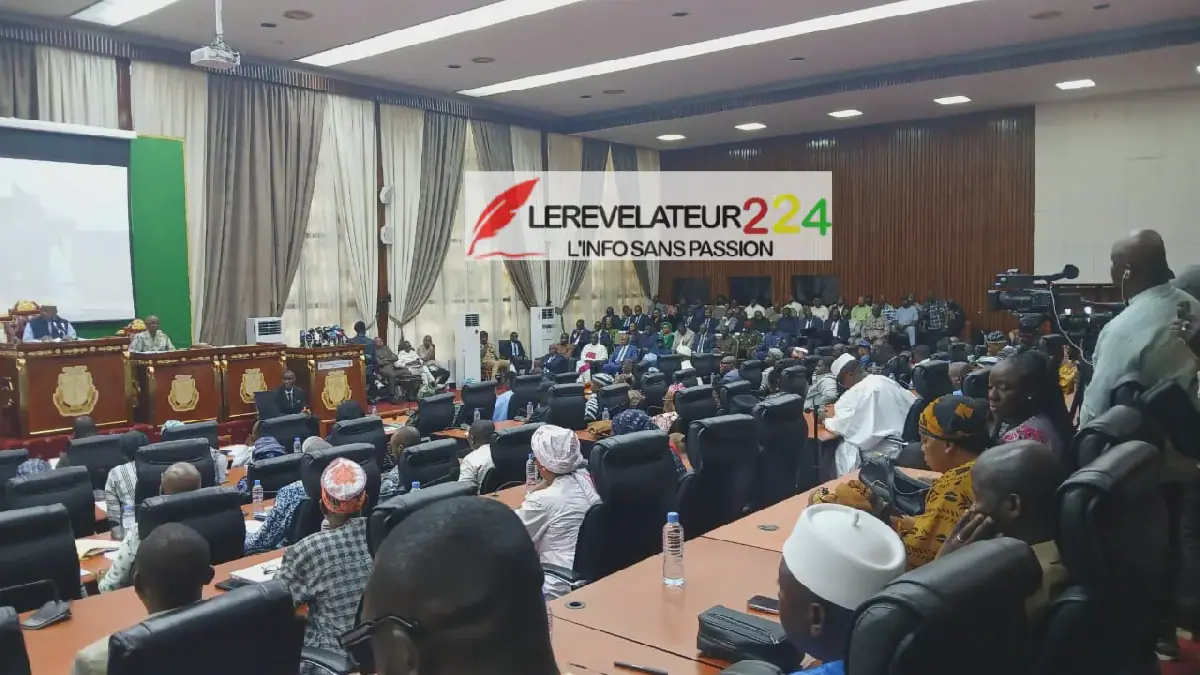
The Guinean parliament is currently examining a bill to create a sovereign fund to manage the country's mining revenues. The bill, which has been under review for several weeks, aims to transform a portion of the country's natural resource revenues into a sustainable financial asset for economic development and future generations. The fund is expected to play a crucial role in managing the country's wealth, particularly from the Simandou project.
The bill, which was submitted to the parliament on October 9, 2026, has undergone significant changes, with the commission of laws proposing several amendments to strengthen transparency, governance, and protection of national resources. The commission's review process involved a comparative study of international experiences and a detailed analysis of the bill's 63 initial provisions. The bill now comprises 81 articles, divided into a preliminary title and eight titles.
One of the key aspects of the bill is the allocation of 30% of the public revenues from the Simandou project to the sovereign fund. Additionally, the fund will receive 5% of the revenues from new extractive projects that commence operations after the law comes into effect. The fund's initial endowment is set at $1 billion, to be mobilized over five years, with a minimum annual contribution of $150 million for the first two years and $200 million for the next three years.
The sovereign fund will operate as a single-person company under Guinean law, with the state as the sole shareholder. It will have three distinct sub-entities: Development, Macroeconomic Stabilization, and Intergenerational Equity. Each sub-entity will have separate management and accounting, with strict controls to prevent unauthorized transfers or subsidies. This setup aims to ensure that the fund's resources are managed efficiently and effectively.
To prevent the fund from being used as a recurrent financing instrument for state deficits, the commission has strengthened the rules governing withdrawals from the fund. The bill now specifies the exceptional circumstances under which withdrawals can be made and requires parliamentary approval for such transactions. Additionally, the commission recommends establishing clear criteria for withdrawals and implementing a mechanism for reconstituting assets.
The commission has also revised the minimum allocation thresholds for the fund's resources, proposing 30% for the Development sub-entity, 20% for Macroeconomic Stabilization, and 20% for Intergenerational Equity. These allocations represent 70% of the fund's resources, with the remaining 30% to be distributed according to the fund's governing rules. A non-regression clause has also been introduced to protect the intergenerational savings.
The bill also focuses on strengthening the fund's governance and professionalism. The board of directors will comprise nine members, including seven independent administrators and two members proposed by the Minister of Finance and the Governor of the Central Bank. The administrators will be required to have at least ten years of experience and proven expertise in areas such as finance, law, and risk management.
Key points
- The Guinean parliament is examining a bill to create a sovereign fund to manage the country's mining revenues, with the aim of transforming a portion of these revenues into a sustainable financial asset for economic development and future generations.
Reporting sources
- Fonds souverain de Guinée : ce que contient le projet de loi examiné en plénière · Le Révélateur 224