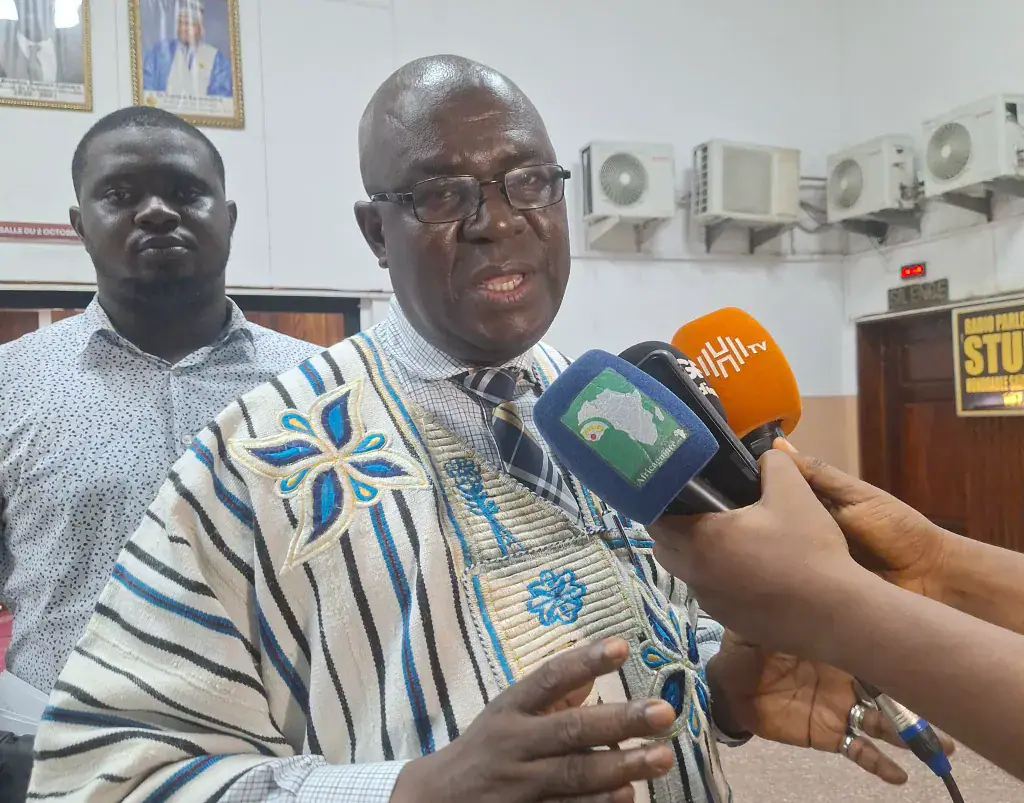
The Guinean National Assembly has adopted the expenditure portion of the 2026 Supplementary Finance Law, despite reservations from opposition lawmakers. Faya Lansana Millimouno, a member of the Alliance patriotique parliamentary group, expressed concerns over the government's budget priorities, citing a rise in operating expenses at the expense of investments. This has sparked controversy, as citizens await basic infrastructure such as roads and schools.
Millimouno noted that while expenditures have increased, investments have decreased, contradicting the government's promises to the people. He argued that this trend will only serve to sustain the administration in Conakry, rather than addressing the needs of the population. The opposition lawmaker emphasized that rejecting the expenditure bill would have meant the government would continue to operate under the old law, hindering investment projects.
The adopted budget has a deficit, which Millimouno acknowledged is within acceptable standards of less than 2.5% of the gross domestic product. However, he expressed concerns over the government's reliance on borrowing, particularly for non-investment purposes. This, he warned, could burden future generations and undermine the country's development.
The budget includes cuts to infrastructure projects, including road construction. While the Minister of Budget provided some explanations, Millimouno stated that many questions remain unanswered. Specifically, he questioned how the government could include projects in the budget without conducting feasibility studies. The case of the 18-kilometer Guéckédou road, which has been discussed for nearly 20 years, was cited as an example.
The Guéckédou road project was among those cut from the budget, but Millimouno assured that it would be reinstated after assurances from the government. The project's reinstatement is crucial for the region, as it connects major cities and facilitates trade. The government has promised to address issues related to the project, including installations by EDG and SEG.
As a lawmaker, Millimouno supports the government's policy of subsidizing petroleum products to maintain affordable fuel prices. However, he advocates for reducing state expenditures to prioritize investments in infrastructure. He criticized the allocation of funds to certain government departments and agencies, arguing that these expenses are not productive and divert resources away from essential public services.
The controversy surrounding the 2026 budget highlights the challenges facing the Guinean government in balancing its spending priorities. While the government aims to stimulate economic growth, opposition lawmakers argue that the current budget does not adequately address the needs of the population. The implementation of the budget will be closely monitored, with citizens expecting tangible results in terms of infrastructure development and improved living standards.
Key points
- The Guinean National Assembly has adopted the 2026 budget despite concerns over spending priorities and a deficit.
- Opposition lawmaker Faya Lansana Millimouno expressed concerns over the government's reliance on borrowing and the allocation of funds to non-productive sectors.
- The budget includes cuts to infrastructure projects, but the government has assured that key projects, such as the 18-kilometer Guéckédou road, will be reinstated.