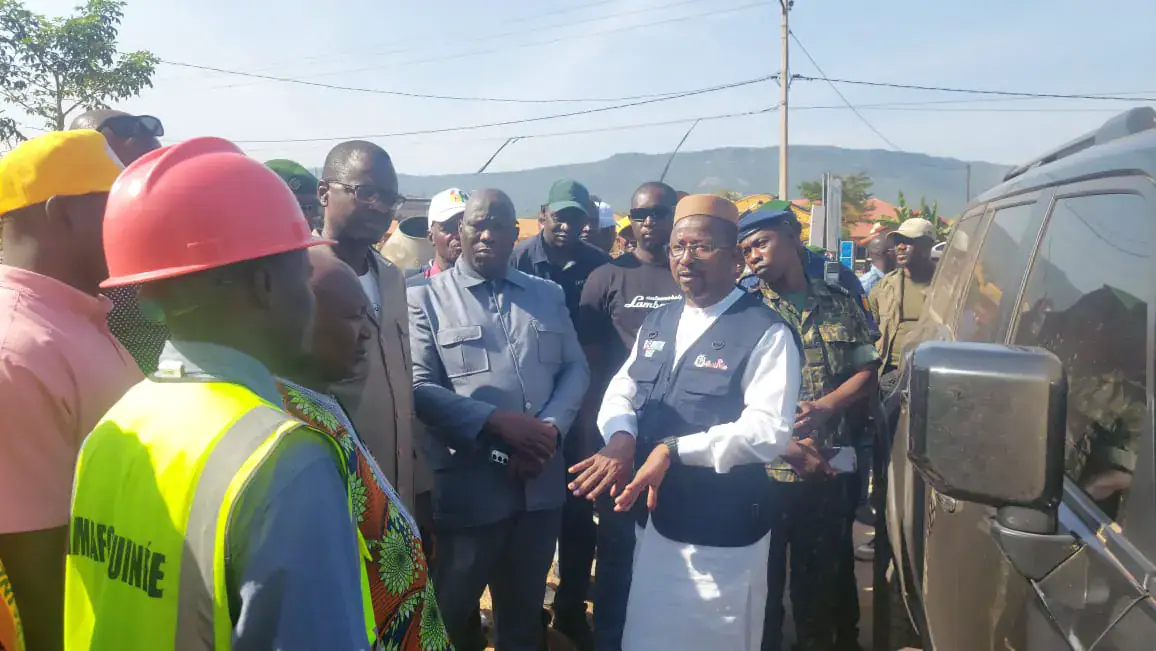
Guinean Minister of Housing, Urbanism and Territorial Planning, Mohamed Lamine Sy Savané, led a delegation on a working visit to Dabola on November 5, 2026. The mission aimed to identify and secure state land reserves across the country. During the visit, the minister met with local leaders, administrative and communal authorities, and technical cadres from the Prefectural Directorate of Housing, Urbanism and Territorial Planning. Discussions focused on the status of state land reserves, their identification, and measures to prevent anarchic occupation.
The Prefectural Director of Housing, Urbanism and Territorial Planning, Djibril Camara, presented efforts already made in the area. He reported that over 50 sites had been identified in the prefecture, although some former state reserves were now occupied or built-up. Camara outlined next steps, including demarcation, securing, and installation of identification plaques to enable populations to clearly recognize state-owned lands and prevent further occupation.
Dabola's urban mayor, Mamadou Condé, welcomed the government initiative, praising the country's development dynamic and advocating for increased state support for Dabola through basic social infrastructure development. Minister Mohamed Lamine Sy Savané expressed satisfaction with local technical services' work, noting that the review of state reserves' situation had been positive. He hoped that future efforts would be even more favorable.
The minister announced that the securitization process would involve site registration, acquisition of land titles, demarcation, and installation of identification markers. The goal is to preserve these spaces for future infrastructure and collective equipment development for the benefit of the population. He invited local elected officials to collaborate with deconcentrated state services to protect identified domains against irregular occupation.
Minister Mohamed Lamine Sy Savané also drew attention to ongoing infrastructure projects, particularly the detention house, which he believed required special government attention. He expressed hope that Dabola would benefit from more social projects and structuring infrastructure in the coming years. This government mission marks an important step in controlling state land patrimony in Dabola.
The identification and securitization of state land reserves appear as prerequisites for the realization of future development projects in the prefecture and its various collectivities. According to the minister, collaboration between local authorities and state services is crucial to protecting state lands. The mission's outcomes will likely influence future development initiatives in Dabola.
The Guinean government's efforts to secure state land reserves reflect a broader strategy to manage the country's land resources effectively. By engaging with local stakeholders and authorities, the government aims to balance development needs with the requirement to preserve state assets. The outcome of this mission will be closely watched as it sets a precedent for similar initiatives across Guinea.
Key points
- The Guinean Minister of Housing led a mission to Dabola to identify and secure state land reserves.
- Over 50 state land sites have been identified in the Dabola prefecture.
- The government aims to register, demarcate, and secure state lands to prevent irregular occupation.