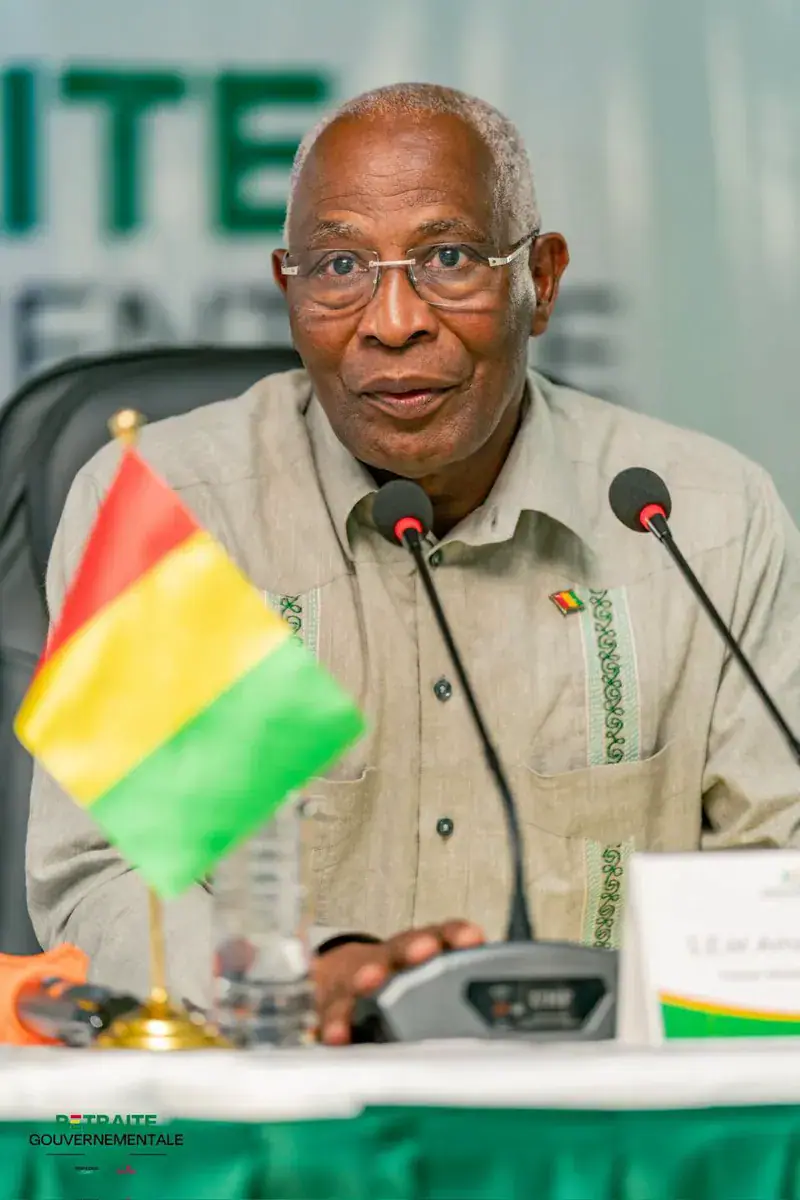
The Guinean government recently held a three-day retreat in Forécariah, led by Prime Minister Amadou Oury Bah, from November 22 to 24, 2026. This marks the third major retreat since the military took power in 2021. The goal was to prepare for 2027 and strengthen government cohesion and effectiveness. The retreat brought together ministers, presidential advisors, high-ranking state officials, and leaders of several public agencies.
The retreat's agenda included evaluating progress and setting priorities for 2027, with a focus on accelerating the implementation of the Simandou 2040 program. However, despite the ambitious goals, citizens remain skeptical about the impact of these gatherings on their daily lives. The retreats have become a ritual under the current government, with previous gatherings held in Kalia in 2021 and Samoréyah in 2024.
In his opening speech, Prime Minister Amadou Oury Bah called for more rigor and discipline within the government, emphasizing the need for a unified national ambition under the President's authority. He urged his team to take responsibility and make a collective commitment to effective governance. However, his words were seen as a severe diagnosis of internal dysfunctions, highlighting the need to address inefficiencies and inconsistent decision-making.
Despite the government's efforts to improve coordination and effectiveness, citizens continue to face significant challenges, including high living costs, limited access to basic services like water and electricity, and endemic youth unemployment. The repeated retreats have led to concerns that the government is not addressing the root causes of these issues, and that the gatherings may be little more than expensive administrative exercises with few tangible results.
One of the main concerns is the lack of transparency and accountability in the government's actions. There is no detailed public report on the outcomes of these retreats, making it difficult to assess whether the government's commitments are being met. This lack of transparency has contributed to a sense of disconnection between the government and citizens, who are increasingly demanding concrete actions that improve their daily lives.
The government's promise to make Forécariah a turning point and a new beginning has been met with skepticism. Citizens are no longer calling for planning seminars but for tangible actions that have a direct impact on their lives. As the government continues to focus on internal planning and coordination, it remains to be seen whether it can address the pressing issues facing the country and deliver meaningful results for its citizens.
As the government looks ahead to 2027, it faces increasing pressure to demonstrate progress and deliver concrete results. With citizens questioning the effectiveness of the retreats, the government must find a way to translate its plans into tangible actions that improve the lives of Guineans. The success of the government's efforts will depend on its ability to address the country's deep-seated challenges and demonstrate a commitment to transparency and accountability.
Key points
- The Guinean government's repeated retreats have failed to deliver tangible results, leading to growing skepticism among citizens about their effectiveness.