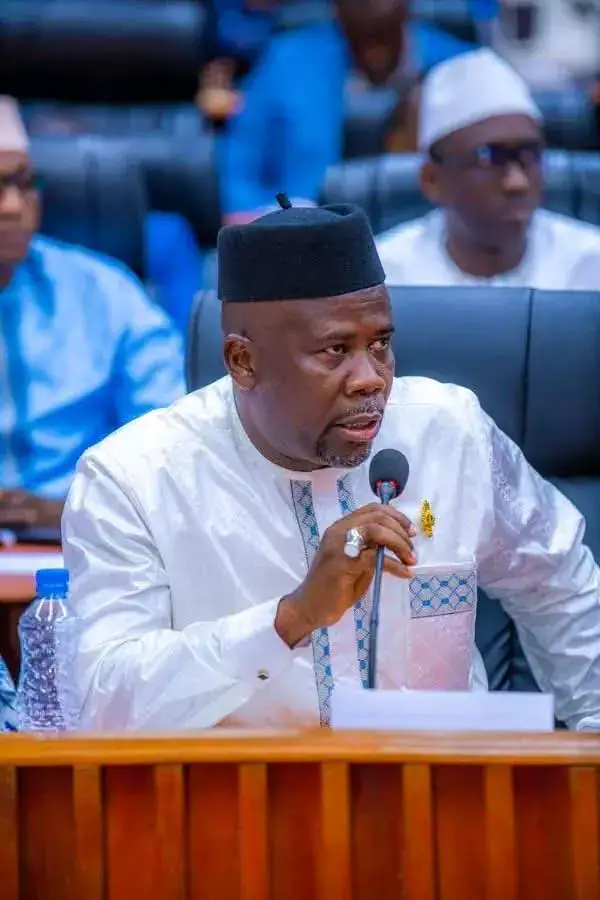
Guinean Deputy Abdoulaye Kourouma has strongly criticized the government's budget management, specifically the low level of public investment spending. In an interview on private channel Télé 24, Kourouma expressed concerns over the government's priorities, citing a significant disparity between spending on investments and administrative expenses. He noted that the government's reduction of investment credits in the 2026 rectified finance law will negatively impact essential public services such as road infrastructure, access to clean water, and hospital construction.
Kourouma pointed out that several ministries have not made any disbursements for investments, while others have very low execution rates. He mentioned that 14 departments have not spent a single franc on investments, and a few others have rates as low as 1-3%. The deputy questioned the government's commitment to the well-being of the population, asking if they have provided inaccurate information to the President of the Republic. He emphasized that the government's low investment spending is a clear indication of its priorities.
According to Kourouma, the government's spending priorities are evident in its execution rates. He stated that while the government has disbursed 91.90% of its own expenses and administrative charges, it has only disbursed 6.81% of its investment projects. This disparity, Kourouma argued, demonstrates that the government is not committed to satisfying the needs of the population. He expressed concern that the government's actions do not align with the needs of the people.
Kourouma's criticism comes as the 2026 rectified finance law is being examined, highlighting the government's budgetary choices. The deputy has brought the issue of public investment execution, budgetary expenditure efficiency, and government accountability back to the forefront of the debate. His comments have sparked discussions on the government's priorities and its commitment to the well-being of the Guinean people.
The government's budget management has been under scrutiny, with many questioning its priorities and allocation of resources. Kourouma's statements have added fuel to the fire, with many calling for greater transparency and accountability in government spending. The issue has become a pressing concern for the Guinean people, who are eager to see improvements in public services and infrastructure.
The rectified finance law for 2026 has been a topic of debate, with many stakeholders expressing concerns over the government's budgetary choices. Kourouma's criticism has highlighted the need for greater investment in public services and infrastructure, and for more efficient use of resources. The government will likely face increased pressure to justify its spending priorities and to demonstrate its commitment to the well-being of the population.
The controversy surrounding the government's budget management has raised questions about its ability to effectively manage public resources. Kourouma's comments have underscored the need for greater transparency and accountability in government spending, and for more effective use of resources to address the needs of the Guinean people. The issue is likely to continue to be a topic of debate in the coming weeks and months.
Key points
- Deputy Abdoulaye Kourouma criticizes the government for low public investment spending, citing a disparity between spending on investments and administrative expenses.