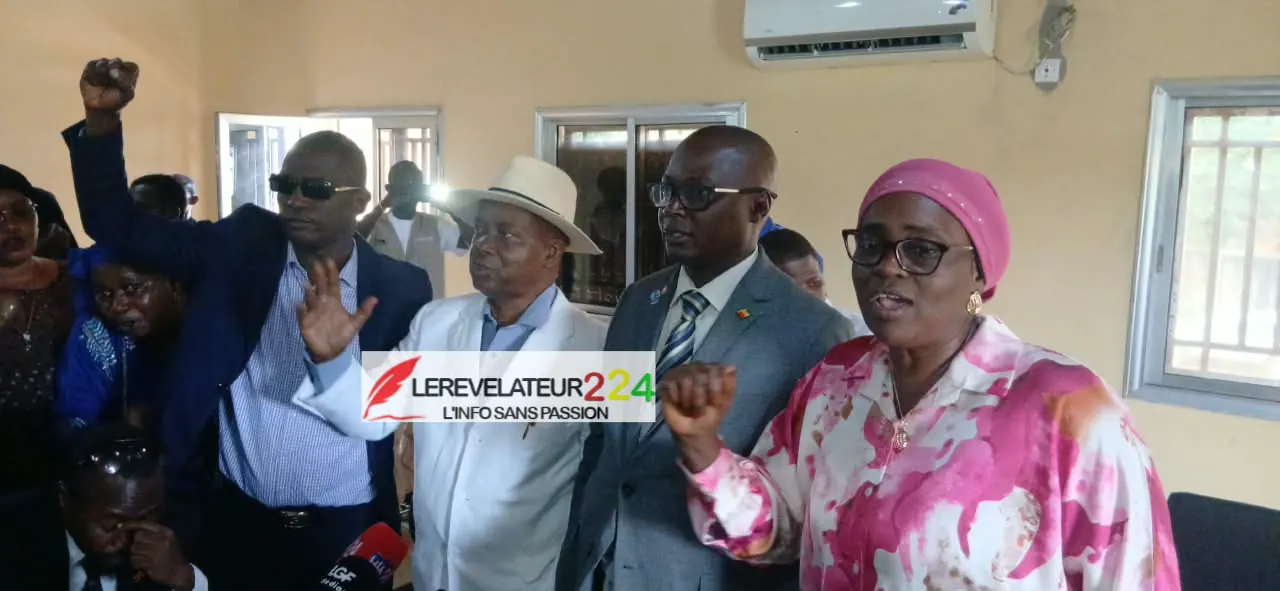
The Guinean education intersyndicale, comprising the Syndicat Libre des Enseignants et Chercheurs de Guinée (SLECG), Fédération Syndicale Professionnelle de l’Éducation (FSPE), and Syndicat National de l’Éducation (SNE), held a press conference on September 21, 2026, at the SLECG headquarters. The unions reacted to the government's announcement of a new teacher recruitment competition. They expressed no opposition to the competition but demanded that the government respect the agreements made in the protocol signed with the unions.
The unions' primary concern is the integration of contractual teachers who participated in the 2024 evaluation process. According to Pépé Balamou, secretary-general of the SNE, 14,500 contractual teachers were identified, registered, and biometrically verified, and then evaluated. Of these, 10,000 were selected, while 4,500 were not recruited due to a proportional distribution system by prefecture. Balamou stated that most of the 4,500 teachers obtained an average score of 10 out of 20, with only 60 failing to meet the threshold.
The intersyndicale demands the integration of these contractual teachers in line with the protocol's commitments. Balamou emphasized that the protocol does not state that the 4,500 teachers will be prioritized in the new competition, but rather that they should be given priority engagement. The unions also call for the integration of approximately 2,000 contractual teachers from Conakry's special zone. Furthermore, they denounce delays in implementing several protocol provisions, including the treatment of lists of non-selected contractual teachers and the revision of the special status of education personnel.
The unions expressed concerns about the material conditions for the upcoming school year, set to begin on October 5, 2026. Balamou reported that many schools lack adequate infrastructure, furniture, and teaching materials. He cited instances of dilapidated schools, non-functional toilets, and insufficient desks and chairs. The teachers and education officials are still awaiting necessary resources to prepare for the new school year.
The intersyndicale also raised issues with the government's communication, stating that the dialogue has been disrupted. Balamou accused administrative officials of isolating themselves and cutting off contact with union leaders, which he believes will lead to problems. The unions reiterated that they are not opposed to recruiting new teachers but insist that those already evaluated and meeting the criteria be treated as a priority.
The intersyndicale warned that respecting the agreements made with the unions is essential for a peaceful and successful start to the new school year. They stressed that if their demands are not met, it will be challenging to achieve a smooth and calm reopening of classes on October 5, 2026. The unions expect the government to address their concerns and honor its commitments.
The Guinean education sector faces significant challenges, including inadequate infrastructure and delayed salary payments. The intersyndicale's demands highlight the need for the government to engage in constructive dialogue with union leaders to address these issues. Ultimately, finding a resolution will require cooperation and a commitment to improving the education system in Guinea.
Key points
- The Guinean education intersyndicale demands the integration of contractual teachers who participated in the 2024 evaluation process.
- The unions insist that those already evaluated and meeting the criteria be treated as a priority in the new recruitment drive.
- The intersyndicale warns that respecting the agreements made with the unions is essential for a peaceful and successful start to the new school year.