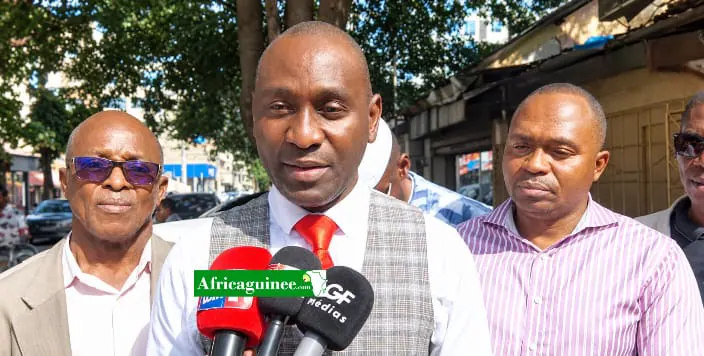
Guinean court officials, specifically huissiers de justice, have initiated a general and indefinite strike as of Thursday, October 8, 2026. This decision was made during an extraordinary general assembly following the detention of two of their colleagues: Me Sory Daouda Camara, former president of the Chamber, and Me Mamadou Sangaré. According to Me Aboubacar Camara, no services or activities related to the profession will be performed across the country until further notice.
The strike is in response to the trial of Me Sory Daouda Camara and Me Mamadou Sangaré, which began on October 7, 2026, at the Cour de répression des infractions économiques et financières (CRIEF). They are accused of several offenses, including fraud, forgery, and usurpation of title and function. Ecobank Guinée is the plaintiff in this case, which stems from a 2018 court procedure. The accused have denied all charges.
The strike, led by the Chambre nationale des huissiers de justice de Guinée, has significant implications for the country's judicial system. Court officials have restricted their public statements until the next hearing, scheduled for Monday. Me Aboubacar Camara stated that they will attend the CRIEF hearing and make an official statement afterward.
The strike has raised concerns about the functioning of the judicial apparatus, particularly regarding the delivery of assignments, notifications, and execution of court decisions. The disruption of these critical services may have far-reaching consequences for the country's justice system.
The detention of Me Sory Daouda Camara and Me Mamadou Sangaré has sparked a strong reaction from their colleagues. The Chambre nationale des huissiers de justice de Guinée has taken a firm stance, with Me Aboubacar Camara emphasizing that the strike will continue rigorously until a resolution is reached.
The situation may escalate further if the issues are not resolved by Monday. Court officials have indicated that they will reassess the situation after the CRIEF hearing and potentially adjust their actions accordingly. The Guinean government and judicial authorities will likely face pressure to address the concerns of the striking court officials.
The strike by Guinean court officials highlights the challenges facing the country's judicial system. The outcome of the trial and the negotiations between the striking officials and the government will be crucial in determining the future of the justice system in Guinea.
Key points
- Guinean court officials have begun an indefinite strike in response to the detention of two colleagues.
- The strike disrupts judicial activities nationwide, affecting the delivery of assignments, notifications, and execution of court decisions.
- The situation may escalate further if the issues are not resolved by Monday.