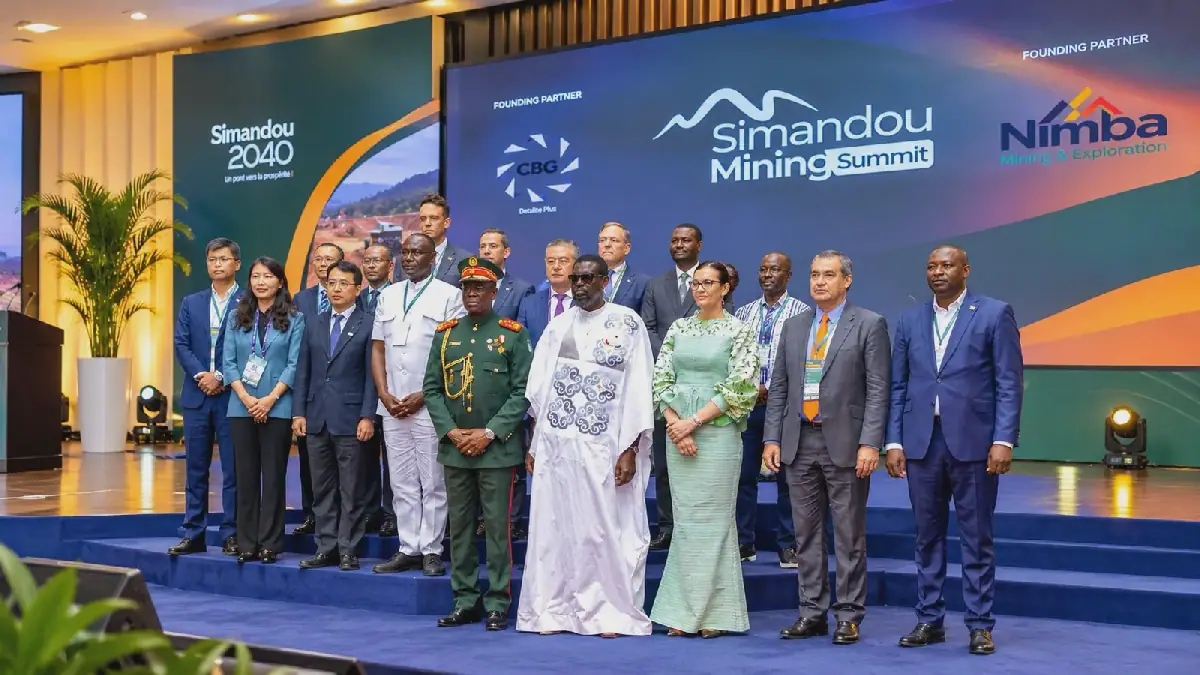
Guinea's Agence guinéenne de développement has presented a programme of more than $200 billion in investments over 15 years, with private capital expected to contribute 40 percent of the total. The figure was put before participants at the first edition of Le Simandou Mining Summit, which opened on 11 November 2026 on the island of Kassa. The scale of the programme places the financing question at the centre of the gathering.
President Mamadi Doumbouya used the opening of the summit to set out a vision that goes beyond the exploitation of iron ore. The programme, known as Simandou 2040, is aimed at turning the country’s mineral wealth into productive investments and durable progress. The summit’s discussions on 12 November 2026 focused on reforms, competitiveness and confidence. Those three themes framed the exchanges among participants on the second day of the event.
Discussions at the summit raised the long-term management of mining revenues, including a reflection on a sovereign fund. The talks on revenue management came as the programme’s financing architecture was under consideration. Djiba Diakité, minister and director of the presidency’s cabinet, chairs the strategic committee of Simandou. Namory Camara is director general of the Agence guinéenne de développement, which presented the investment programme.
The expected 40 percent contribution from private capital suggests that the bulk of the programme’s financing would need to come from other sources. With more than $200 billion planned over 15 years, the programme’s realisation appears likely to hinge on project structuring and execution, as indicated in the presentation. The first edition of Le Simandou Mining Summit opened on 11 November 2026 on the island of Kassa.
The Simandou 2040 programme seeks to transform Guinea's economy by leveraging its mineral resources. The programme's success will depend on the government's ability to attract investors and implement the necessary reforms. The summit provided a platform for stakeholders to discuss the challenges and opportunities associated with the programme.
The financing structure of the programme is under scrutiny, with the majority of funding expected to come from sources other than private capital. The government will need to explore alternative funding options, such as partnerships with international organisations or other countries. The programme's impact on Guinea's economy and development will be closely watched.
The Simandou 2040 programme is a key component of Guinea's economic development strategy. The programme's success will depend on effective implementation and management. The government will need to ensure that the programme benefits the local population and contributes to the country's sustainable development.
Key points
- The programme's financing architecture is under consideration, with a focus on attracting private capital and exploring alternative funding options.
Reporting sources
- Guinea’s Simandou 2040 plan targets over $200bn in investments over 15 years · West Africa News Agency