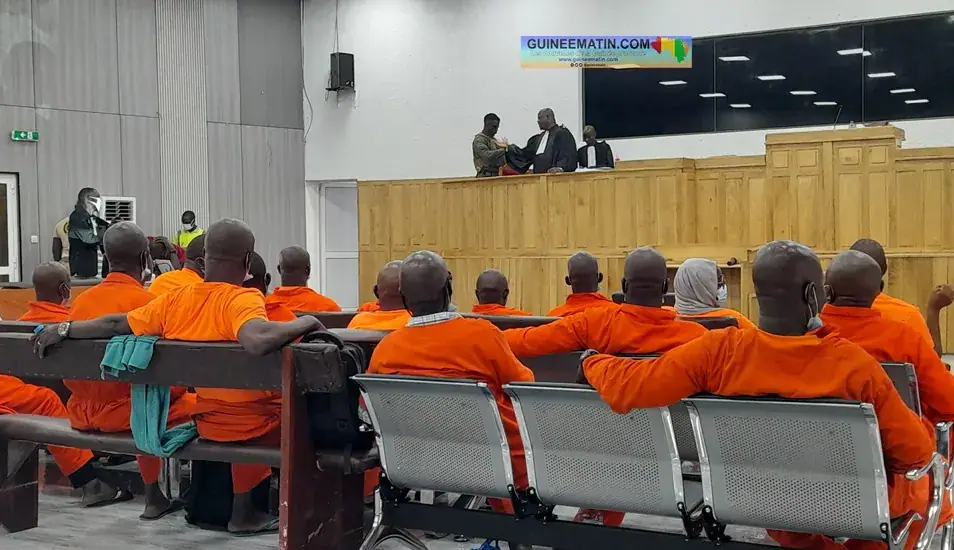
The trial of 22 territorial administrators from Siguiri, Guinea, accused of involvement in illegal gold mining, has resumed before the CRIEF court. They face charges including corruption of public agents, illicit enrichment, money laundering, complicity in environmental degradation, destruction of property, and water pollution. The administrators, including a former regional governor and several ex-prefects and sub-prefects, had previously denied the allegations.
The case involves 202 clandestine gold miners who were also charged in the same affair, but they were not present in court. The miners were part of 1,557 foreign gold miners released and deported to the Guinea-Mali border the previous Saturday. Some of the miners had previously been convicted by Guinean courts, while others were still awaiting trial. Their case was initially joined with that of the 22 administrators.
During the first hearing, the administrators denied all charges, claiming they had never authorized or facilitated illegal gold mining in their areas of jurisdiction. The court then adjourned the case to November 16 for the presentation of a video produced by the special prosecutor and continuation of the debates.
The resumption of the trial on November 16 saw the administrators present in court, but the 202 gold miners were absent. The court is expected to hear further evidence and possibly deliver a verdict. The case has garnered significant attention due to the high number of officials involved and the severity of the charges.
The Guinean government has been cracking down on illegal gold mining, which has caused significant environmental damage and loss of revenue for the country. The trial is seen as part of efforts to hold accountable those involved in such activities. The CRIEF court has been tasked with investigating and prosecuting cases of corruption and economic crimes.
The case has raised concerns about corruption and complicity among government officials and the impact of illegal mining on local communities. The court's decision is expected to have far-reaching implications for the country's efforts to combat corruption and protect its natural resources.
The trial will continue with the presentation of further evidence and testimony from witnesses. A verdict is expected in the coming weeks. The case has significant implications for the country's efforts to promote transparency and accountability in the mining sector.
Key points
- The trial of 22 territorial administrators in Guinea has resumed over their alleged involvement in illegal gold mining.
- The administrators face charges including corruption, illicit enrichment, and environmental degradation.
- The case is part of the Guinean government's efforts to crack down on illegal mining and hold officials accountable.