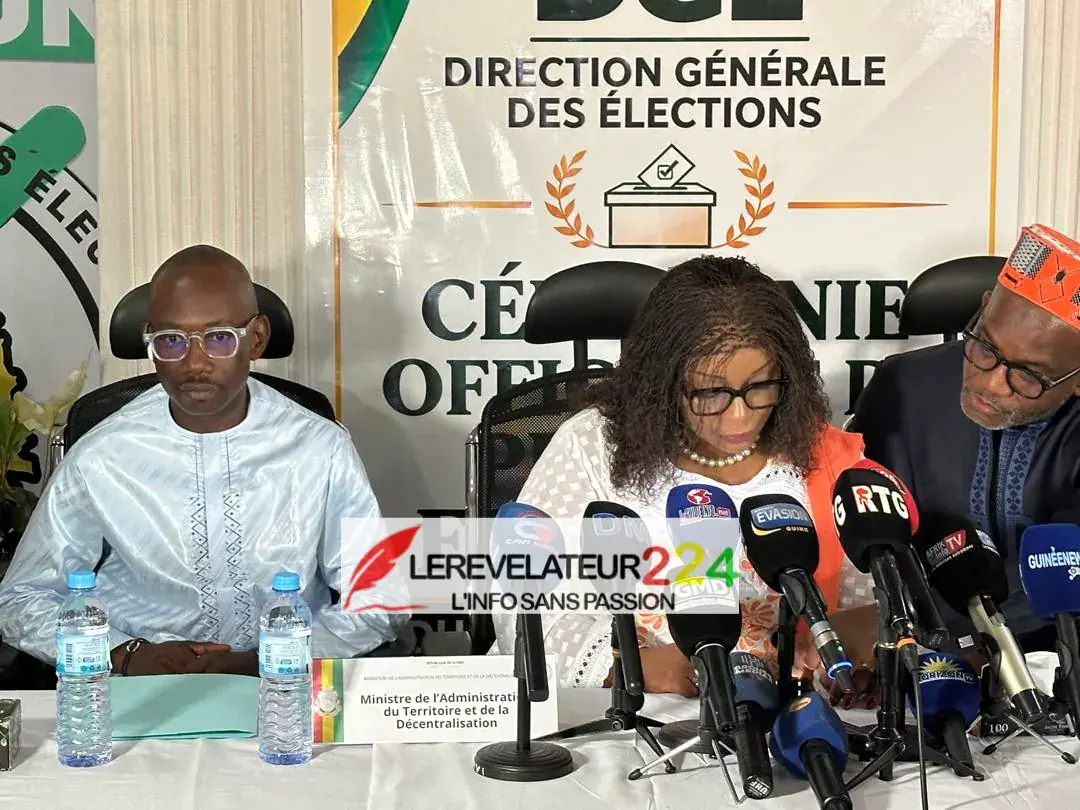
Guinea's electoral agenda is set to continue next year with complementary local and senatorial elections, according to Minister of Territorial Administration and Decentralization Djénabou Touré. Speaking at the handover ceremony of the new Director General of Elections, Touré announced that the elections will be held in 2027 to complete the setup of institutions following the country's new administrative division. The minister clarified the next steps in the country's institutional consolidation.
The upcoming elections will concern both local authorities and the upper house of Parliament. Touré specified that new communes created by law, including those that have been under-prefectures for over five years, will hold elections. Additionally, the Senate will be expanded to include representatives from the new administrative entities, pending a prior legal adjustment. The minister emphasized that these elections are crucial for ensuring equitable representation across Guinea's new administrative divisions.
The elections will be a significant task for the new Director General of Elections, who will need to prepare the technical and logistical framework for the partial polls. The Director General's priority will be to ensure that the elections are conducted smoothly and that the new administrative divisions are adequately represented. This move is part of the government's efforts to consolidate institutions and ensure that all parts of the country have a voice in the electoral process.
According to Touré, the new communes and two new regions will also elect their senators to complete the Senate. This will require a modification of the organic law governing the Senate's internal regulations. The minister's announcement provides a clear indication of the roadmap for the new elections and the tasks that lie ahead for the electoral authorities.
The decision to hold complementary elections has been well-received by stakeholders, who see it as a positive step towards consolidating democracy in Guinea. The country's electoral process has faced several challenges in recent years, and the upcoming elections are seen as an opportunity to address some of these issues. The government has emphasized its commitment to ensuring that the elections are free, fair, and transparent.
The new Director General of Elections, Mohamed Ali Condé, will play a critical role in organizing the elections. Condé was appointed recently and will need to work closely with the electoral authorities to ensure that the elections are conducted smoothly. The government has urged all stakeholders to support the electoral process and ensure that the elections are a success.
The announcement of the complementary elections has sparked widespread interest, with many stakeholders eager to see the country's electoral process move forward. The elections are expected to be a significant milestone in Guinea's democratic journey, and the government has emphasized its commitment to ensuring that they are conducted in a free, fair, and transparent manner.
Key points
- The elections will concern both local authorities and the upper house of Parliament.