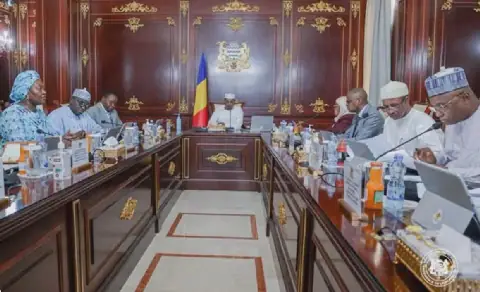
Guinea's President Mamadi Doumbouya has overseen the country's fourth General Census of Population and Housing (RGPH-4), which has been highlighted as a reference point for demographic data in Africa. On November 5, 2026, in Abidjan, Planning and International Cooperation Minister Ismael Nabe participated in the Demographic Future Dialogue 2026, organized by the UNFPA. He was part of a high-level panel on partnerships for demographic resilience.
Minister Nabe presented Guinea's experience with the RGPH-4, which recorded 17,521,167 inhabitants, with nearly 8 out of 10 Guineans aged under 35. The census also revealed an average age of approximately 22 years, with over 60% of the population living in rural areas, and a majority of women. These results demonstrate Guinea's unique demographic profile, which can inform policy decisions and investments.
Minister Nabe emphasized two priorities for Guinea: using demographic data to inform public decision-making and investing in the country's youthful population. He stressed the need to transform the potential of Guinea's youth into a demographic dividend by investing in education, vocational training, healthcare, entrepreneurship, and employment. This approach aligns with the goals of the Simandou 2040 program.
To achieve these goals, Minister Nabe called for increased mobilization from four types of actors: development partners, financial institutions, the private sector, and South-South cooperation actors. He emphasized that a concerted and multisectoral approach is essential to make the demographic transition a genuine development opportunity.
Minister Nabe highlighted that a young population is not, in itself, a demographic dividend, but rather a promise. He stressed that the realization of this promise depends on the quality of decisions, the audacity of investments, and the solidity of partnerships. This perspective underscores the importance of effective partnerships in leveraging demographic data for development.
The Demographic Future Dialogue 2026 provided an opportunity for Minister Nabe to acknowledge the historical partnership between Guinea and the UNFPA, particularly in areas such as census-taking, maternal and reproductive health, women's empowerment, and national statistical system strengthening. This partnership has contributed to Guinea's progress in demographic data collection and analysis.
By sharing its experience at the Demographic Future Dialogue in Abidjan, Guinea reaffirms its ambition to not only understand its population but also to harness its human potential as a driver of economic and social transformation. The country's participation in this dialogue demonstrates its commitment to using demographic data to inform development policies and investments.
Key points
- Guinea's fourth general census recorded 17,521,167 inhabitants, with a majority of the population under 35 years old.
- The Guinean government aims to transform the country's youthful population into a demographic dividend through investments in education, vocational training, and employment.
- Minister Nabe emphasized the need for a concerted and multisectoral approach to leverage demographic data for development, involving development partners, financial institutions, the private sector, and South-South cooperation actors.