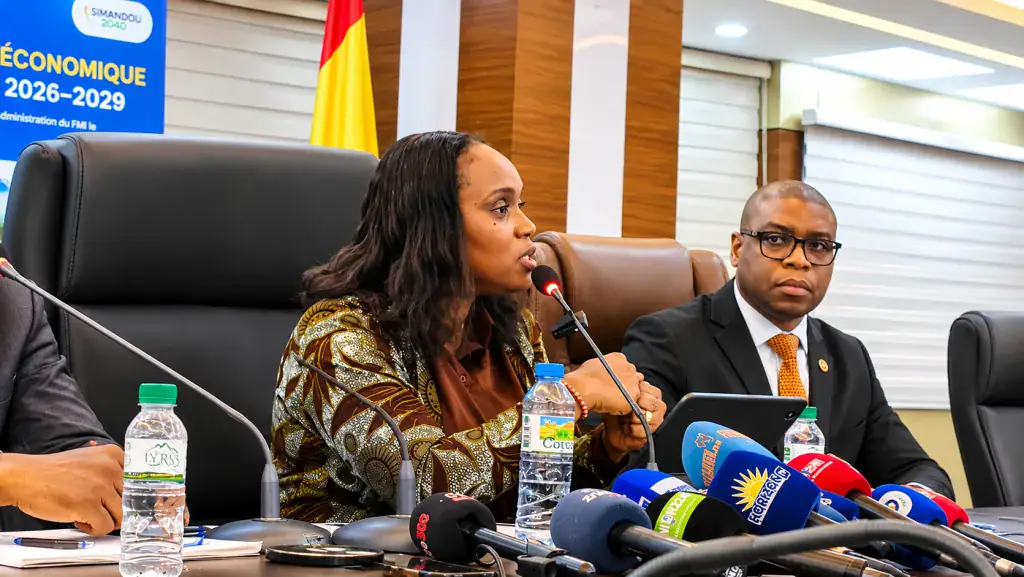
The International Monetary Fund (IMF) has approved a new economic program for Guinea, providing $425 million in financing to support the country's economic development. The program, which runs from 2026 to 2029, aims to preserve macroeconomic stability and transform Guinea's mining potential into sustainable, diversified, and inclusive growth. According to Dr. Kodjo Nérée G. M. Noumon, IMF Resident Representative in Guinea, the program was developed in line with the government's priorities, including the Simandou 2040 plan.
The IMF program includes an immediate disbursement of $63.4 million in special drawing rights to support Guinea's budget. The program emphasizes the importance of domestic revenue mobilization and social spending protection. Dr. Noumon noted that the IMF's board welcomed Guinea's economic resilience and favorable mining prospects but highlighted the government's limited maneuvering room and significant development needs. The program's success will depend on Guinea's ability to implement reforms and meet its commitments.
Guinea's Minister of Economy, Finance, and Budget, Mariama Ciré Sylla, hailed the program's approval as a significant milestone in relations between Guinea and the IMF. This new program comes nine years after the previous one was approved. Sylla emphasized that the program is a vote of confidence in Guinea's credibility and that the government must now deliver results. She noted that the program's fiscal discipline will help Guinea better anticipate challenges related to Simandou's exploitation while meeting population expectations.
The program's effects are expected to be felt as early as next year, particularly in domestic revenue mobilization and public investment execution. Sylla stated that the government will focus on improving budget-program implementation and achieving tangible results on the ground. The program's success will be evaluated through various mechanisms, including budget-program indicators, IMF semi-annual reviews, and national monitoring and control systems.
The program's impact on Guinea's economy will be closely watched, particularly in terms of job creation and household income improvement. Sylla cautioned that significant results in these areas will take time, but the government aims to achieve substantial improvements by the end of the three-year program. The IMF's presence is expected to improve Guinea's perception among technical and financial partners, as well as private investors.
The program includes specific objectives, such as reducing the budget deficit, accumulating foreign exchange reserves, and implementing reforms. The commitments made by the Guinean authorities are outlined in a letter of intent and a memorandum of economic and financial policies, which are publicly available. The program's success will depend on the government's ability to meet its commitments and translate macroeconomic performance into improved living conditions.
The new IMF program offers a positive signal for Guinea's economy, but its success remains contingent on the government's ability to implement reforms and achieve tangible results. The program's effects on Guinea's sovereign rating and borrowing conditions will also be closely monitored. With the right implementation, the program could help Guinea achieve sustainable and inclusive growth.
Key points
- The IMF program aims to support Guinea's economic development through $425 million in financing.
- The program emphasizes domestic revenue mobilization and social spending protection.
- The program's success will depend on Guinea's ability to implement reforms and meet its commitments.