The Guinean government is preparing for its economic future with the approaching exploitation of revenues from the Simandou project. To achieve this, the country has secured a $425 million funding agreement from the International Monetary Fund (IMF), approved by the IMF's board of directors on November 23, 2026. This agreement is part of Guinea's 2026-2029 economic and financial program.
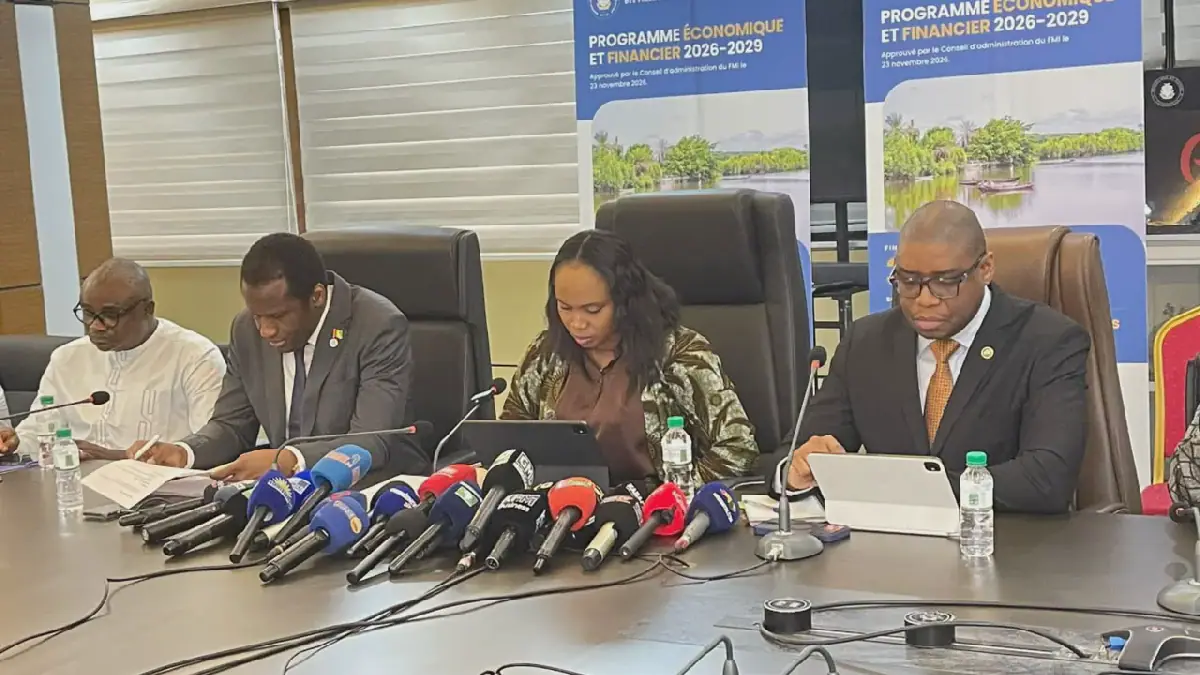
On November 27, in Conakry, Economy, Finance, and Budget Minister Mariama Ciré Sylla, accompanied by the IMF's resident representative in Guinea and the Central Bank governor, provided clarification on the objectives of this agreement. The minister emphasized that this partnership is not limited to financial support but is an instrument to accompany economic reforms and strengthen the state's capacity to mobilize and manage national resources effectively.
Minister Sylla highlighted the progress made in mobilizing internal revenues, which have doubled over the past three to four years, with a nearly 50% increase between 2024 and 2025. Reforms undertaken include the digitalization of tax and customs administrations, the modernization of public procurement through the Télémos platform, and the implementation of the program budget in 2027.
The program budget reform aims to shift from administrative spending to a logic of measurable results for the population. Minister Sylla stressed that Guinea has chosen to anticipate and not wait for the revenue from Simandou to take action. The country's economic growth is forecast to reach 8.6% in 2026, up from 7.1% in 2025.
The government aims to ensure that this economic performance benefits citizens through job creation, infrastructure investments, and improved living conditions. Minister Sylla emphasized the importance of consolidating the nation's economic fundamentals, preserving public debt sustainability, and ensuring that the country's resources translate into concrete results for the population.
Through this $425 million agreement, Guinea aims to consolidate its financial credibility and better prepare for managing future mining revenues. The government must now translate these reforms into tangible benefits for the Guinean population. The IMF funding will support the country's efforts to achieve its economic objectives.
The success of this program will depend on the effective implementation of the agreed-upon reforms and the government's ability to ensure that the benefits of economic growth are shared by all. Minister Sylla affirmed that the government wants to ensure that this historical opportunity is transformed into a historical success.
Key points
- The IMF funding will support Guinea's 2026-2029 economic program, which aims to consolidate the country's financial credibility and prepare for the management of future mining revenues.