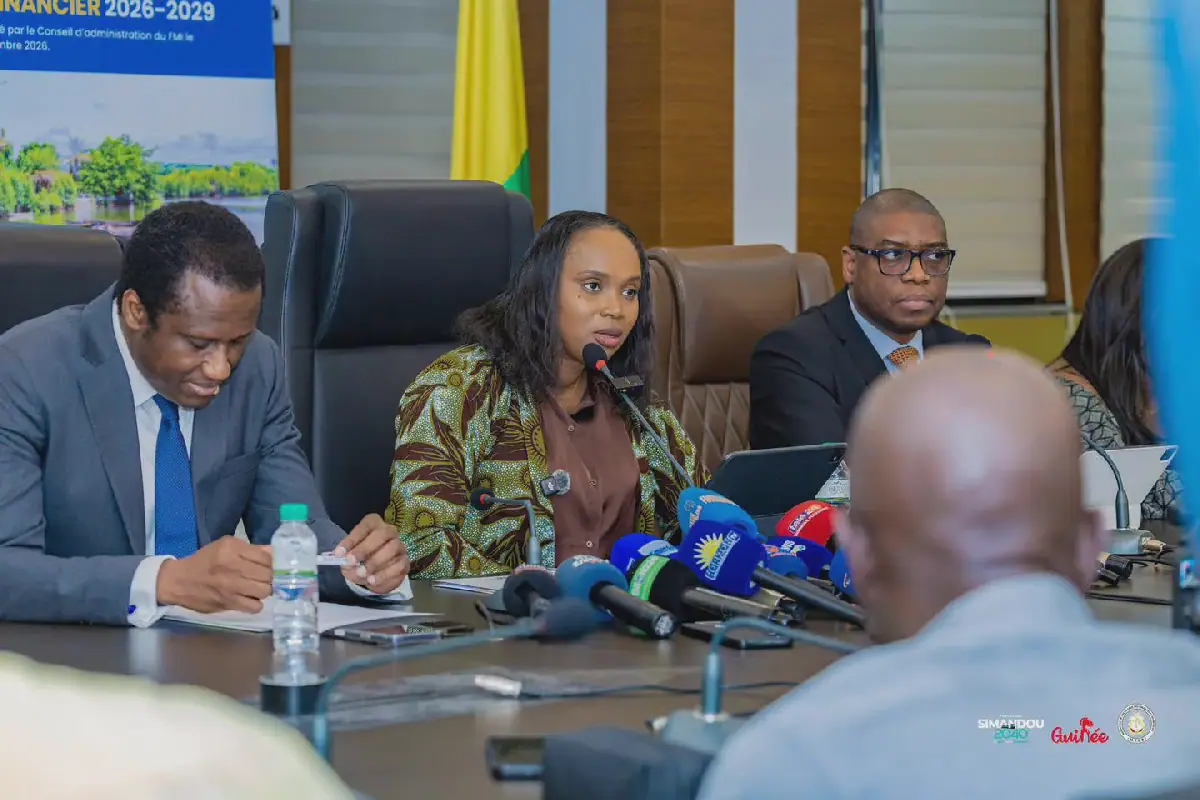
The International Monetary Fund (IMF) has approved a financing package worth $425 million for Guinea, equivalent to 310.59 million Special Drawing Rights (SDRs). This move is expected to support the country's economic reforms and growth. The financing package is part of a 38-month program under the Extended Credit Facility (ECF) and Extended Fund Facility (EFF). The program aims to help Guinea transform its abundant natural resources into sustainable and inclusive growth.
The IMF program will focus on mobilizing more revenue for priority spending, strengthening budget and monetary frameworks, and improving governance and transparency. According to Bo Li, Deputy Managing Director and Acting Chair of the IMF, Guinea will need to make sustained efforts to mobilize domestic revenue and improve public expenditure efficiency. This includes increasing mining revenue, modernizing tax and customs administrations, and gradually removing fuel and electricity subsidies.
The program has been welcomed by the Guinean government, which sees it as a framework for containing inflationary pressures, strengthening public finances, and supporting growth. The government believes that the program will enhance the credibility of its economic policy and send a strong signal of confidence to technical and financial partners, as well as investors. The program is also expected to facilitate access to competitive financing and reduce the cost of debt.
However, not everyone is supportive of the program. The NGO Tournons la page (TLP-Guinée) has denounced the program, citing concerns about human rights and governance. The organization had previously requested that the IMF include clauses on governance and human rights with measurable indicators, as well as regular participation of civil society in program monitoring.
TLP-Guinée has also called on the IMF to publish the full program report and protocol agreement signed with Guinea, and to include a point on civic space and ongoing investigations in each review. The organization wants the IMF to meet with independent civil society before each review and to publicly report on these exchanges.
The Guinean government has assured that the program will improve public finance management, including budget preparation and execution, treasury and debt management, and the quality of spending. The government also plans to protect vulnerable households from the impact of subsidy removals and to implement social measures to mitigate the effects.
The first review of the program is expected within six months. The IMF program is seen as a crucial step in supporting Guinea's economic development, but its success will depend on the government's ability to implement reforms and address concerns about human rights and governance. Key challenges ahead include improving revenue mobilization, strengthening public finances, and addressing the needs of vulnerable populations.
Key points
- The IMF program aims to support Guinea's economic growth and development by improving public finance management and governance.
- The program has been criticized by some for not adequately addressing human rights concerns.
- The Guinean government has assured that it will implement social measures to mitigate the impact of subsidy removals on vulnerable households.