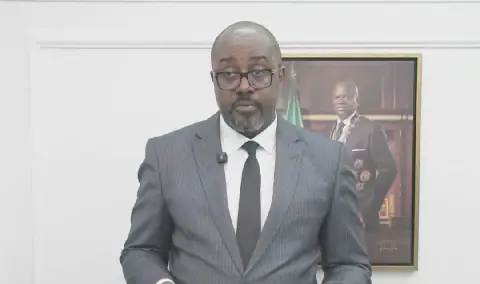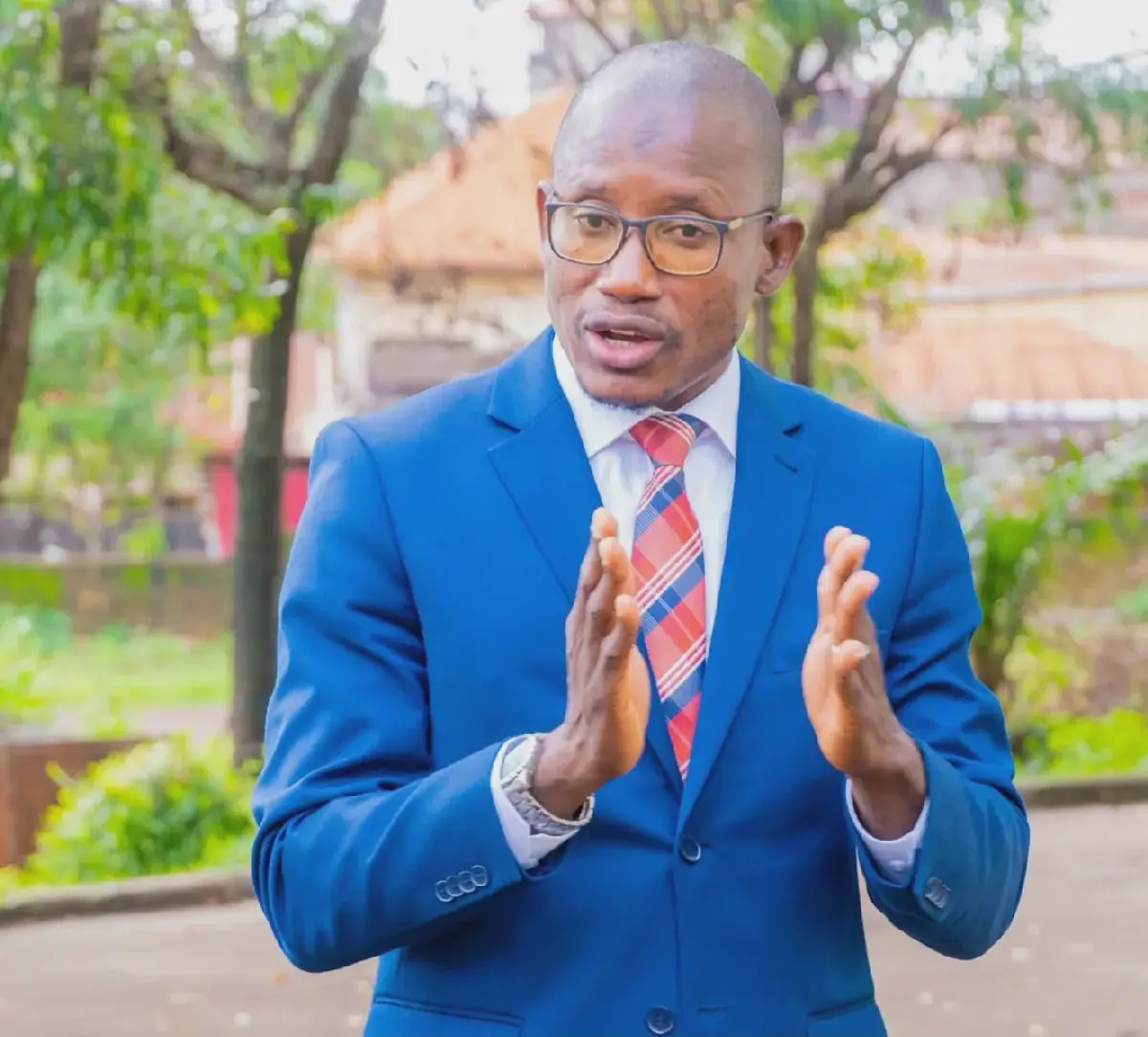
As Guinea prepares for its regional and sectoral elections, the establishment of new constitutional institutions has raised several questions. Jurist Mamady 3 Kaba recently appeared on the RTG's Grand Angle program to shed light on the process of selecting senators, their profiles, and their responsibilities. He also highlighted several legal difficulties related to the representation of new regions and prefectures in the future upper house of Parliament. Kaba emphasized that decentralization relies on precise legal principles essential for the proper administration of territorial collectivities.
According to Kaba, three fundamental conditions must be met to recognize a decentralized collectivity. Firstly, there must be legal recognition, which implies that the collectivity has its own assets, goods, and personnel distinct from those of the state. This involves the transfer of competencies. Secondly, the management of these collectivities must be based on elected officials, not appointed ones. The populations must elect those who will preside over their destiny. Finally, there must be administrative supervision, which does not equate to independence from the state.
Kaba discussed the modalities for designating regional councilors, stating that the electoral process will be organized by the subdivisions of the General Directorate of Elections. Only communal councils are authorized to submit candidatures, and the electors are exclusively the same communal councilors. The final results will be proclaimed by the courts of appeal after examining any electoral disputes. He also explained that the number of representatives of communes within regional councils depends on the number of communal councilors.
The composition of the future upper house of the Guinean Parliament was a key topic of discussion. Kaba stated that the Senate will consist of 81 members, divided into two categories: senators elected by indirect suffrage and those designated by the President of the Republic. The Senate will comprise 54 elected members and 27 members designated by the President. The 27 personalities designated by the head of state must come from different socio-professional components of the nation, including four representatives of the diaspora.
For the 54 elected senators, the provisions provide for a territorial distribution including one senator per prefecture, one per regional capital, one per commune of Conakry, and one for the city of Conakry. Kaba clarified that the representation of a prefecture is not limited to its only urban commune. The operations will be organized at the level of regional capitals, with one polling station per prefecture. The communal councils of each prefecture, to which the concerned regional councilors are added, will participate in the designation of senators.
The representation of new regions and prefectures raises legal difficulties. Kaba mentioned the cases of the Sigiri and Beyla regions, whose institutional status poses problems in the context of this first establishment of the Senate. He emphasized that these regions must be elevated to the rank of decentralized collectivities, as their creation, functioning, and responsibilities are subject to the law. Another difficulty lies in the number of senators already fixed by the texts, which corresponds to the old administrative configuration of the country.
Kaba concluded that the difficulties will only be definitively resolved through a modification of the concerned provisions. He notably mentioned Article 187 of the Electoral Code and the need to adapt the current regulations to the new administrative configuration of the country. The jurist's explanations provide valuable insights into the complexities of the senatorial selection process and the challenges that need to be addressed to ensure a smooth transition.
Key points
- The Senate will consist of 81 members, with 54 elected by indirect suffrage and 27 designated by the President of the Republic.