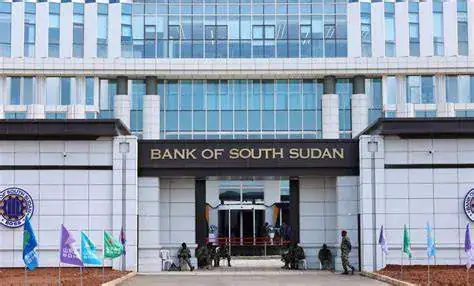
In December 2024, the Guinean government took control of Areeba, previously known as MTN Guinea. The state now owns 100% of the company's capital and voting rights. Areeba was transformed into a public anonymous company with a board of directors under the technical supervision of the Ministry of Telecommunications and the financial supervision of the Ministry of Economy and Finance. This move marked a significant shift in the country's telecommunications sector.
The revival of Guinée Télécom, the successor to the defunct SOTELGUI, is still in the strategic preparation phase. The government is working with specialized consulting firms on restructuring, recapitalization, governance, and selecting a partnership model. In November 2026, Guinean ministers met with a delegation from Maroc Telecom to discuss the relaunch of both operators, but no agreement was announced. The government aims to create a competitive national operator that operates like a business.
The history of Guinea's telecommunications sector is marked by several ruptures, including the creation of SOTELGUI in 1992, the arrival of mobile operators in 2006-2007, the collapse of SOTELGUI in 2012-2013, and the government's takeover of Areeba in 2024. A common factor among these events is the ability to finance and govern in the long term. The sector has experienced significant changes, with private operators taking market share while SOTELGUI struggled.
As of June 30, 2026, the national mobile park had 13.2 million subscriptions, down from 13.6 million at the end of 2024. Orange Guinée dominated the market with 85.4% of subscriptions, followed by Areeba with 13.4% and Cellcom with 1.2%. Orange also leads in mobile data with 90.9% market share and mobile money with 94%. The regulator attributes 99% of voice traffic to Orange.
The market dynamics have been shaped by the decline of Areeba and Cellcom. Between the end of 2024 and June 2026, Areeba lost approximately 1.3 million subscriptions, representing a 42% decline in its customer base. Cellcom, which held 21% of the market in 2014, now accounts for only 1.2%. Orange's dominant position is not necessarily problematic, but its effects on prices, innovation, and investment by competitors are crucial.
The Guinean government faces a critical decision regarding the future of its telecommunications sector. Rather than managing two separate assets, the government should consider consolidating Areeba and Guinée Télécom. This move would require a rigorous and sequenced approach, backed by a proven technical partner. The goal is to create a competitive national operator that adds to market competition rather than reducing it.
The proposed consolidation is not about creating a public monopoly but rather a national operator that operates efficiently. The government must carefully consider its options and engage in a strategic reflection to determine the best course of action for the country's telecommunications sector. With the right approach, Guinea can build a robust and competitive operator that drives growth and innovation in the sector.
Key points
- The Guinean government controls Areeba, formerly MTN Guinea, and is working to revive state-owned Guinée Télécom.
- Orange Guinée dominates the market with 85.4% of subscriptions, while Areeba and Cellcom have lost significant market share.
- The government aims to create a competitive national operator that operates like a business, adding to market competition rather than reducing it.