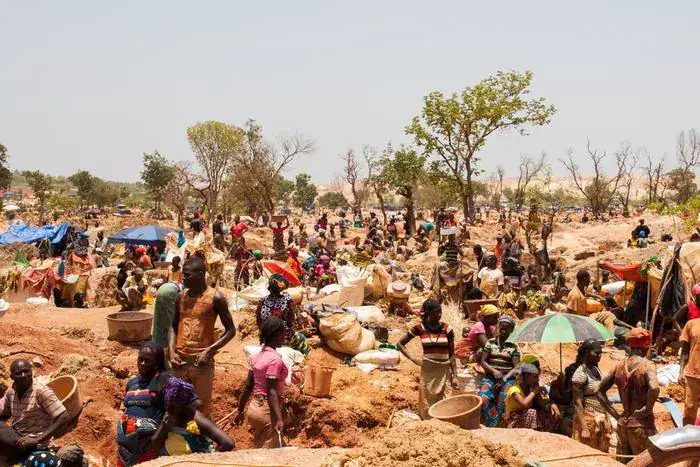
The Centre d'Analyse et d'Études Stratégiques (CAES) has expressed deep concern over the rising tensions in Guinea's Siguiri region, warning of a potential social explosion if the issues of illegal mining, youth unemployment, and regional security are not addressed comprehensively. The CAES has been monitoring the situation closely, highlighting the risks of inaction and the need for a proactive approach to mitigate the crisis. The region has been plagued by illegal mining activities, which have led to environmental degradation, displacement of local communities, and youth unemployment.
The Guinean government has taken steps to address the crisis, including suspending illegal mining activities, dismantling unauthorized mining sites, seizing heavy equipment, and removing local administrators who have failed to address the issue. While these measures are necessary, analysts argue that they must be accompanied by a deeper understanding of the region's history, traditions, and economic challenges. The CAES has emphasized the need for a holistic approach that takes into account the socio-economic and cultural context of the region. The government must engage with local communities and address their concerns to prevent further escalation.
The crisis in Siguiri has significant implications for regional security, with terrorist groups active in the Sahel region posing a threat to Guinea's stability. Analysts warn that the government's response must be carefully calibrated to avoid exacerbating the situation, which could create an opportunity for terrorist groups to exploit local grievances and infiltrate the region. The situation requires a nuanced understanding of the complex interplay between local, national, and regional factors. The government must balance the need to maintain law and order with the need to address the root causes of the crisis.
The CAES has argued that solutions to the crisis must be anchored in local and endogenous dimensions, rather than relying on standardized recipes from international institutions. The experience of other countries in the region, such as Mali, Burkina Faso, and Nigeria, has shown that externally-driven solutions often fail to address the specific socio-economic and cultural contexts of local communities. The CAES has emphasized the need for the Guinean government to engage with local authorities, traditional leaders, and community members to develop solutions that are tailored to the region's specific needs.
The crisis in Siguiri highlights the need for a new approach to addressing security challenges in Guinea and the wider region. Analysts argue that a solely military approach is unlikely to succeed, as it fails to address the underlying socio-economic and cultural factors driving the crisis. Instead, the government must adopt a comprehensive approach that combines security measures with economic development, social cohesion, and community engagement. This approach must be informed by a deep understanding of the region's history, traditions, and cultural norms.
The international community has a role to play in supporting Guinea's efforts to address the crisis in Siguiri. However, analysts caution that external assistance must be carefully calibrated to avoid imposing solutions that are not adapted to local contexts. The experience of international interventions in other countries has shown that external solutions can often exacerbate local tensions and create new challenges. The international community must work closely with the Guinean government and local communities to develop solutions that are tailored to the region's specific needs.
The situation in Siguiri remains volatile, with many challenges ahead. However, analysts believe that with a comprehensive and nuanced approach, it is possible to address the crisis and restore stability to the region. The Guinean government must prioritize dialogue, community engagement, and socio-economic development, while also addressing the security challenges posed by terrorist groups. By adopting a holistic approach, the government can build trust with local communities and create the conditions for sustainable peace and stability.
Key points
- Analysts urge the Guinean government to adopt a comprehensive approach to address the crisis in Siguiri, combining security measures with economic development, social cohesion, and community engagement.