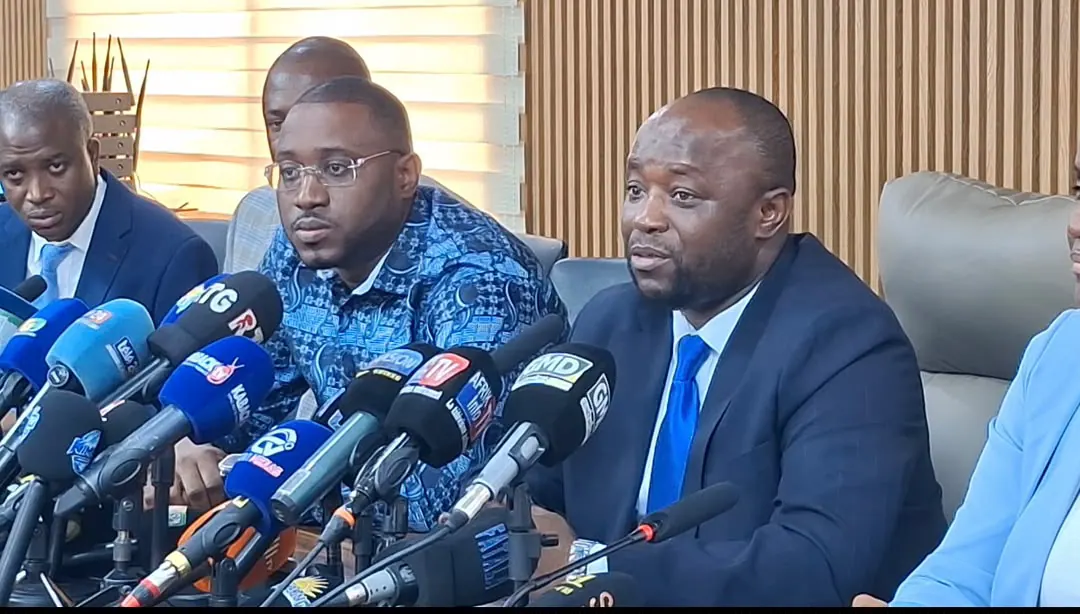
On September 29, 2026, Guinea's Minister of Modernization of Administration and Public Service, Faya François Bourouno, announced the launch of a new public service recruitment campaign. This initiative aims to modernize the administration, focusing on identifying prior personnel needs, occupations, and required skills. The minister emphasized that recruitment will only occur when a specific need is identified.
The new approach relies on digitalizing public service management processes, including a database of staff and payroll, an updated directory of jobs, occupations, and skills, and an operational organizational framework. Each agent will have a job description that serves as the basis for their evaluation and administrative management. This campaign affects various public administration sectors, including Health, Higher Education and Scientific Research, Sanitation, and Justice.
The recruitment campaign will address needs in several areas, such as medical specialists and healthcare personnel, university teachers, contract agents, magistrates, and elementary and secondary school teachers. The process will occur in two phases, with the first phase taking place in the remaining months of 2026 and additional operations in 2027. Minister Bourouno presented the main pillars of this new policy, including equal opportunities, transparency, merit, territorialization, digitalization, and anti-fraud measures.
To ensure territorialization, several competitions will be organized within the country. In pre-university education, candidates can directly apply for identified positions in school establishments. If admitted, their commitment and assignment will be linked to the chosen position, contributing to strengthening public services within the country. Digitalization will cover the entire process, from registration to exam results publication, aiming to enhance transparency and limit fraud.
The minister announced measures to combat networks and individuals exploiting recruitment campaigns to scam candidates by promising them public service integration. Authorities will rely on competent services for information system security. This operation aims to contribute to the rejuvenation and feminization of the public service. According to provided data, the proportion of female public servants increased from 27% before September 5, 2021, to 31% after recent recruitment operations.
The responsible authorities are counting on respecting legal recruitment conditions to favor the integration of young people and women into public administration. The minister recalled that the recruitment process is framed by several stages, from need definition by sectoral departments to technical analysis and budgetary sustainability verification, before validation by competent authorities. Admitted candidates will be engaged as probationary civil servants and subject to at least one year of probation.
Their validation will occur after evaluating their performance. Authorities invite candidates to refer exclusively to official ministry and government channels for information on the competition. This new approach aims to strengthen public services and promote equal opportunities for all Guinean citizens. The campaign's success will depend on its transparency and the merit-based selection of candidates.
Key points
- The new recruitment process prioritizes merit and transparency in public service hiring.
- The process aims to contribute to the rejuvenation and feminization of the public service.
- Digitalization will be used to enhance transparency and limit fraud in the recruitment process.