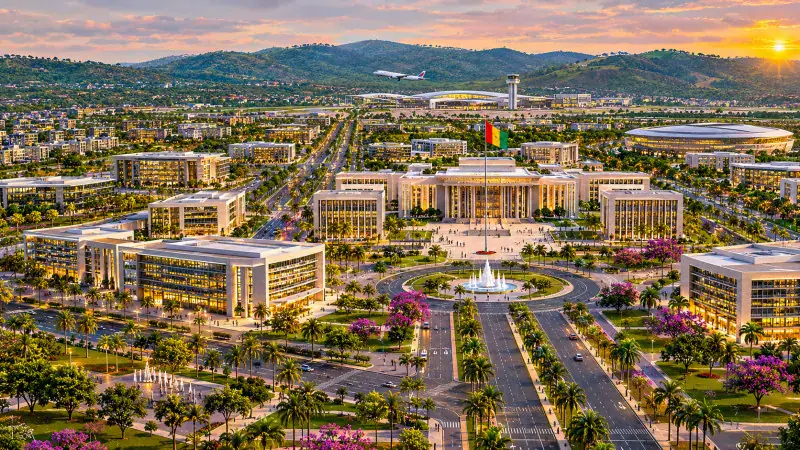
The Guinean government has unveiled plans for a new administrative capital, Nimba, located about 60 km from Conakry, the current capital. The proposed city, presented by Senegalese architect Pierre Goudiaby Atepa, aims to alleviate congestion in Conakry. The project is estimated to cost between $20 and $30 billion and will be built on 30,000 hectares of land. The idea of a second capital for Guinea has been discussed informally for years, with some suggesting the central city of Dabola as a potential location.
The Nimba project has received a lukewarm response from the public, with many questioning its opportunism and relevance to the Simandou 2040 program. Critics argue that the project's location near Morebaya, which will host the Simandou mineral port, appears to be driven by a desire to link it to the program. However, the Simandou 2040 vision is a broader development plan for Guinea, and some argue that the new capital could be located anywhere in the country without losing its connection to the program.
One of the main concerns about the Nimba project is its cost, which is seen as prohibitively expensive by many Guineans. With the country's current economic challenges, some argue that the funds could be better spent on developing other regions. Investing in localities across the four natural regions, with a focus on public services and economic opportunities, could encourage people to stay in their hometowns and reduce the influx of migrants to Conakry.
The proposed Nimba city is not the first attempt to address congestion in Conakry. Previous plans have been discussed, but none have come to fruition. The current government's enthusiasm for the project has raised hopes that it will be implemented, but concerns about its feasibility and funding remain. The project's success will depend on the government's ability to balance the needs of the capital city with the needs of the rest of the country.
Some experts argue that a more effective way to address congestion in Conakry would be to focus on developing other urban centers in Guinea. This approach would involve investing in infrastructure, services, and economic opportunities in cities and towns across the country. By doing so, the government could reduce the pressure on Conakry and create more balanced economic growth.
The Nimba project has also raised questions about the country's urban planning and development strategy. Some argue that the focus on building a new capital city ignores the needs of existing cities and towns. Others argue that the project is a necessary step to address the country's rapid urbanization and ensure sustainable development.
The Guinean government has asked for further studies on the project, indicating that it is still in the early stages of development. The project's fate will depend on the government's ability to address concerns about its cost, location, and feasibility. The outcome will have significant implications for the country's development and urban planning.
Key points
- The proposed Nimba city aims to alleviate congestion in Conakry, but its $20-30 billion cost and proximity to the current capital have sparked skepticism.