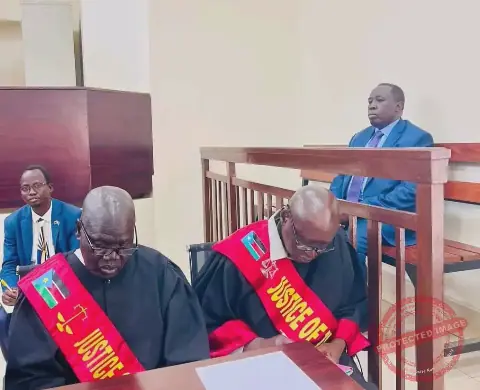
The Syndicat des professionnels de la presse de Guinée (SPPG) has expressed concern over the prosecution of Youssouf Boundou Sylla, a former journalist and current secretary general of Guinea's Ministry of Culture, Tourism, and Handicrafts. In a statement released on November 17, 2026, the union contested the procedure initiated by the special prosecutor near the CRIEF (Cour de répression des infractions économiques et financières), arguing that any potential dispute related to a press article should be treated according to the law on press freedom.
The case originated from an article published by Boundou Sylla under the regime of former President Alpha Condé, concerning Zenab Nabaya Dramé, who was then Minister of Technical Education. The SPPG stated that it is not defending Boundou Sylla due to his administrative functions but aims to preserve the fundamental principles of press freedom and the rule of law. The union emphasized that journalists are not above the law, but any procedure concerning them must respect the legal provisions governing the exercise of their profession.
The SPPG recalled that the Constitution guarantees freedom of expression and press freedom, while providing sanctions against abuses, particularly attacks on honor and reputation. The union stressed that this constitutional protection does not mean that journalists are above the law, but rather that any action against a journalist must be based on clear text, exercised by the competent authority, and conducted according to the procedures provided. The union cited the organic law L/2010/002/CNT of June 22, 2010, relative to press freedom, which specifically frames press offenses and provides financial sanctions rather than prison sentences.
The SPPG questioned the competence of the CRIEF, which was established by ordinance n° O/2021/007/PRG/CNRD/SGG of December 2, 2021, to deal with economic and financial offenses, such as corruption, embezzlement of public funds, and money laundering. The union argued that a potential case of defamation by press does not fall within its natural field of competence. The SPPG emphasized that the CRIEF cannot be considered the naturally competent jurisdiction to judge a dispute arising from the publication of a press article in a legally created journal like Guinée News.
The union stated that its position does not call into question the right of any person who feels they have been victimized by a journalistic publication to seek redress. The SPPG mentioned that Zenab Nabaya Dramé has legal avenues to assert her rights if she considers that the article has damaged her honor, reputation, or interests. However, the union contested the initiative of the public prosecution, arguing that in cases of defamation by press, it is generally up to the person who feels they have been harmed to file a complaint and seize the competent jurisdiction.
The SPPG warned about the consequences of such a procedure on the entire journalistic profession, particularly investigative journalism. The union fears that restrictive measures of freedom taken in a case that, according to it, falls under the regime of press offenses could create a climate of intimidation and dissuade journalists from investigating sensitive subjects. The SPPG called for rigorous respect for the texts and the protection of press freedom.
The case against Youssouf Boundou Sylla has sparked concerns about press freedom and the rule of law in Guinea. The SPPG's statement highlights the importance of protecting journalists' rights and ensuring that any action against them is based on clear laws and procedures. The union's intervention aims to safeguard the fundamental principles of press freedom and the rule of law, not only for Boundou Sylla but for all journalists in Guinea.
Key points
- The SPPG contests the prosecution of journalist Youssouf Boundou Sylla, citing concerns over press freedom and the jurisdiction of the CRIEF.
- The union argues that the CRIEF is not the competent jurisdiction to judge a dispute arising from the publication of a press article.
- The SPPG warns that restrictive measures of freedom in this case could create a climate of intimidation and dissuade journalists from investigating sensitive subjects.