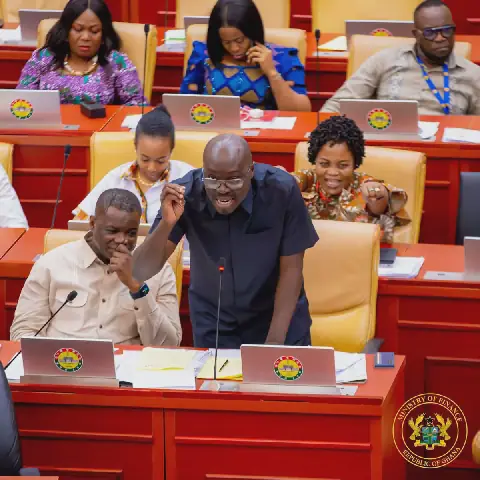
Guinea's President Mamadi Doumbouya has announced a new stance on enforcing rules and regulations in the country. In a recent statement, he emphasized the importance of respecting the country's laws and regulations, saying that his administration will no longer tolerate violations. This declaration was made before a gathering of top state officials, who reportedly applauded his remarks. The president's statement has been seen as a significant shift in the country's approach to governance.
President Doumbouya's remarks were characterized by a tone of firmness, although some observers have noted that his conviction appeared hesitant. He stated that Guinea has been too lenient in the past, particularly with regard to pan-Africanism, but that this approach will no longer be tolerated. The president emphasized that his administration's priority is the country's well-being and the respect of its laws, adding that they will not be swayed by personal relationships or friendships.
The president's statement has been met with a mix of reactions, with some observers expressing relief that the government is taking a firmer stance on governance. However, others have raised concerns about the potential implications of this new approach, particularly with regard to individual freedoms and the rule of law. The president's declaration has also sparked a wider debate about the role of pan-Africanism in Guinea's governance and the need for the country to balance its commitment to African values with the need for effective governance.
Critics have argued that Guinea, like many other African countries, often blames external factors for its development challenges, rather than addressing internal contradictions and incoherence. President Doumbouya's statement appears to acknowledge this critique, emphasizing the need for Guinea to take responsibility for its own development and governance. This approach has been welcomed by some as a necessary step towards achieving true sovereignty and self-determination.
The president's emphasis on enforcing rules and regulations has also been seen as a response to criticisms that Guinea's pan-Africanism has been little more than rhetoric. Many have argued that the country's commitment to African values and principles has not been matched by concrete actions, and that this has undermined the country's credibility and effectiveness. President Doumbouya's statement appears to signal a shift towards a more action-oriented approach to governance.
The implications of President Doumbouya's statement are still unclear, and it remains to be seen how his administration will implement this new approach to governance. However, the president's emphasis on enforcing rules and regulations has been seen as a positive step towards promoting accountability and transparency in government. It is also likely to have significant implications for Guinea's relationships with international partners, including Western countries.
In conclusion, President Doumbouya's statement has marked a significant shift in Guinea's approach to governance, with a renewed emphasis on enforcing rules and regulations. While the implications of this approach are still unclear, it has been welcomed by some as a necessary step towards achieving true sovereignty and self-determination. As Guinea moves forward, it will be important to monitor the implementation of this new approach and its impact on the country's development and governance.
Key points
- President Doumbouya's administration will prioritize enforcing rules and regulations.
- The president's statement has sparked a wider debate about the role of pan-Africanism in Guinea's governance.
- The implementation of this new approach will have significant implications for Guinea's relationships with international partners.
Reporting sources
- La Guinée veut désormais afficher une posture de rigueur · malikonews.com