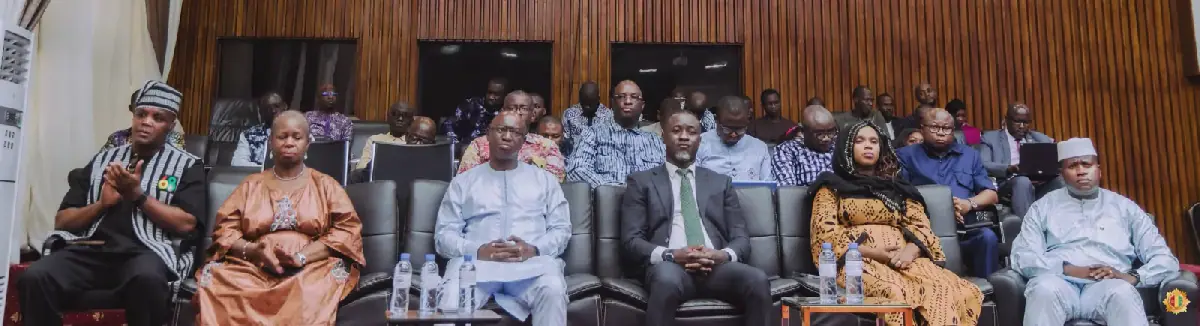
Guinea's National Assembly has made a series of recommendations to improve budget execution and ensure a tangible impact on citizens' daily lives. This follows a thorough examination of the 2026 revised finance bill's expenditure component. The Assembly's recommendations focus on addressing the alarmingly low execution rate of investment spending. A staggering 75% of ministerial departments have a payment rate below 30%.
The Parliament has called on the Prime Minister to conduct an in-depth evaluation to identify areas of responsibility. They also demand the establishment of a quarterly evaluation mechanism for investments, accompanied by semiannual reports. Furthermore, the Assembly recommends creating a system to secure and reserve salary credits for public establishments facing payment arrears. This move aims to guarantee the dignity of workers in these establishments.
To enhance transparency and public debt management, the National Assembly requests the completion of domestic debt audits from 2014 to 2020. They also suggest involving the Guinean Order of Chartered Accountants in this process. Additionally, the Assembly proposes the direct payment of post-ordinated claims. The actualization and expansion of the price catalog by the National Institute of Statistics, as well as the establishment of a reference framework for road works, are also recommended.
The Parliament emphasizes the need for urgent ecological and economic measures. These include protecting mangroves and developing infrastructure for small and medium-sized enterprises and artisans. The development of rural areas and social equity are also prioritized. The Assembly insists on accelerating rural access, recommending the construction of at least 1,000 kilometers of roads in 2027 and 1,400 kilometers in 2028.
The National Assembly also demands a special execution procedure to guarantee a minimum annual allocation of 2,300 billion GNF to local authorities. This is due to the unjustified retention of funds allocated to the ANAFIC, with only 0.65% of resources being returned to local authorities. Moreover, the coordination between ministries needs to be strengthened to prevent road project delays caused by the relocation of public networks.
The rationalization of state charges is accompanied by strong requirements in the energy and digital sovereignty sectors. The Parliament invites the government to gradually regulate subsidies granted to Électricité de Guinée. They also demand the full electrification of localities near the Kaléta, Souapiti, and Amaria dams by 2027. Furthermore, investing in a second undersea cable is recommended to eliminate the risk of connectivity disruptions.
The Assembly's recommendations also cover various other areas, including diplomacy, administrative modernization, and major projects. They call for the regular payment of international contributions, the modernization of diplomatic representations, and the insertion of imperative deadline clauses in agreements with funders. The Parliament also emphasizes the need to finalize administrative and judicial infrastructure, support national cultural heritage, and satisfy all legal prerequisites before the 2027 generalization of the program budget.
Key points
- The Guinean parliament's recommendations aim to improve budget execution, enhance transparency, and ensure concrete impact on citizens' daily lives.
- The parliament demands a special execution procedure to guarantee a minimum annual allocation of 2,300 billion GNF to local authorities.
- The Assembly recommends investing in a second undersea cable to eliminate the risk of connectivity disruptions.