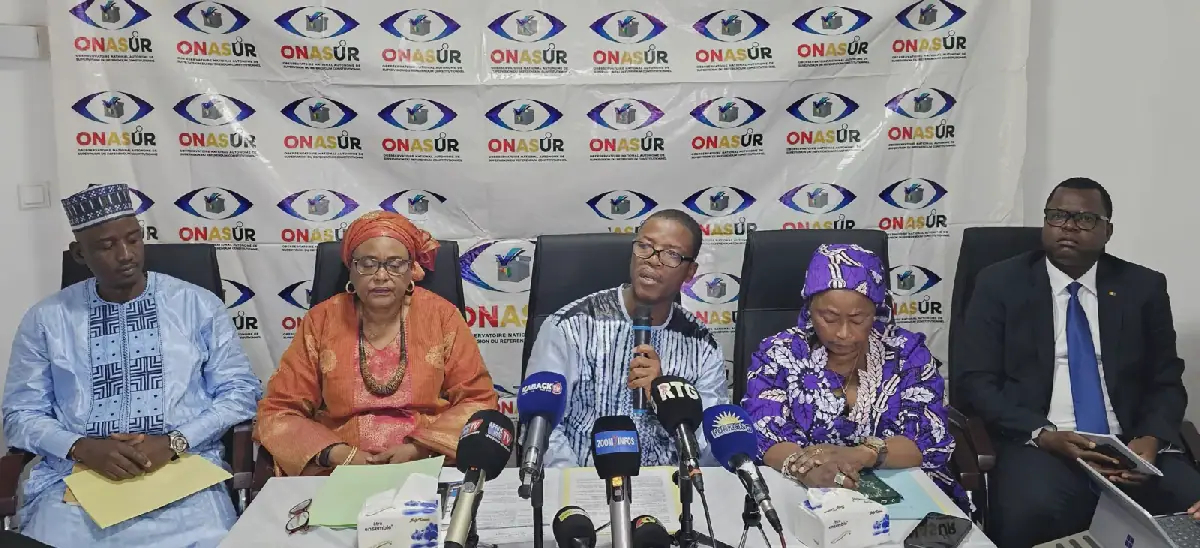
The Guinean National Autonomous Observatory for the Supervision of the Constitutional Referendum and Elections (ONASUR-E) held a press conference on November 19, 2026, in Conakry, to discuss preparations for the upcoming regional and senate elections. The elections, scheduled for November 29 and December 20, 2026, respectively, are crucial for strengthening decentralization, territorial representation, and the consolidation of republican institutions in Guinea.
According to Dr. Michel Jeannette Tolno, a counselor at ONASUR-E, the observatory's action plan focuses on two main priorities: strengthening technical and operational supervision of the elections and promoting transparency and electoral peace. This approach aims to ensure professional, impartial, and adapted supervision of the two elections, while respecting the legal framework in force. The plan also includes the prevention of incidents, awareness-raising for political actors, institutional dialogue, and documentation of electoral operations.
ONASUR-E intends to produce an objective report with recommendations to contribute to the improvement of the electoral system and the strengthening of citizens' trust. The report will help identify areas for improvement and provide guidance for future elections. The observatory's efforts are crucial in ensuring the credibility and transparency of the electoral process in Guinea.
Mariama Diallo Sy, Vice-President of ONASUR-E, emphasized the importance of the future senatorial institution and the need to appoint competent and respected individuals to lead it. She called for consideration and respect for republican institutions, highlighting the significance of the senate in the country's governance. The senate will comprise 81 members, with two-thirds elected and one-third appointed by presidential decree.
Ousmane Diaby, a counselor at ONASUR-E, provided details on the electoral colleges for the regional and senate elections. For regional elections, the electoral college consists of all communal councilors in the concerned region, and only these elected officials are eligible. For the senate, two-thirds of members will be elected, while the remaining one-third will be appointed by presidential decree, including Guineans living abroad.
The press conference took place just days before the regional elections and a month before the senate election, two significant events in the process of establishing republican institutions in Guinea. The elections are expected to contribute to the country's democratic development and the strengthening of its institutions. ONASUR-E's efforts are critical in ensuring the integrity and transparency of the electoral process.
The Guinean government and ONASUR-E are working to ensure that the elections are conducted in a free, fair, and transparent manner. The international community is also following the developments in Guinea, with various stakeholders emphasizing the importance of credible and inclusive elections. The outcome of the elections will have a significant impact on Guinea's democratic trajectory and its relations with the international community.
Key points
- ONASUR-E is working to ensure the transparency and integrity of Guinea's regional and senate elections.